Search the site
Search
Grammar ▾
▸ Articles
▸ Advanced Grammar
▸ Adjectives & Adverbs
▸ Conjunctions
▸ Conditionals
▸ Determiners
▸ Gerunds & Infinitives
▸ Grammar Practice
▸ Modal Verbs
▸ Nouns
▸ Parts of Speech
▸ Passive Voice
▸ Prepositions
▸ Pronouns
▸ Quantifiers
▸ Question Formation
▸ Reported Speech
▸ Verbs
Writing ▾
▸ Punctuation
▸ Sentence Structure
▸ Writing Mistakes
Vocabulary ▾
▸ Visual Vocabulary
▸ Food Vocabulary
▸ People Vocabulary
▸ Places Vocabulary
▸ Hobbies Vocabulary
▸ Home Vocabulary
▸ School Vocabulary
▸ Weather Vocabulary
▸ Basic Vocabulary
▸ General Vocabulary
Speaking ▾
▸ Conversational English
Calculators
Contacts
Home
» A1–A2 Beginner
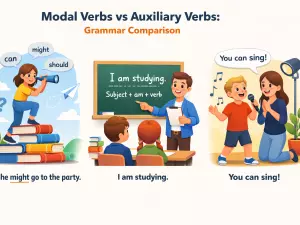
Modal Verbs vs Auxiliary Verbs: Grammar Comparison
Covers what auxiliary verbs do in English, which verbs are modal auxiliaries, and how modals differ from be, do, and have. Explains tense-building vs meaning/attitude, shows modals with auxiliaries together, flags common mix-ups, and includes practice ID exercises.
Modal Verbs vs Regular Verbs: Key Grammar Differences
This article explains how regular verbs work in English grammar and how modal verbs are different. It shows why modals don’t take s, ed, or ing, how regular verbs use auxiliaries, and compares sentences. It also covers common learner mistakes and gives exercises to tell them apart.
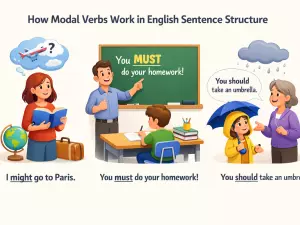
How Modal Verbs Work in English Sentence Structure
This article explains where modal verbs go in English and why they come before the main verb. It covers the subject plus modal plus base verb pattern, forming questions without do, making negatives with not, placing adverbs and time phrases, how modals change tone, and practice exercises.
What Are Modal Verbs in English? Complete Guide
This article explains what modal verbs are and how they shift meaning, covers the main modals and the ideas they express, shows how they pair with the base verb, and why they don’t change form. It includes ability, permission, obligation, and possibility, plus real examples and practice exercises.
Gerund or Infinitive? Simple Rules and Usage Guide
This article explains why some English verbs take a gerund or an infinitive, lists common verbs that require each form, and shows verbs that allow both. It also covers cases where meaning changes, plus real-speech tips and practice exercises.
Gerunds After Prepositions: Rules and Examples
This article explains why verbs after prepositions take the gerund, lists common prepositions that need -ing, and covers gerunds in phrasal and fixed phrases like interested in and good at. It also explains multi-word preps like because of/instead of, common learner errors, and quick practice.
Bare Infinitive in English: When to Use Verb Without “To”
Explains what the bare infinitive is versus to + verb, when to use it after modals, perception verbs like see/hear/feel, and after let, make, and help. Covers had better and would rather, common to mistakes, and practice exercises to spot and use it right.
Infinitives After Modal Verbs: Rules and Examples
Learn why modal verbs take the bare infinitive, how sentences work with can, must, should, and may, and how each modal shifts meaning. It covers negatives, questions, common mistakes, perfect forms like may have done, and practice fill-ins.
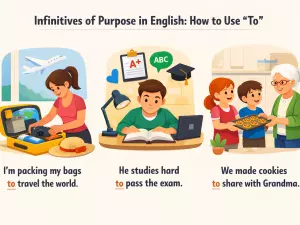
Infinitives of Purpose in English: How to Use “To”
This article explains what an infinitive of purpose is, how to use to plus a verb to show why you do something, common sentence patterns, and where it goes in a sentence. It also compares it with for and so that, flags common mistakes, and gives practice exercises.
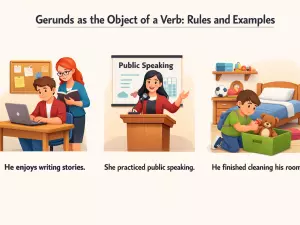
Gerunds as the Object of a Verb: Rules and Examples
Explains why some verbs require a gerund, lists common gerund-taking verbs, and shows key sentence patterns. Compares gerund objects with infinitive objects, flags mistakes with enjoy, avoid, suggest, teaches spotting gerunds in longer sentences, and ends with fill-in practice.
Previous
1
2
3
4
5
6
7
8
9
10
...
34
Next