Sentence Transformation with Conjunctions (Intermediate)

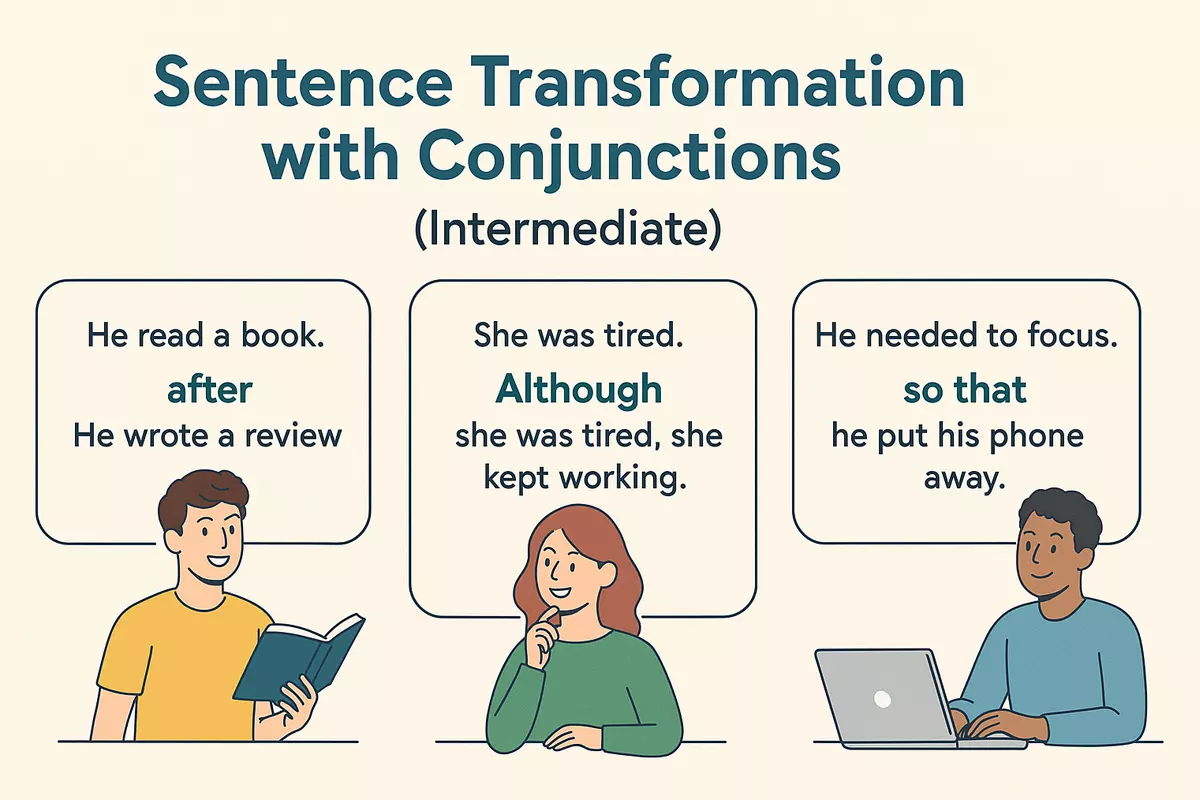 This article explains sentence transformation tasks as found in exams and textbooks. It covers patterns like because to so, although to but, and if to unless, offers practice exercises, challenge tasks, and detailed step-by-step answer keys.
- Overview of sentence transformation tasks in exams and textbooks
- Useful patterns: because → so, although → but, if → unless
- Rules for keeping meaning the same while changing conjunctions
- Practice: rewrite sentences using a new conjunction given in brackets
- Challenge tasks: transform two simple sentences into one complex sentence
- Answer key with step-by-step transformations
Connecting ideas smoothly is essential for effective communication, and understanding how to rephrase statements using appropriate joining words can significantly improve the clarity and flow of your writing. This article provides practical exercises designed to help you practice combining sentences at an intermediate level, enabling you to express your thoughts more cohesively and develop stronger writing skills. By mastering these techniques, you will be able to create more engaging and precise written work.
Overview of sentence transformation tasks in exams and textbooks
Sentence transformation questions are a core part of language exams and coursebooks, especially at the intermediate level. These tasks challenge students to express the same idea in a new structure, often using specific grammar points like conjunctions. The aim is to test not just grammar knowledge, but also flexibility and understanding of meaning.
Common Features of Sentence Transformation Tasks
- Instructions typically require rewriting a sentence without changing its meaning.
- Conjunctions such as although, because, so, but, unless, and while are frequently tested.
- Students may be given a word they must use (often called a “key word transformation”).
- Answers are usually marked for both accuracy and preservation of original meaning.
- Tasks often appear in exam sections focused on grammar, writing, or language use.
Typical Exam Instructions and Task Types
- Key word transformation: Rewrite the sentence using the given word.
- Join the sentences: Combine two sentences using a conjunction.
- Rewrite with a new connector: Change the linking word while keeping the meaning.
- Negative/affirmative switches: Express the same idea in a negative or positive form.
Patterns and Conjunctions Often Tested
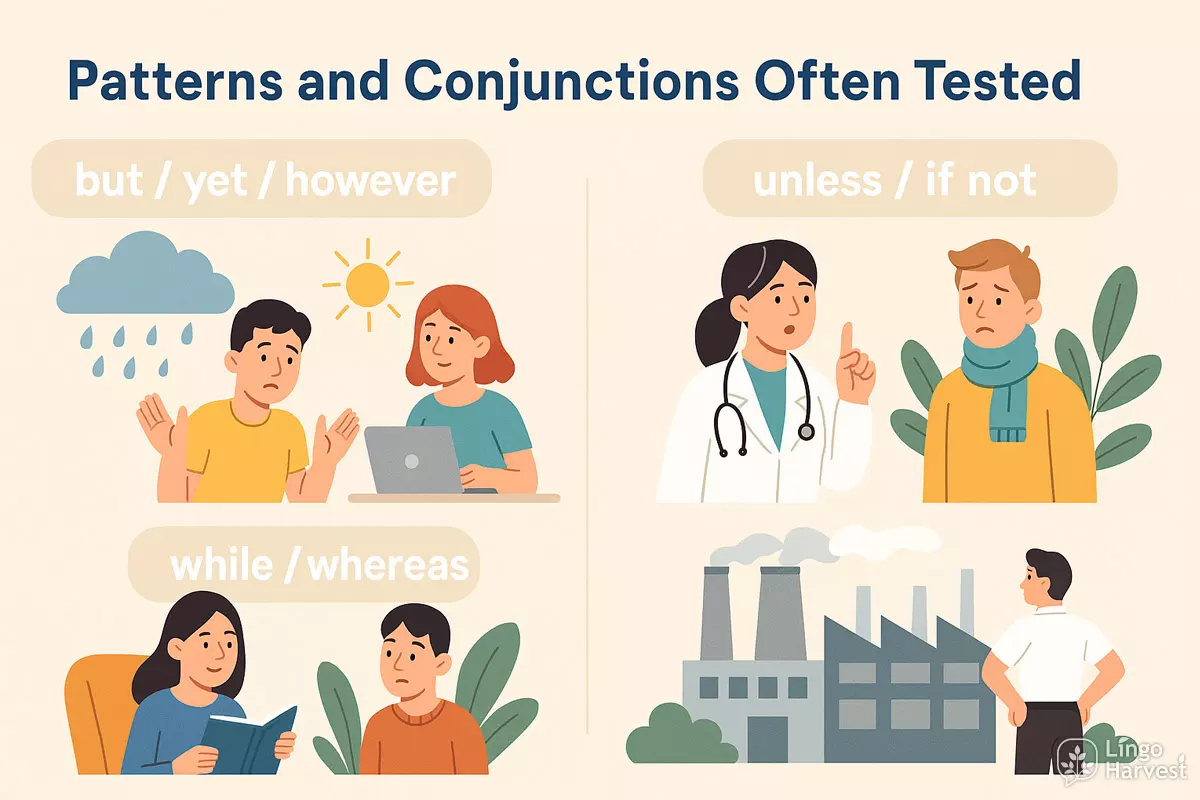
- although / even though / though
- because / since / as
- so / therefore / as a result
- but / yet / however
- unless / if not
- while / whereas
- in order to / so that
- despite / in spite of
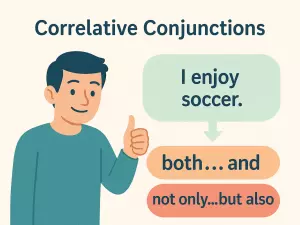
- not only... but also
- either... or / neither... nor
- whether... or (not)
- provided (that) / as long as
Comparison of Task Formats in Exams and Textbooks
| Format | Typical Example | Focus | Scoring Criteria |
|---|---|---|---|
| Key Word Transformation | Rewrite using “although” It was raining. We went for a walk. |
Grammar, meaning, flexibility | Accuracy, correct use of the word, same meaning |
| Sentence Combination | Join using “because” He was tired. He went to bed early. |
Use of conjunctions, sentence structure | Logical connection, grammatical correctness |
| Connector Replacement | Rewrite with “but” She wanted to go. She stayed home. |
Variety in linking words | Natural phrasing, preserved meaning |
| Affirmative/Negative Change | Rewrite in negative He finished the test. He didn’t leave early. |
Negation, sentence transformation | Correct negative structure, meaning intact |
Why These Tasks Matter
Practicing these transformations helps learners:
- Develop flexibility in expressing ideas.
- Deepen understanding of conjunctions and linking structures.
- Prepare for typical exam formats and marking schemes.
- Build confidence in both writing and speaking contexts.
Sample Practice
Try transforming these sentences using the conjunction in brackets:
- She studied hard. She didn’t pass the exam. (although)
- It was late. They continued working. (even though)
- He can’t come. He is ill. (because)
- We will go out. It stops raining. (if)
- I was tired. I finished the project. (though)
- He didn’t eat breakfast. He wasn’t hungry. (since)
- She saved money. She could buy a new laptop. (so that)
- Finish your work. You leave the office. (before)
- I’ll call you. I arrive home. (when)
- We waited. The bus arrived. (until)
Show answers
- Although she studied hard, she didn’t pass the exam.
- They continued working even though it was late.
- He can’t come because he is ill.
- We will go out if it stops raining.
- Though I was tired, I finished the project.
- He didn’t eat breakfast since he wasn’t hungry.
- She saved money so that she could buy a new laptop.
- Finish your work before you leave the office.
- I’ll call you when I arrive home.
- We waited until the bus arrived.
Useful patterns: because → so, although → but, if → unless
Understanding how to transform sentences by switching conjunctions is a powerful skill for intermediate learners. It allows you to express the same idea in different ways, which is especially useful for writing and speaking. Let’s look at how you can change sentences using pairs like "because" and "so," "although" and "but," or "if" and "unless."
Changing Cause and Effect: because ↔ so
When you want to explain why something happens, you often use "because." To express the result instead, you can use "so." This transformation involves reordering the clauses and sometimes adjusting punctuation.
- She was tired because she worked late. → She worked late, so she was tired.
- They left early because it was raining. → It was raining, so they left early.
- I didn't eat breakfast because I woke up late. → I woke up late, so I didn't eat breakfast.
- He stayed home because he was sick. → He was sick, so he stayed home.
- We missed the bus because we walked slowly. → We walked slowly, so we missed the bus.
Contrasts: although ↔ but
To show contrast, "although" usually begins a clause, while "but" joins two complete ideas. When transforming, you may need to rearrange sentences for clarity.
- Although it was cold, they went swimming. → It was cold, but they went swimming.
- Although she was tired, she finished her homework. → She was tired, but she finished her homework.
- Although he is young, he is very responsible. → He is young, but he is very responsible.
- Although the exam was difficult, everyone passed. → The exam was difficult, but everyone passed.
- Although I was late, the teacher let me in. → I was late, but the teacher let me in.
Conditional Structures: if ↔ unless
"If" introduces a condition, while "unless" means "if not." Transforming between these words often requires careful attention to the meaning, as the sentence can become negative.
| With "if" | With "unless" |
|---|---|
| If you study, you will pass. | You will not pass unless you study. |
| If it rains, we will stay inside. | We will stay inside unless it doesn’t rain. |
| If you hurry, you'll catch the train. | You won't catch the train unless you hurry. |
| If she calls, tell me. | Don’t tell me unless she calls. |
| If you practice, you will improve. | You won’t improve unless you practice. |
Tips for Sentence Transformation
- Pay attention to the meaning when switching conjunctions—sometimes you need to change the verb tense or add negatives.
- Practice by rewriting sentences in both forms to reinforce understanding.
- Reading and listening to authentic English will help you notice these patterns in context.
Exploring these transformation patterns will make your English more flexible and natural. Use these structures to expand your range and express ideas with more variety.
Rules for keeping meaning the same while changing conjunctions
Understanding how to swap one conjunction for another without altering the intended message is essential for mastering sentence transformation. This skill helps you express ideas flexibly while maintaining clarity and accuracy. Below, you'll find practical guidelines and examples to support effective changes between conjunctions.
General Tips for Substituting Conjunctions
When you replace a conjunction, always consider the relationship it shows—such as contrast, reason, or addition. Not every conjunction can substitute for another; some are only suitable in specific contexts.
- Check if the new conjunction expresses the same logical link (e.g., cause, result, contrast).
- Adjust word order or sentence structure if needed to fit the new conjunction naturally.
- Watch for changes in meaning caused by subtle differences (e.g., “although” vs. “but”).
- Mind punctuation, especially with coordinating conjunctions (“and,” “but,” “or”) and subordinating ones (“because,” “since,” “although”).
- Maintain tense and subject consistency to avoid confusion.
Common Conjunction Transformations
Some conjunctions are interchangeable in many contexts, but the sentence may need to be restructured. Here are frequent patterns:
- Because → since, as: She left because it was late. → She left since it was late.
- Although → even though, though: Although it was raining, we went out. → Even though it was raining, we went out.
- But → however, yet: He is tired, but he finished the work. → He is tired; however, he finished the work.
- If → unless (with negative meaning): If you don’t hurry, you’ll miss the bus. → Unless you hurry, you’ll miss the bus.
- So → therefore, as a result: It was cold, so we stayed inside. → It was cold; therefore, we stayed inside.
- And → as well as: She likes tea and coffee. → She likes tea as well as coffee.
- While (contrast) → whereas: He likes jazz, while I prefer rock. → He likes jazz, whereas I prefer rock.
- Before → until (with negative): We didn’t leave before the rain stopped. → We didn’t leave until the rain stopped.
- So that → in order to: She spoke loudly so that everyone could hear. → She spoke loudly in order to be heard by everyone.
- Because → due to (with noun): He was late because he missed the bus. → He was late due to missing the bus.
Comparing Conjunction Functions
To clarify which conjunctions can replace each other and how the sentence may change, see the structured comparison below.
| Original Conjunction | Possible Substitutes | Example Transformation |
|---|---|---|
| Although | Though, Even though | Although he was tired, he worked. → Even though he was tired, he worked. |
| Because | Since, As | She stayed home because she was ill. → She stayed home since she was ill. |
| But | Yet, However | He tried hard, but he failed. → He tried hard; however, he failed. |
| If | Unless (negative condition) | If you don’t call, I’ll worry. → Unless you call, I’ll worry. |
| So | Therefore, As a result | It rained, so we left. → It rained; therefore, we left. |
Keep Context and Register in Mind
Some conjunctions are more formal (like “however,” “therefore”), while others are common in everyday speech (“but,” “so”). Choose based on the tone and setting. Always check that the replacement conjunction fits the context and preserves the original intent. Mastering these strategies will help you transform sentences with confidence while ensuring your meaning stays intact.
Practice: rewrite sentences using a new conjunction given in brackets
This section offers hands-on transformation tasks to help you become comfortable with using a variety of conjunctions. You'll see sentences and must rewrite them, substituting the original conjunction for the one given in brackets. This skill is essential for expressing ideas flexibly and accurately.
Rewrite the following sentences as instructed
For each item, change the sentence using the new conjunction in brackets. Pay attention to sentence structure and meaning—often, you’ll need to adjust word order or make other small changes.
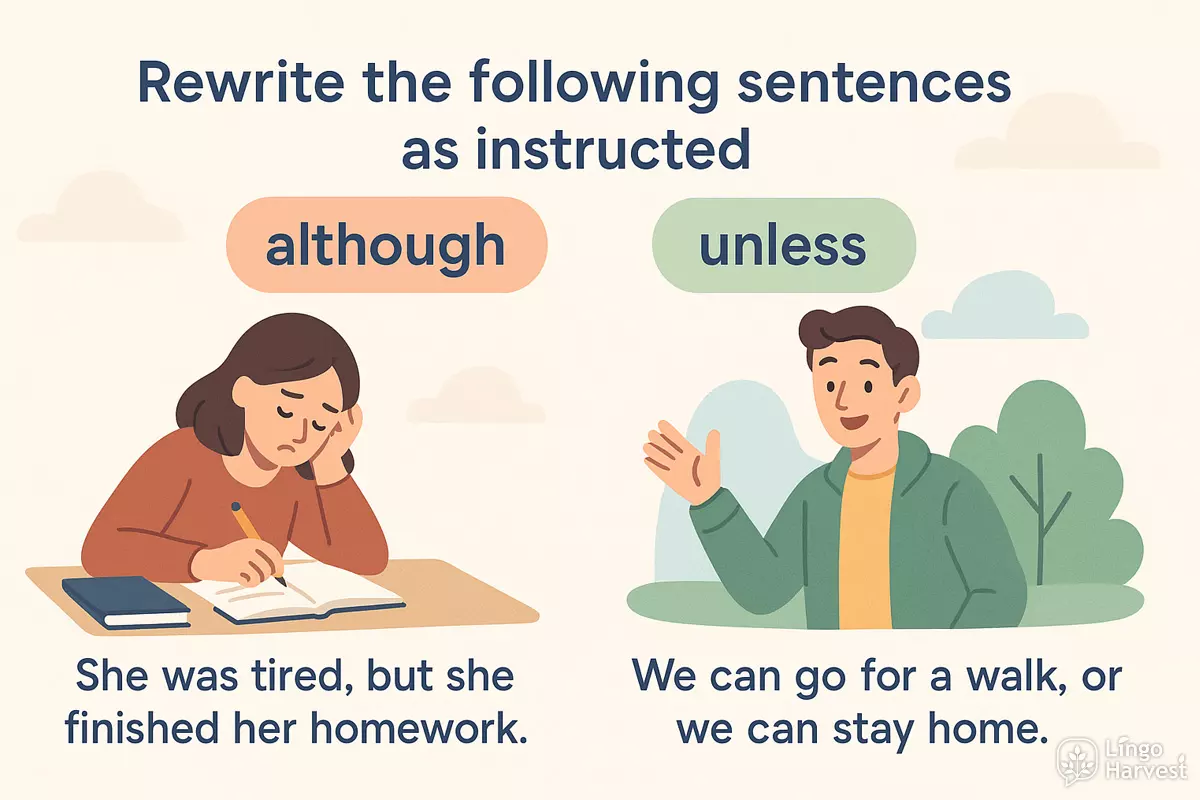
- She was tired, but she finished her homework. (although)
- We can go for a walk, or we can stay home. (unless)
- He didn’t go to the party because he was ill. (so)
- You can have tea, and you can have coffee. (either...or...)
- They left early so that they could catch the first train. (in order to)
- She called me after she arrived. (when)
- We stayed at home since it was raining. (because)
- If you study, you will pass. (unless)
- He sings while he cooks. (as)
- She likes chocolate whereas he prefers vanilla. (but)
- Although it was cold, we went swimming. (despite)
- He is not only smart but also hardworking. (as well as)
- We will go to the museum provided that it doesn’t rain. (if)
- Before you leave, lock the door. (when)
- She failed the test because she didn’t study. (since)
- He finished his work so he could leave early. (in order that)
- It was late, but they kept talking. (even though)
- Although he was tired, he kept running. (but)
- She will join us if she finishes her project. (unless)
- We waited until the rain stopped. (when)
Show answers
- Although she was tired, she finished her homework.
- We can go for a walk unless we want to stay home.
- He was ill, so he didn’t go to the party.
- You can have either tea or coffee.
- They left early in order to catch the first train.
- She called me when she arrived.
- We stayed at home because it was raining.
- Unless you study, you will not pass.
- He sings as he cooks.
- She likes chocolate, but he prefers vanilla.
- Despite the cold, we went swimming.
- He is smart as well as hardworking.
- We will go to the museum if it doesn’t rain.
- Lock the door when you leave.
- She failed the test since she didn’t study.
- He finished his work in order that he could leave early.
- Even though it was late, they kept talking.
- He was tired, but he kept running.
- She will not join us unless she finishes her project.
- We waited when the rain stopped.
Tips for transforming sentences with conjunctions
- Check if the new conjunction needs a change in sentence order (e.g., “although” vs. “but”).
- Some conjunctions require negative forms (“unless” often reverses the condition).
- Be careful with meaning—do not just swap words; make sure the logic is correct.
- Practice with a range of conjunctions: coordinating (and, but, or), subordinating (because, although, while, if, unless), and correlative (either…or, neither…nor).
- Notice how verb forms and punctuation may change.
Regular practice with these transformations will make your use of conjunctions more natural and your writing more varied. Try writing your own sentences and swap conjunctions to further improve your skills.
Challenge tasks: transform two simple sentences into one complex sentence
Combining simple statements using conjunctions is a key skill for expressing relationships between ideas more clearly and naturally. By merging short clauses, you can highlight cause, contrast, time, or condition, making your writing smoother and more sophisticated. Below, you'll find practice activities and useful examples to help you get comfortable with this transformation.
Common conjunctions for sentence combination
- because – shows reason (I stayed home because it was raining.)
- although – introduces contrast (Although he was tired, he finished the project.)
- when – indicates time (Call me when you arrive.)
- so that – shows purpose (She left early so that she could catch the bus.)
- if – introduces condition (If you study, you will pass.)
- while – contrast/simultaneous actions (He read while she cooked.)
- since – reason or time (Since you’re here, let’s start.)
- unless – negative condition (You won’t pass unless you try.)
- before – time sequence (Wash your hands before you eat.)
- after – time sequence (We left after the rain stopped.)
Practice: combine the pairs into one complex sentence
- She was late. She missed the bus.
- It was raining. We went for a walk.
- He didn’t bring an umbrella. He got wet.
- We will go swimming. The weather is warm.
- I finished my homework. I watched a movie.
- He studied hard. He passed the exam.
- She was tired. She kept working.
- You call me. I will help you.
- The bell rang. The students left the classroom.
- She practiced every day. She improved quickly.
Show answers
- She was late because she missed the bus.
- Although it was raining, we went for a walk.
- He got wet because he didn’t bring an umbrella.
- We will go swimming if the weather is warm.
- After I finished my homework, I watched a movie.
- He passed the exam because he studied hard.
- Although she was tired, she kept working.
- If you call me, I will help you.
- When the bell rang, the students left the classroom.
- She improved quickly because she practiced every day.
Tips for transforming sentences
- Identify the relationship between the two ideas: reason, contrast, time, condition, or purpose.
- Choose the most appropriate conjunction for that relationship.
- Pay attention to word order: sometimes, the conjunction comes at the beginning (Although...), or in the middle (...because...).
- Make sure the resulting sentence is clear and grammatically correct.
Patterns and structures to practice
- [Main clause] because [reason clause]
- Although [contrast clause], [main clause]
- [Main clause] if [condition clause]
- [Main clause] after/before [time clause]
- [Main clause] so that [purpose clause]
- When [time clause], [main clause]
- Unless [negative condition], [main clause]
- [Main clause] while [simultaneous action]
Practicing these transformations will help you write and speak with more variety and accuracy. Try combining your own sentences using the patterns above for extra practice.
Answer key with step-by-step transformations
When practicing sentence transformation using conjunctions, it's important to follow logical steps. Below, you'll find clear examples demonstrating how to connect, combine, or rephrase sentences by inserting appropriate conjunctions. Each transformation is broken down to show the reasoning and grammatical adjustments involved.
Step-by-Step Example Transformations
- Original: She was tired. She finished her homework.
Step 1: Identify the relationship (contrast).
Step 2: Choose a conjunction: although.
Transformed: Although she was tired, she finished her homework. - Original: He didn’t study. He passed the test.
Step 1: Notice the surprising result.
Step 2: Use even though.
Transformed: Even though he didn’t study, he passed the test. - Original: I will call you. I arrive.
Step 1: Indicate time.
Step 2: Use when.
Transformed: I will call you when I arrive. - Original: She likes swimming. She likes running.
Step 1: Show addition.
Step 2: Use and.
Transformed: She likes swimming and running.
Common Conjunctions and Their Use in Transformations
| Conjunction | Function & Example |
|---|---|
| because | Expresses reason: She went home because she was tired. |
| so | Shows result: He was late, so he missed the bus. |
| although | Expresses contrast: Although it was raining, they played outside. |
| while | Shows simultaneous actions: She listened to music while studying. |
| if | Introduces condition: If you hurry, you’ll catch the train. |
| unless | Negative condition: You can’t go out unless you finish your work. |
| as soon as | Immediate sequence: Call me as soon as you arrive. |
| before | Sequence in time: Finish your meal before you leave. |
| after | Sequence in time: We’ll go out after it stops raining. |
| even though | Unexpected result: Even though he was tired, he went to the gym. |
Transformation Tips
- Think about the logical relationship between the two ideas: cause, contrast, time, or addition.
- Choose a suitable conjunction that matches the intended meaning.
- Adjust word order and verb forms if necessary to ensure the sentence is grammatical.
- Read the new sentence aloud to check for clarity and natural flow.
By following these structured steps and reviewing the examples above, you can build confidence in transforming sentences with conjunctions and improve your writing fluency.