Search the site
Search
Grammar ▾
▸ Articles
▸ Advanced Grammar
▸ Adjectives & Adverbs
▸ Conjunctions
▸ Conditionals
▸ Determiners
▸ Gerunds & Infinitives
▸ Grammar Practice
▸ Modal Verbs
▸ Nouns
▸ Parts of Speech
▸ Prepositions
▸ Pronouns
▸ Quantifiers
▸ Question Formation
▸ Reported Speech
▸ Verbs
Writing ▾
▸ Punctuation
▸ Sentence Structure
▸ Writing Mistakes
Vocabulary ▾
▸ Visual Vocabulary
▸ Food Vocabulary
▸ People Vocabulary
▸ Places Vocabulary
▸ Hobbies Vocabulary
▸ Home Vocabulary
▸ School Vocabulary
▸ Weather Vocabulary
▸ Basic Vocabulary
▸ General Vocabulary
Speaking ▾
▸ Conversational English
Calculators
Contacts
Home
»
English
»
Grammar
Grammar
This section focuses on English grammar explained in a simple and practical way. You will find clear rules, step-by-step examples, and common mistakes to avoid, helping you build a strong foundation for speaking and writing confidently.
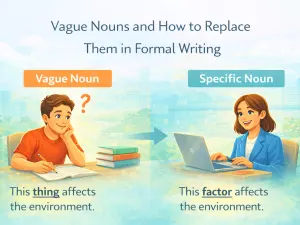
Vague Nouns and How to Replace Them in Formal Writing
The article defines vague nouns, shows how they reduce clarity and precision, and lists common examples from student and professional writing. It also covers their effect on tone, learner mistakes, and strategies for using more specific nouns.
Post-modifiers After Nouns: Clauses and Extended Phrases
The article explains post-modifiers, their purposes, and how to use prepositional phrases, relative clauses, and non-finite clauses after nouns. It covers choosing effective modifiers, common learner mistakes, and provides practice activities.
Reduced Noun Phrases in Headlines and Media Writing
Here we why headlines use reduced noun phrases, how articles and verbs are left out, the role of time and event nouns, possible ambiguities, differences from full sentences, typical learner errors, and includes practice converting sentences.
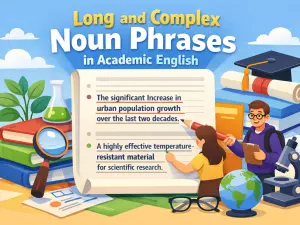
Long and Complex Noun Phrases in Academic English
Here we what makes noun phrases long and complex, how multiple modifiers are layered, reading strategies for dense noun phrases, punctuation for clarity, patterns in academic texts, common learner errors, and practice simplifying them.
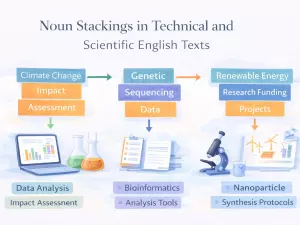
Noun Stackings in Technical and Scientific English Texts
Here we what noun stacking is in technical writing, how stacked nouns create compact meanings, common patterns in science and technology, strategies to unpack long stacks, risks of ambiguity, differences from general English, and practice in paraphrasing.
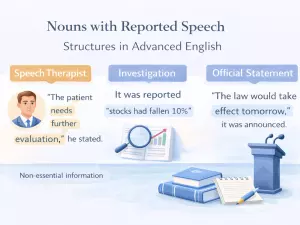
Nouns with Reported Speech Structures in Advanced English
Here we how reporting nouns such as statement, claim, and report function in reported speech, including their use with that-clauses, tense and reference changes, formal and informal styles, common learner errors, and practical transformation exercises.
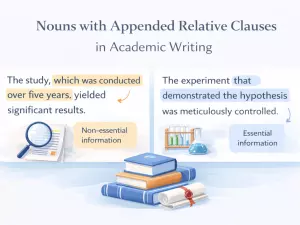
Nouns with Appended Relative Clauses in Academic Writing
Here we how relative clauses after nouns improve clarity in academic writing. It explains restrictive and non-restrictive clauses, relative pronoun choice, punctuation, common learner mistakes, and provides practice with adding correct clauses.
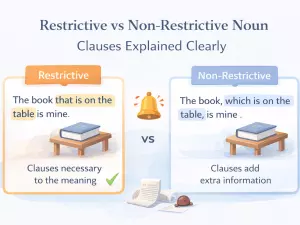
Restrictive vs Non-Restrictive Noun Clauses Explained Clearly
Here we the difference between restrictive and non-restrictive meanings in noun clauses, their role in sentence structure, how punctuation and information focus affect meaning, common introducers, typical learner errors, and practice identifying clause…
Nouns in Legal and Policy Language with Formal Structures
Here we why legal and policy writing relies on abstract nouns, details common legal noun types, shows how precise meaning is achieved, explains set legal phrases, compares legal to everyday language, and provides practice simplifying legal nouns.
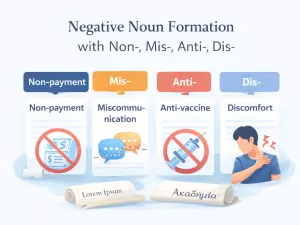
Negative Noun Formation with Non-, Mis-, Anti-, Dis-
This article explains how English forms negative nouns using prefixes like non-, mis-, anti-, and dis-. It covers their specific meanings, which nouns take them, spelling and pronunciation changes, common mistakes, and includes practice exercises.
Previous
1
...
46
47
48
49
50
51
52
53
54
...
124
Next