Search the site
Search
Grammar ▾
▸ Articles
▸ Advanced Grammar
▸ Adjectives & Adverbs
▸ Conjunctions
▸ Conditionals
▸ Determiners
▸ Gerunds & Infinitives
▸ Grammar Practice
▸ Modal Verbs
▸ Nouns
▸ Parts of Speech
▸ Prepositions
▸ Pronouns
▸ Quantifiers
▸ Question Formation
▸ Reported Speech
▸ Verbs
Writing ▾
▸ Punctuation
▸ Sentence Structure
▸ Writing Mistakes
Vocabulary ▾
▸ Visual Vocabulary
▸ Food Vocabulary
▸ People Vocabulary
▸ Places Vocabulary
▸ Hobbies Vocabulary
▸ Home Vocabulary
▸ School Vocabulary
▸ Weather Vocabulary
▸ Basic Vocabulary
▸ General Vocabulary
Speaking ▾
▸ Conversational English
Calculators
Contacts
Home
»
English
»
Grammar
Grammar
This section focuses on English grammar explained in a simple and practical way. You will find clear rules, step-by-step examples, and common mistakes to avoid, helping you build a strong foundation for speaking and writing confidently.
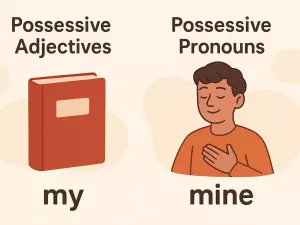
Possessive Adjectives vs Possessive Pronouns: My vs Mine
Here we possessive adjectives like my and your, and possessive pronouns such as mine and yours. It discusses where they appear in sentences, noting that "its" cannot stand alone.
Subject vs Object Pronouns: Easy Rules and Examples
This article explains subject pronouns like I, you, he, she, it, we, and they, and object pronouns like me, you, him, her, it, us, and them.
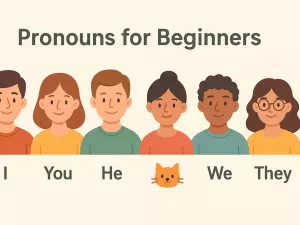
Pronouns for Beginners: I, You, He, She, It, We, They
This article is a beginner's guide to personal English pronouns, covering their roles, the use of subject pronouns, and the "be" verbs. It explains third-person basics for "he/she/it" and how to use "it" for things, time, and weather.
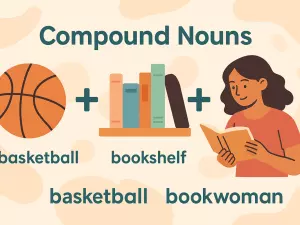
Compound Nouns: How to Read and Use Them
Here we compound nouns, detailing their types and spelling rules, including hyphenation. It discusses pronunciation and stress patterns, provides common examples, and offers practice in identifying and building compound nouns.
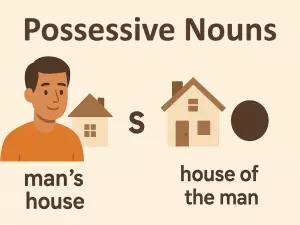
Possessive Nouns Made Easy: 's and of
Here we possessive nouns, focusing on using 's and of to show ownership and relationships. It covers common situations like people, things, and places, highlights frequent mistakes to avoid, and offers practice exercises for better understanding.
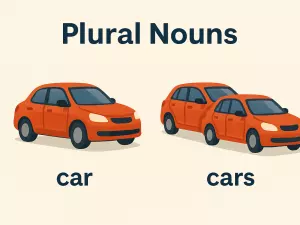
Plural Nouns: Basic Rules and Common Irregulars
Explore plural nouns by learning the basic rules of adding -s or -es, handling words ending in y, f/fe, and tackling irregular forms like man to men. Understand singular/plural forms like fish and foreign-origin plurals like cactus to cacti.
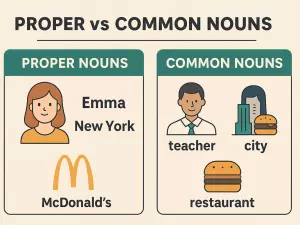
Proper vs Common Nouns: What's the Difference?
This beginner-friendly guide explains the difference between proper and common nouns. With clear examples and simple rules, you’ll learn how to use them correctly in everyday English.
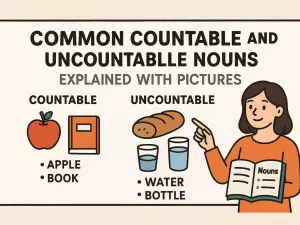
Common Countable and Uncountable Nouns Explained with Pictures
This beginner-friendly guide explains the difference between countable and uncountable nouns in simple words. With pictures and clear examples, you will learn how to use them correctly in everyday English.
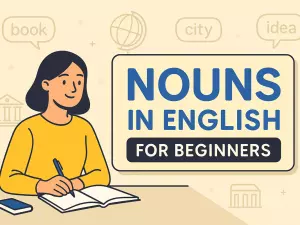
Nouns in English for Beginners: Simple Definitions and Easy Examples
This beginner-friendly guide explains what nouns are and how to use them in everyday English. With clear definitions and simple examples, you’ll start forming sentences more confidently.
Previous
1
...
115
116
117
118
119
120
121
122
123
124
Next