Search the site
Search
Grammar ▾
▸ Articles
▸ Advanced Grammar
▸ Adjectives & Adverbs
▸ Conjunctions
▸ Conditionals
▸ Determiners
▸ Gerunds & Infinitives
▸ Grammar Practice
▸ Modal Verbs
▸ Nouns
▸ Parts of Speech
▸ Prepositions
▸ Pronouns
▸ Quantifiers
▸ Question Formation
▸ Reported Speech
▸ Verbs
Writing ▾
▸ Punctuation
▸ Sentence Structure
▸ Writing Mistakes
Vocabulary ▾
▸ Visual Vocabulary
▸ Food Vocabulary
▸ People Vocabulary
▸ Places Vocabulary
▸ Hobbies Vocabulary
▸ Home Vocabulary
▸ School Vocabulary
▸ Weather Vocabulary
▸ Basic Vocabulary
▸ General Vocabulary
Speaking ▾
▸ Conversational English
Calculators
Contacts
Home
»
English
»
Grammar
Grammar
This section focuses on English grammar explained in a simple and practical way. You will find clear rules, step-by-step examples, and common mistakes to avoid, helping you build a strong foundation for speaking and writing confidently.
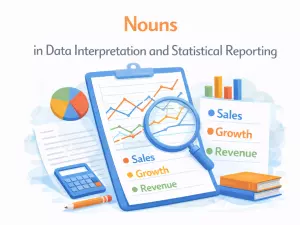
Nouns in Data Interpretation and Statistical Reporting
This article explains key noun types for data interpretation, covering vocabulary for trends, comparisons, and cause-and-effect. It also addresses formality, common learner errors, and offers practice in accurately describing visual data.
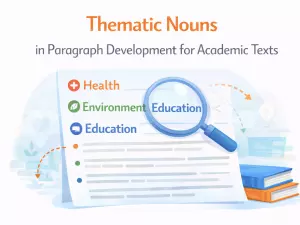
Thematic Nouns in Paragraph Development for Academic Texts
Here we the role of thematic nouns in academic writing, showing how they link sentences, maintain topic focus, and improve paragraph cohesion. It also addresses common learner errors and provides practice to enhance paragraph flow.
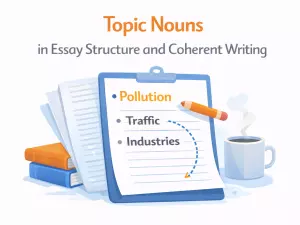
Topic Nouns in Essay Structure and Coherent Writing
Here we how topic nouns organize essay structure, clarify thesis and topic sentences, link sections with repeated references, and maintain focus. It also discusses common mistakes and offers practice in rebuilding essay logic using topic nouns.
Double Possessives in English Like A Friend of My Father’s
The article explains double possessives in English grammar, such as a friend of my father’s, and compares them to regular of-phrases. It also covers their meaning, usage, register, common learner mistakes, and offers practice on rewriting phrases.
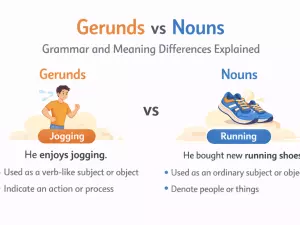
Gerunds vs Nouns: Grammar and Meaning Differences Explained
Here we how gerunds differ from true nouns, compares their sentence roles, and explains how objects, modifiers, and articles are used with each. It also highlights meaning shifts, common mistakes, and includes practice choosing the right form.
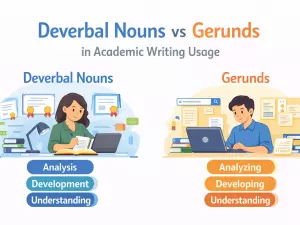
Deverbal Nouns vs Gerunds in Academic Writing Usage
This article defines deverbal nouns in academic English, contrasts them with gerunds, and explains their role in creating dense, nominal style. It also covers article and modifier use, common learner errors, and offers practice rewriting sentences with deverbal nouns.
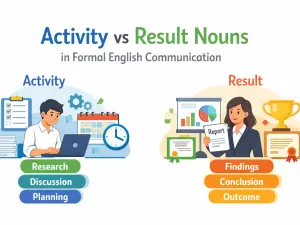
Activity vs Result Nouns in Formal English Communication
Here we the difference between activity and result nouns, how verb–noun pairs show process versus outcome, context clues for choosing the right noun, the effect on meaning in reports, formal style preferences, common learner confusion, and practice exercises.
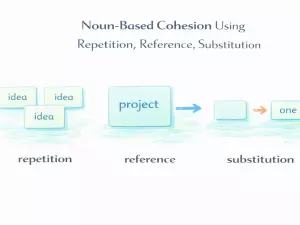
Noun-Based Cohesion Using Repetition, Reference, Substitution
This article explains noun-based cohesion in writing. It covers repeating key nouns, using reference and shell nouns, balancing repetition and variation, common learner problems, and offers practice to improve paragraph cohesion using noun reference.
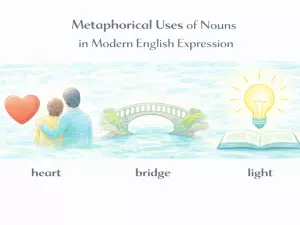
Metaphorical Uses of Nouns in Modern English Expression
Here we metaphorical nouns in communication, highlighting common patterns, how they create abstract meaning, differences from literal usage, stylistic effects, frequent learner misunderstandings, and provides practice in identifying them.
Evaluative Nouns in Opinion and Review Writing Style
The article details how evaluative nouns function in opinion writing, distinguishes between positive and negative types, compares them to adjective-based evaluations, explains their impact on tone, points out common errors, and offers practice rewriting reviews.
Previous
1
...
48
49
50
51
52
53
54
55
56
...
124
Next