Search the site
Search
Grammar ▾
▸ Articles
▸ Advanced Grammar
▸ Adjectives & Adverbs
▸ Conjunctions
▸ Conditionals
▸ Determiners
▸ Gerunds & Infinitives
▸ Grammar Practice
▸ Modal Verbs
▸ Nouns
▸ Parts of Speech
▸ Prepositions
▸ Pronouns
▸ Quantifiers
▸ Question Formation
▸ Reported Speech
▸ Verbs
Writing ▾
▸ Punctuation
▸ Sentence Structure
▸ Writing Mistakes
Vocabulary ▾
▸ Visual Vocabulary
▸ Food Vocabulary
▸ People Vocabulary
▸ Places Vocabulary
▸ Hobbies Vocabulary
▸ Home Vocabulary
▸ School Vocabulary
▸ Weather Vocabulary
▸ Basic Vocabulary
▸ General Vocabulary
Speaking ▾
▸ Conversational English
Calculators
Contacts
Home
»
English
»
Grammar
Grammar
This section focuses on English grammar explained in a simple and practical way. You will find clear rules, step-by-step examples, and common mistakes to avoid, helping you build a strong foundation for speaking and writing confidently.
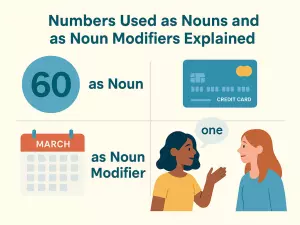
Numbers Used as Nouns and as Noun Modifiers Explained
This article explains how numbers function as nouns and modifiers, covers their use as subjects or objects, and discusses plural forms. It also addresses numbers in dates, ages, and measurements, with practice to avoid common mistakes.
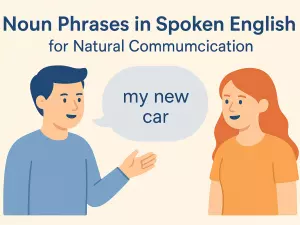
Noun Phrases in Spoken English for Natural Communication
Here we how noun phrases in spoken English differ from written forms. It covers shortened and vague noun phrases, intonation with long phrases, errors learners make, and offers practice through role-play for natural conversation.
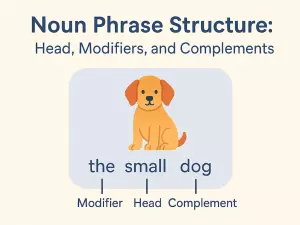
Noun Phrase Structure: Head, Modifiers, and Complements
Here we what noun phrases are in English grammar, explains the role of the head noun, discusses modifiers and complements, compares simple and expanded structures, highlights common learner mistakes, and provides practice with building noun phrases.
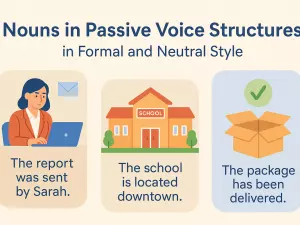
Nouns in Passive Voice Structures in Formal and Neutral Style
Here we how passive voice shifts focus between nouns by changing subjects and objects, explains agent nouns in by-phrases, details its formal uses, points out common mistakes, and provides practice rewriting active sentences into passive forms.
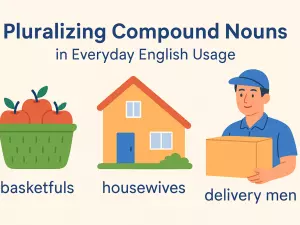
Pluralizing Compound Nouns in Everyday English Usage
This article explains what compound nouns are, how to pluralize them based on their type—open, closed, or hyphenated—and which word takes the plural ending. It covers common and irregular forms, typical mistakes, and practice exercises.
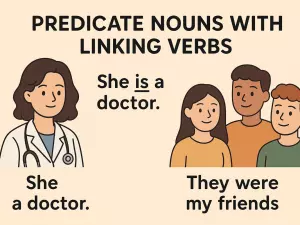
Predicate Nouns with Linking Verbs Explained with Examples
Here we what predicate nouns are in English grammar, how they work with linking verbs, which linking verbs are common, how they differ from direct objects, rules for agreement, typical learner mistakes, and practice with sentences.
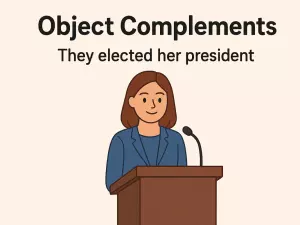
Object Complements with Nouns in Modern English Sentences
Here we what object complements are in English sentences, how they differ from objects, common verbs that take noun object complements, how they affect meaning, their use in passive forms, typical learner confusion, and practice with examples.
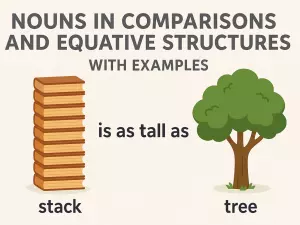
Nouns in Comparisons and Equative Structures with Examples
Here we how to form comparative and equative sentences with nouns, including patterns like as plus noun as and using more or less with nouns. It also explains count versus mass noun comparisons, common errors, and provides practice exercises.
Shared and Group Possessives Like John and Mary’s Car
Here we the difference between shared and individual possession, how to form each type with apostrophes, how meaning changes, possessives with group or compound subjects, frequent learner mistakes, and includes practice rewriting sentences.
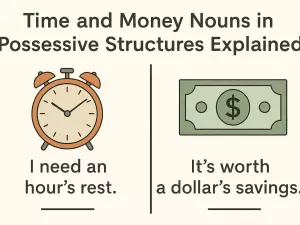
Time and Money Nouns in Possessive Structures Explained
Here we why English uses possessive forms with time and money, common examples like a day's work and ten dollars' worth, and the difference between possessive and of-phrases. It also highlights typical learner mistakes and includes practice exercises.
Previous
1
...
54
55
56
57
58
59
60
61
62
...
124
Next