Search the site
Search
Grammar ▾
▸ Articles
▸ Advanced Grammar
▸ Adjectives & Adverbs
▸ Conjunctions
▸ Conditionals
▸ Determiners
▸ Gerunds & Infinitives
▸ Grammar Practice
▸ Modal Verbs
▸ Nouns
▸ Parts of Speech
▸ Prepositions
▸ Pronouns
▸ Quantifiers
▸ Question Formation
▸ Reported Speech
▸ Verbs
Writing ▾
▸ Punctuation
▸ Sentence Structure
▸ Writing Mistakes
Vocabulary ▾
▸ Visual Vocabulary
▸ Food Vocabulary
▸ People Vocabulary
▸ Places Vocabulary
▸ Hobbies Vocabulary
▸ Home Vocabulary
▸ School Vocabulary
▸ Weather Vocabulary
▸ Basic Vocabulary
▸ General Vocabulary
Speaking ▾
▸ Conversational English
Calculators
Contacts
Home
»
English
»
Grammar
Grammar
This section focuses on English grammar explained in a simple and practical way. You will find clear rules, step-by-step examples, and common mistakes to avoid, helping you build a strong foundation for speaking and writing confidently.
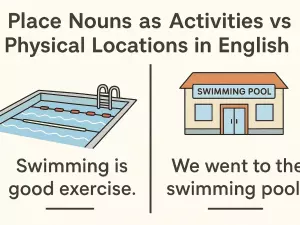
Place Nouns as Activities vs Physical Locations in English
Here we how English place nouns such as school or office indicate either activities or locations, explains article use and meaning shifts, addresses common learner confusion, and provides practice distinguishing activity and location meanings in sentences.
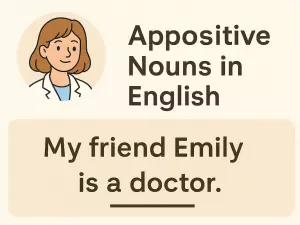
Appositive Nouns in English for Clear and Precise Meaning
Here we what appositive nouns are, their purpose, and how to distinguish restrictive from non-restrictive appositives. It explains punctuation rules, common comma mistakes, differences in writing and speech, and offers practice with rewriting sentences.
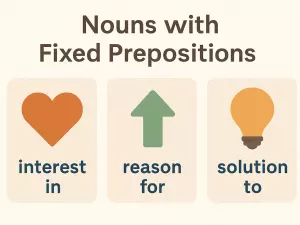
Nouns with Fixed Prepositions in Common English Patterns
Here we fixed noun–preposition combinations, such as reason for and access to, explains their stable meanings, contrasts them with verb-preposition patterns, highlights common learner errors, and gives strategies and practice for mastering them.
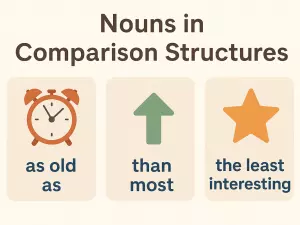
Nouns in Comparison Structures Used in Everyday English
The article explains how nouns function in comparative statements, including using more, less, and equal forms, and comparing count and mass nouns. It also covers equative structures, common errors, and differences between noun and adjective comparisons.
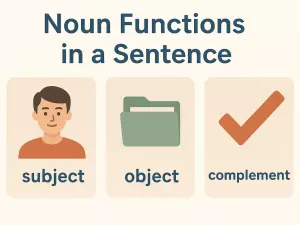
Noun Functions in a Sentence: Subject, Object, and Complement
Here we the main grammatical functions of nouns, showing how they act as subjects in simple and complex clauses, serve as direct or indirect objects, and function as complements. It also discusses noun positions, common learner errors, and provides practice.
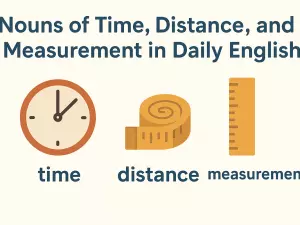
Nouns of Time, Distance, and Measurement in Daily English
Here we key nouns for time and distance, like hour, day, meter, and mile, as well as measurement nouns for weight, volume, and size. It explains how to use these with numbers and prepositions, plus offers practice for real-life descriptions.
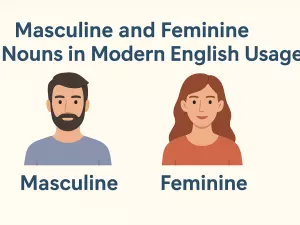
Masculine and Feminine Nouns in Modern English Usage
Here we how English nouns are moving from traditional masculine and feminine forms to gender-neutral options. It discusses neutral job titles, inclusive language choices, common mistakes, and gives practice updating sentences.
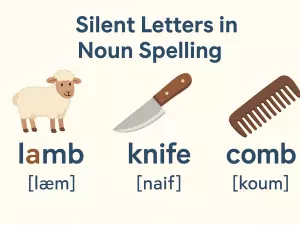
Silent Letters in Noun Spelling: Common Patterns and Rules
Here we silent letters in English noun spelling, focusing on patterns such as silent k, b, and g. It includes examples, pronunciation guidance, comparisons with similar nouns, common spelling mistakes, and practice exercises for correct usage.
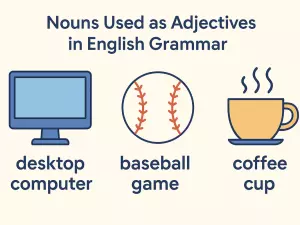
Nouns Used as Adjectives in English Grammar with Examples
This article explains noun modifiers in English grammar, including basic patterns like car door and coffee cup, how meanings change, spelling and hyphenation rules, formal versus informal usage, common mistakes, and practice creating clear noun modifiers.
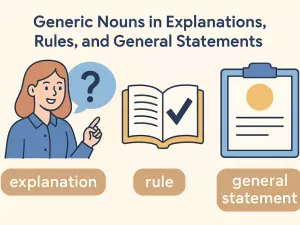
Generic Nouns in Explanations, Rules, and General Statements
Here we what generic nouns are in English grammar, how to use their singular, plural, and zero article forms, their role in rules and definitions, differences from specific examples, common mistakes, and practice turning specifics into generics.
Previous
1
...
55
56
57
58
59
60
61
62
63
...
124
Next