Search the site
Search
Grammar ▾
▸ Articles
▸ Advanced Grammar
▸ Adjectives & Adverbs
▸ Conjunctions
▸ Conditionals
▸ Determiners
▸ Gerunds & Infinitives
▸ Grammar Practice
▸ Modal Verbs
▸ Nouns
▸ Parts of Speech
▸ Prepositions
▸ Pronouns
▸ Quantifiers
▸ Question Formation
▸ Reported Speech
▸ Verbs
Writing ▾
▸ Punctuation
▸ Sentence Structure
▸ Writing Mistakes
Vocabulary ▾
▸ Visual Vocabulary
▸ Food Vocabulary
▸ People Vocabulary
▸ Places Vocabulary
▸ Hobbies Vocabulary
▸ Home Vocabulary
▸ School Vocabulary
▸ Weather Vocabulary
▸ Basic Vocabulary
▸ General Vocabulary
Speaking ▾
▸ Conversational English
Calculators
Contacts
Home
»
English
»
Grammar
Grammar
This section focuses on English grammar explained in a simple and practical way. You will find clear rules, step-by-step examples, and common mistakes to avoid, helping you build a strong foundation for speaking and writing confidently.
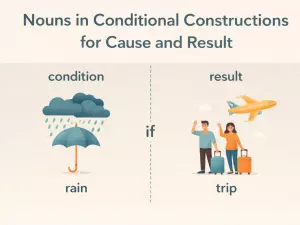
Nouns in Conditional Constructions for Cause and Result
This article explains how nouns function in conditional sentences, covering their use in expressing causes, results, and hypothetical ideas. It discusses first, second, and third conditionals, common errors, and offers practice with noun phrases.
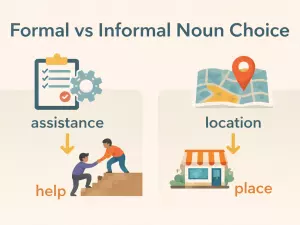
Formal vs Informal Noun Choice in Spoken and Written English
Here we how formal and informal noun registers differ, compares everyday versus academic nouns, explains register shifts in speech and writing, explores slang and abstract nouns, points out common learner errors, and provides rewriting practice.
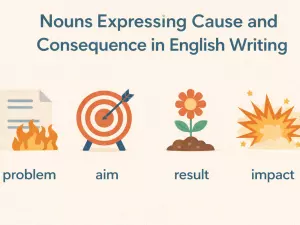
Nouns Expressing Cause and Consequence in English Writing
This article explains key cause and consequence nouns in English, such as reason, factor, result, and outcome. It covers their use in writing, differences between academic and everyday contexts, common learner mistakes, and practical exercises.
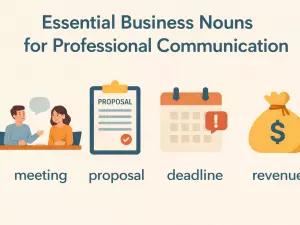
Essential Business Nouns for Professional Communication
Here we core business-related nouns for meetings, management, projects, finance, and strategy. It also offers guidance on using these nouns in emails and presentations, highlights common learner mistakes, and provides practice with professional messages.
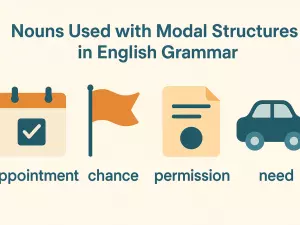
Nouns Used with Modal Structures in English Grammar
Here we how nouns convey modal meaning in English, including common patterns and the use of nouns to show necessity, permission, and possibility. It also discusses frequent learner errors and provides practice with modal-related nouns.
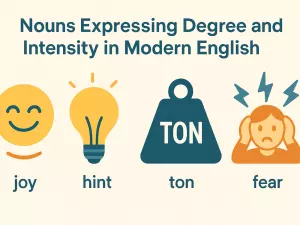
Nouns Expressing Degree and Intensity in Modern English
Here we how English nouns show strength and nuance, discusses common degree and intensity nouns, and explains how to use them with adjectives and verbs. It also compares formal and informal choices and points out common learner mistakes.
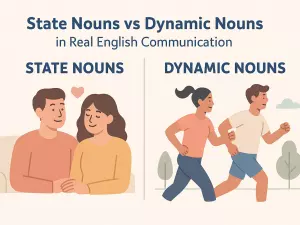
State Nouns vs Dynamic Nouns in Real English Communication
Here we what state and dynamic nouns refer to, how they differ in describing conditions or change, differences in verb choice, examples from everyday English, common learner mistakes, and offers practice classifying nouns by meaning.
Nouns in Polite Requests and Offers in Real Conversations
The article explains how nouns such as favor, help, and opportunity influence the tone of requests and offers. It covers formal versus casual usage, frequent learner mistakes, and gives practice in making requests more polite.
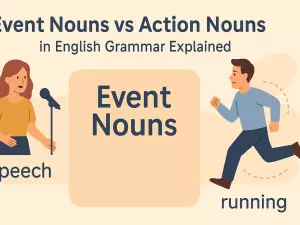
Event Nouns vs Action Nouns in English Grammar Explained
The article explains how event nouns emphasize outcomes or occasions while action nouns highlight processes or activities. It provides verb–noun pairs, context clues for usage, common learner mistakes, and practice in choosing the correct noun type.
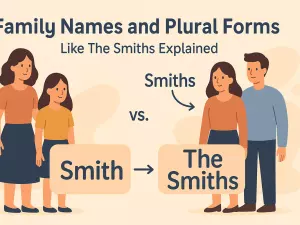
Family Names and Plural Forms Like The Smiths Explained
Here we how family names act as collective nouns, rules for pluralizing surnames ending in -s, -x, and -ch, when to use the with plural family names, differences between using a surname for one person or a family, and common mistakes, with practice examples.
Previous
1
...
52
53
54
55
56
57
58
59
60
...
124
Next