Search the site
Search
Grammar ▾
▸ Articles
▸ Advanced Grammar
▸ Adjectives & Adverbs
▸ Conjunctions
▸ Conditionals
▸ Determiners
▸ Gerunds & Infinitives
▸ Grammar Practice
▸ Modal Verbs
▸ Nouns
▸ Parts of Speech
▸ Prepositions
▸ Pronouns
▸ Quantifiers
▸ Question Formation
▸ Reported Speech
▸ Verbs
Writing ▾
▸ Punctuation
▸ Sentence Structure
▸ Writing Mistakes
Vocabulary ▾
▸ Visual Vocabulary
▸ Food Vocabulary
▸ People Vocabulary
▸ Places Vocabulary
▸ Hobbies Vocabulary
▸ Home Vocabulary
▸ School Vocabulary
▸ Weather Vocabulary
▸ Basic Vocabulary
▸ General Vocabulary
Speaking ▾
▸ Conversational English
Calculators
Contacts
Home
»
English
»
Grammar
Grammar
This section focuses on English grammar explained in a simple and practical way. You will find clear rules, step-by-step examples, and common mistakes to avoid, helping you build a strong foundation for speaking and writing confidently.
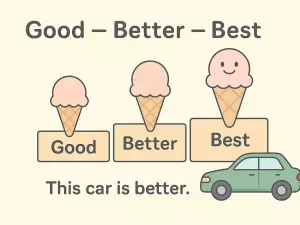
Irregular Adjectives in Comparison: Good, Better, Best
Here we what irregular comparison means, lists key irregular forms such as good/better/best and bad/worse/worst, explains the difference between farther and further, discusses common mistakes, and provides practice choosing correct forms.
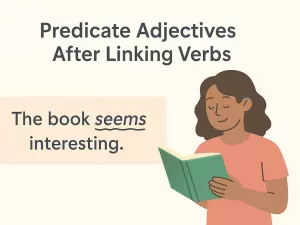
Predicate Adjectives After Linking Verbs
The article defines predicate adjectives, introduces common linking verbs such as be, seem, feel, look, and sound, explains the subject-verb-adjective pattern, highlights errors with good versus well, and provides practice using predicate adjectives in sentences.
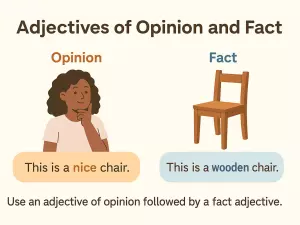
Adjectives of Opinion and Fact: Simple Guide
Learn the difference between opinion adjectives like nice and boring and fact adjectives like wooden or Italian. The article explains their typical order, how to use both together naturally, and offers practice with adjective order.
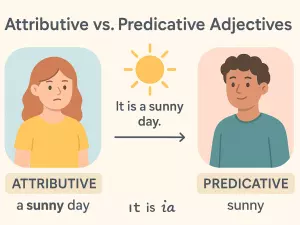
Attributive vs Predicative Adjectives: Clear Rules
The article defines attributive and predicative adjectives, lists verbs commonly paired with predicative adjectives, explains when adjective position can change or is restricted, and offers practice moving adjectives between attributive and predicative roles.
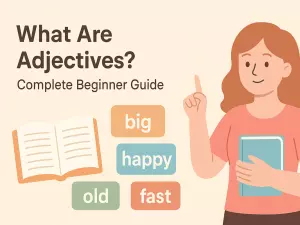
What Are Adjectives? Complete Beginner Guide
This article explains what adjectives are in English, what they describe, and where they appear in sentences. It includes clear examples with people, places, and things, highlights common mistakes, and offers a brief practice exercise.
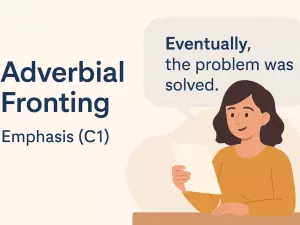
Adverbial Fronting for Emphasis (C1 structure)
Here we how fronting adverbials shifts emphasis and focus in sentences, which types of adverbials can be fronted, and the impact on tone in both formal and literary English. It also covers naturalness and provides practice for emphasis.
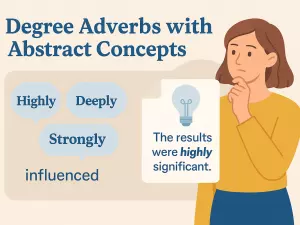
Degree Adverbs with Abstract Concepts (advanced use)
Here we how to use degree adverbs like highly, deeply, and strongly with abstract nouns. It compares their tone in academic versus conversational English, highlights common errors, and offers practice for natural, accurate usage.
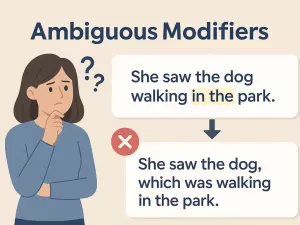
Ambiguous Modifiers: advanced repair techniques
Here we types of ambiguous modifiers, how to spot unclear attachment, and repair strategies such as repositioning, rephrasing, or splitting sentences. It also offers formal writing guidelines, real examples, and practice correcting modifiers.
Master Test: Adjectives & Adverbs in Academic and Professional English
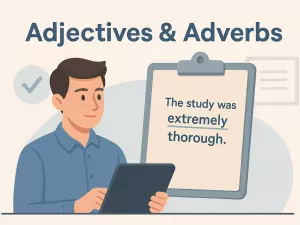
Here we advanced adjective and adverb exercises, challenging adverb placement, and C1–C2 level error correction. It also includes sentence rewriting for tone, mini-passage editing, and a comprehensive final test.
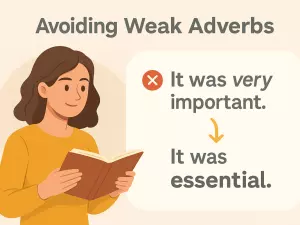
Avoiding Weak Adverbs in Writing (very, really - strong alternatives)
Weak adverbs like very and really weaken clarity in writing. This article explains their impact, suggests stronger adjective alternatives, shows improved sentence examples, discusses when intensifiers work, and offers practice replacing weak adverbs.
Previous
1
...
79
80
81
82
83
84
85
86
87
...
124
Next