Search the site
Search
Grammar ▾
▸ Articles
▸ Advanced Grammar
▸ Adjectives & Adverbs
▸ Conjunctions
▸ Conditionals
▸ Determiners
▸ Gerunds & Infinitives
▸ Grammar Practice
▸ Modal Verbs
▸ Nouns
▸ Parts of Speech
▸ Prepositions
▸ Pronouns
▸ Quantifiers
▸ Question Formation
▸ Reported Speech
▸ Verbs
Writing ▾
▸ Punctuation
▸ Sentence Structure
▸ Writing Mistakes
Vocabulary ▾
▸ Visual Vocabulary
▸ Food Vocabulary
▸ People Vocabulary
▸ Places Vocabulary
▸ Hobbies Vocabulary
▸ Home Vocabulary
▸ School Vocabulary
▸ Weather Vocabulary
▸ Basic Vocabulary
▸ General Vocabulary
Speaking ▾
▸ Conversational English
Calculators
Contacts
Home
»
English
»
Grammar
Grammar
This section focuses on English grammar explained in a simple and practical way. You will find clear rules, step-by-step examples, and common mistakes to avoid, helping you build a strong foundation for speaking and writing confidently.
Positive vs Negative Connotation (extended theory)
The article defines connotation in English, discusses how words can have positive, neutral, or negative meanings, explains how connotation shapes tone and attitude, gives adjective examples in context, and includes practice with rewriting for different effects.
Adjectives for Storytelling and Fiction Writing
Here we how adjectives influence imagery in fiction, outlines types of descriptive adjectives for narratives, and explains their effect on tone and mood.
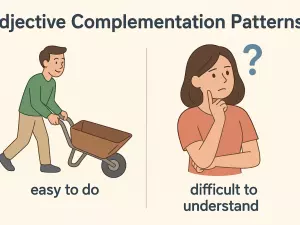
Adjective Complementation Patterns (easy to do / difficult to understand)
The article defines complementation, reviews common adjective plus to-infinitive patterns, and lists key adjective plus preposition combinations for B1-B2 learners. It also explains the difference between easy to do and easy doing, with examples and practice sentences.
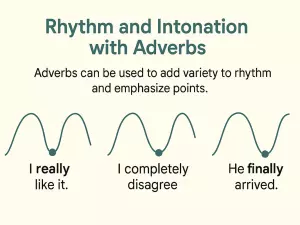
Rhythm and Intonation with Adverbs (full theory)
This article explains how adverbs affect English sentence rhythm, covering stress patterns, adverb types, speech tempo, and intonation shifts with fronting or emphasis. It includes natural examples and practical read-aloud exercises for practice.
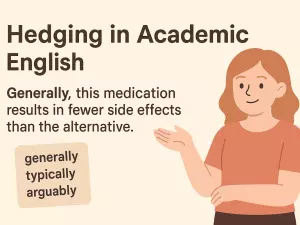
Hedging in Academic English: generally, typically, arguably
Here we the meaning of hedging in academic writing, reasons for softening statements, typical hedging adverbs and phrases, placement rules, examples from essays and research, and practice exercises for making statements more cautious.
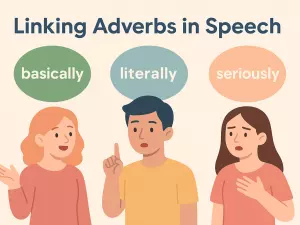
Linking Adverbs in Speech: basically, literally, seriously
Here we how linking adverbs differ from fillers, how to use them to organize speech, when words like basically or literally sound natural, tips for avoiding overuse, real-life examples, and a practice dialogue for choosing linking adverbs.
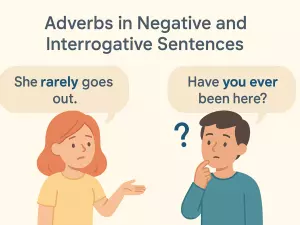
Adverbs in Negative and Interrogative Sentences
Here we how negative forms affect where adverbs go, including their placement before or after auxiliary verbs. It also discusses adverb movement in questions, common mistakes in negative questions, and provides real examples and practice exercises.
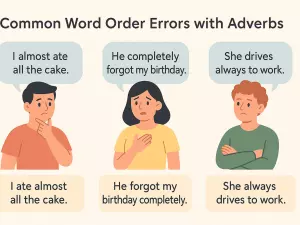
Common Word Order Errors with Adverbs (Intermediate+)
This article explains typical mistakes with frequency and manner adverbs, such as incorrect mid, front, or end placement. It shows how placement changes meaning, gives real student examples, and offers practice to correct these errors.
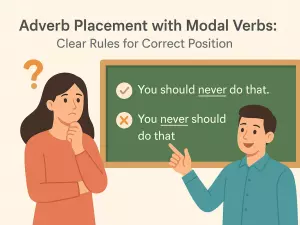
Adverb Placement with Modal Verbs: Clear Rules for Correct Position
This article explains how adverbs are used with modal verbs, including their typical mid-position, exceptions, and stylistic alternatives. It also covers position differences in negatives and questions, with examples and sentence-reordering practice.
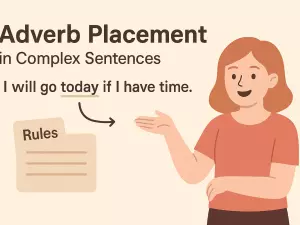
Adverb Placement in Complex Sentences
This article explains how adverb placement affects clause meaning, especially in multi-clause sentences. It discusses rules, restrictions with subordinate clauses, ways to avoid ambiguity, and provides examples and short word order exercises.
Previous
1
...
75
76
77
78
79
80
81
82
83
...
124
Next