Future Passive: Will Be Done and Going to Be Done

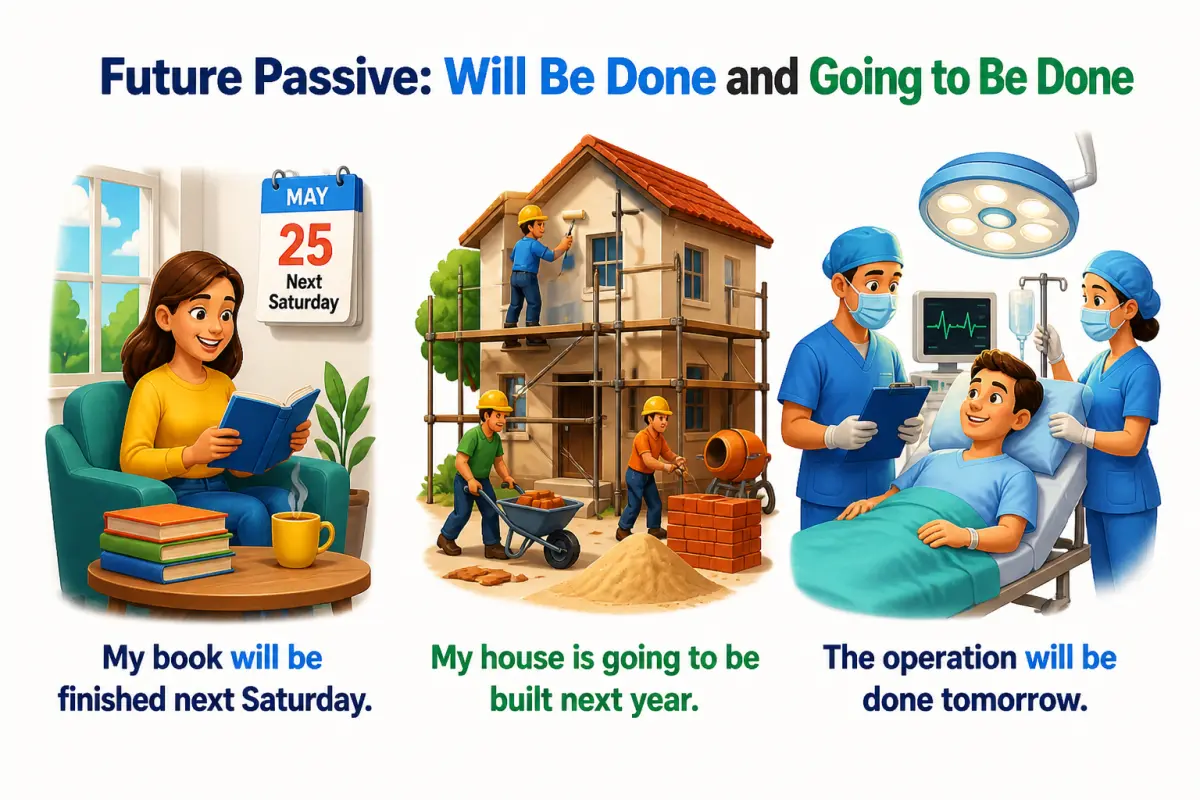 Here we the future passive voice: what it means, when to use will be done or going to be done, and how it works in announcements, project updates, deadlines, negatives, and questions. It also compares the two forms, highlights common mistakes with will, be, and past participles, and includes practice plus an FAQ.
- What the future passive means
- Will be done for predictions, promises, and schedules
- Going to be done for plans and expected results
- Future passive in announcements and project updates
- Future passive with deadlines and by-phrases
- Negatives and questions in future passive forms
- Will be done vs going to be done
- Errors with will, be, and past participles
- Future passive task: choose will or going to
- FAQ: future passive voice
When we talk about things expected to happen later, English often uses forms like will be done and going to be done, and they are more useful than many learners realize. You hear them in everyday situations such as travel plans, repairs, deliveries, and official announcements. This article looks at how each form sounds in real life, why people choose one over the other, and how to use them with confidence.
What the future passive means
The future passive is used when we want to talk about something that will happen to a person, thing, or situation in the future, rather than focusing on who will do it. In other words, the action is more important than the doer. That is why English often uses the passive in formal writing, instructions, news, business updates, and everyday situations where the result matters more than the agent.
The two main forms are will be + past participle and going to be + past participle. For example, “The report will be sent tomorrow” and “The report is going to be sent tomorrow” are both future passive sentences. In both, the focus is on the report, not on the person sending it.
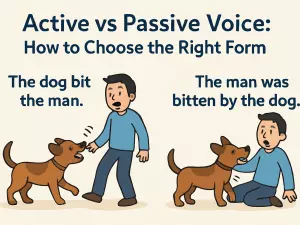
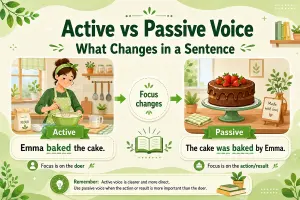
Compare these active and passive pairs:
- Active: The manager will announce the results at noon.
Passive: The results will be announced at noon. - Active: They are going to repair the bridge next month.
Passive: The bridge is going to be repaired next month. - Active: Someone will check your documents at the entrance.
Passive: Your documents will be checked at the entrance.
A quick way to build the form is:
| Meaning | Form | Example |
|---|---|---|
| Future decision, prediction, promise | will be + past participle | The fee will be refunded. |
| Future plan or expected result | am/is/are going to be + past participle | The old system is going to be replaced. |
| Negative | will not be / is not going to be + past participle | The order won’t be delivered today. |
| Question | Will + subject + be + past participle? | Will the room be cleaned soon? |
If you need a broader review of passive structures, it helps to understand the future form as one more tense pattern in the same system.
Teacher note: learners often understand the grammar faster when they first ask, “What is the focus of the sentence?” If the focus is the action receiver, the passive usually feels natural.
Will be done for predictions, promises, and schedules

We often choose will be done when we are making a prediction, giving a promise, or stating a future arrangement in a neutral, official, or detached way. It sounds especially natural when the speaker is not stressing a personal plan but rather a future fact, expectation, or decision.
This form is common in customer service, notices, school communication, official emails, and news-style writing. It can sound more formal than an active sentence, which is sometimes exactly what we want.
- Prediction: Traffic rules will be changed in the city center next year.
- Prediction: More electric buses will be introduced soon.
- Promise: Your application will be reviewed within five working days.
- Promise: A replacement item will be sent at no extra cost.
- Schedule or official plan: Final grades will be published on Friday.
- Schedule or official plan: The museum will be reopened after the renovation.
Notice that with schedules, English also uses present forms in many cases, but the passive with will is common when the message sounds official or administrative:
- The certificates will be handed out after the ceremony.
- The road will be closed from 8 p.m. to 6 a.m.
- All visitors will be asked to show identification.
Here are some useful contrasts:
- Active: We will email the invoice this afternoon.
Passive: The invoice will be emailed this afternoon. - Active: The school will announce the winners tomorrow.
Passive: The winners will be announced tomorrow. - Active: The company will deliver the furniture on Monday.
Passive: The furniture will be delivered on Monday.
When you are not sure whether to use active or passive, ask yourself: do I care more about who does it or what happens? If the result matters more, the passive is often the better choice.
Going to be done for plans and expected results
We use going to be done when there is already a plan, intention, or clear reason to expect something. The idea usually feels more prepared, more visible, or more connected to present evidence than will be done.
This form is very common when people talk about renovations, reorganizations, repairs, launches, and planned changes. It is also useful when the future result seems obvious from the current situation.
- The office is going to be repainted during the summer break.
- The old files are going to be archived next week.
- This road is going to be widened; the construction signs are already up.
- Several flights are going to be delayed because of the storm.
- The entire system is going to be tested before launch.
Now compare present evidence and future expectation:
- The walls are damaged. They are going to be repaired soon.
- The invitations are ready. They are going to be sent this evening.
- The budget has been approved. A new branch is going to be opened in October.
You can think of this form as a passive version of “We are going to do it.” The structure simply shifts the focus to the thing affected by the action:
- Active: They are going to upgrade the software.
Passive: The software is going to be upgraded. - Active: They are going to interview ten candidates.
Passive: Ten candidates are going to be interviewed. - Active: They are going to clean the carpets tomorrow.
Passive: The carpets are going to be cleaned tomorrow.
If you want a wider look at how English expresses future meaning in general, a review of future verb forms can help you see where this pattern fits.
Teacher note: many learners overuse will because it feels simpler. In real speech, native speakers often choose going to when a plan already exists or the evidence is right in front of them.
Future passive in announcements and project updates
One of the most practical uses of the future passive is in announcements, notices, project communication, and status updates. In these contexts, the writer often wants to sound clear and professional without repeating “we” in every sentence. The passive helps keep attention on tasks, stages, and results.
This is especially useful in workplaces, universities, construction updates, event planning, and technical communication. It can make a message more objective and more organized.
Examples from announcements:
- Participants will be informed by email by the end of the week.
- The meeting room will be reserved for all training sessions.
- New safety instructions are going to be posted in the lobby.
- The final speaker list is going to be confirmed tomorrow afternoon.
Examples from project updates:
- The first prototype will be tested next month.
- The old database is going to be migrated in two stages.
- Three additional classrooms will be added in phase two.
- A temporary entrance is going to be created during the renovation.
Notice how natural the passive sounds when the doer is obvious, unimportant, or not yet decided. In a project meeting, everyone already knows that the team, the company, or the contractor will do the work. Repeating the agent would sound heavy:
- Heavier: Our IT team is going to migrate the old database in two stages.
- Smoother for updates: The old database is going to be migrated in two stages.
The future passive is also useful when you want to sound diplomatic:
- The issue will be addressed after the audit.
- Your suggestions will be considered during the next review cycle.
- The policy is going to be revised to reflect the new rules.
In this kind of writing, passive forms are not just grammar exercises. They are part of how real English handles processes, procedures, and public communication.
Future passive with deadlines and by-phrases
The future passive is very common with time expressions such as by Friday, before noon, within 48 hours, and by the end of the month. These deadlines make the sentence practical and precise, which is why this pattern appears so often in work emails, school instructions, and service communication.
We also sometimes add a by-phrase to mention the agent, but only when that information is useful. If the doer is obvious or not important, we usually leave it out.
Examples with deadlines:
- All expense claims must be submitted by Friday, and they will be processed by Monday.
- The forms will be checked within two business days.
- The tickets are going to be issued before departure.
- The final version will be uploaded by 6 p.m.
Examples with by-phrases:
- The presentation will be delivered by the sales director.
- The damaged windows are going to be replaced by a local contractor.
- The essay will be assessed by an external examiner.
Use the by-phrase when the agent adds important information. Do not add it automatically. Compare:
- Natural: The package will be delivered tomorrow.
- Also possible, but only if relevant: The package will be delivered by our evening courier.
Another useful contrast is by for agent and by for deadline. English uses the same word, but the meaning is different:
- Deadline: The contract will be signed by Friday. = no later than Friday
- Agent: The contract will be signed by the director. = the director will sign it
Context usually makes the meaning clear. If both appear together, the sentence is still easy to understand:
- The contract will be signed by the director by Friday.
- The final photos are going to be selected by the marketing team before noon.
Teacher note: when students write formal emails, I often suggest adding a deadline after the passive form. “It will be sent” is grammatical, but “It will be sent by 3 p.m.” is much more useful.
Negatives and questions in future passive forms
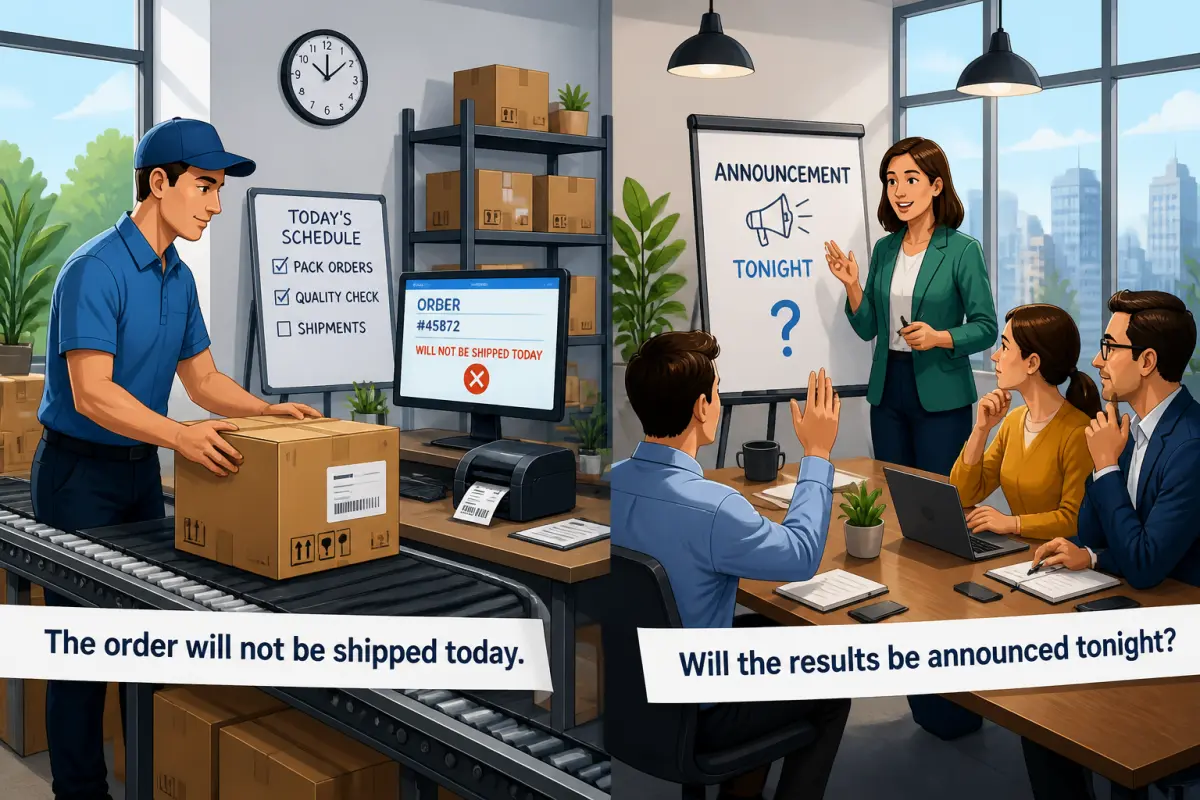
To make negatives and questions, keep the passive structure intact. Many learners accidentally remove be or use the wrong word order. The basic rule is simple: in future passive forms, the past participle stays, and be must stay too.
Negative forms:
- The order will not be shipped today.
- The old logo is not going to be used anymore.
- Visitors won’t be allowed inside during the inspection.
- The extra charges aren’t going to be added to your bill.
Question forms:
- Will the results be announced tonight?
- Will my request be approved automatically?
- Is the building going to be closed during the holiday?
- Are the documents going to be translated before the meeting?
Common patterns to remember:
- Will + subject + be + past participle?
Will the room be prepared in time? - Subject + will not be + past participle
The room will not be prepared today. - Am/Is/Are + subject + going to be + past participle?
Is the room going to be prepared today? - Subject + am/is/are not going to be + past participle
The room is not going to be prepared today.
When learners practice question order, they often benefit from reviewing future tense questions, especially if they confuse active and passive patterns.
Here are some wrong and correct forms:
- ❌ Will announced the winners tomorrow?
✅ Will the winners be announced tomorrow? - ❌ The files will not archived tonight.
✅ The files will not be archived tonight. - ❌ Is going to be send the package today?
✅ Is the package going to be sent today?
Contractions are common in speech and informal writing:
- It won’t be finished tonight.
- They aren’t going to be invited this time.
- Isn’t the schedule going to be changed again?
Will be done vs going to be done
These two forms are close in meaning, and sometimes both are possible. The difference is usually about how the speaker sees the future event. With will be done, the speaker often presents a future fact, promise, decision, or neutral prediction. With going to be done, the speaker usually suggests a plan already exists or that there is present evidence for the future result.
This distinction is not mechanical, so the best approach is to notice the context. Ask: is this more like a decision or prediction, or more like a plan or expected consequence?
| Form | Typical use | Example |
|---|---|---|
| will be done | promise, neutral prediction, official statement | Your refund will be processed shortly. |
| going to be done | plan already made, likely result based on evidence | The hall is going to be redecorated next month. |
| will be done | quick decision or formal commitment | The matter will be discussed at once. |
| going to be done | scheduled change visible from current situation | The crossing is going to be blocked; workers are already there. |
Now look at three comparison pairs:
- Will be done: The complaint will be investigated immediately.
Going to be done: The complaint is going to be investigated by a special team we have already appointed. - Will be done: The final decision will be announced tomorrow.
Going to be done: The final decision is going to be announced at tomorrow’s press conference, which has already been scheduled. - Will be done: The damaged seat will be replaced.
Going to be done: The damaged seat is going to be replaced; the new one has already arrived.
And three more, with a sharper contrast:
- Will be done: Your bag will be checked at the gate. = standard procedure
Going to be done: Your bag is going to be checked because the scanner showed a problem. = specific expectation - Will be done: The issue will be raised in the meeting. = statement or promise
Going to be done: The issue is going to be raised; it’s already on the agenda. = planned - Will be done: Several changes will be introduced next year. = future statement
Going to be done: Several changes are going to be introduced; the board approved them yesterday. = plan already in place
For some learners, this difference connects well with other future contrasts such as the first conditional, where context also strongly shapes how future meaning works.
Errors with will, be, and past participles
The most common mistakes in this grammar area are very predictable. Learners often forget be, use the wrong form after will, or choose a past simple form instead of a past participle. These are not small details: each one breaks the passive structure.
The safest checklist is this: after will, use be; after going to, also use be; and then use the past participle, not the base form and not the past simple unless it is the same form.
Mistake 1: forgetting be
- ❌ The package will delivered tomorrow.
✅ The package will be delivered tomorrow. - ❌ The room is going to cleaned later.
✅ The room is going to be cleaned later. - ❌ The forms will not checked today.
✅ The forms will not be checked today.
Mistake 2: using the wrong form after will
- ❌ The payment will being processed soon.
✅ The payment will be processed soon. - ❌ The names will been published online.
✅ The names will be published online. - ❌ The event will is held indoors.
✅ The event will be held indoors.
Mistake 3: using the wrong verb form instead of the past participle
- ❌ The letters will be send tonight.
✅ The letters will be sent tonight. - ❌ The menu is going to be choose by the client.
✅ The menu is going to be chosen by the client. - ❌ The windows will be broke during removal.
✅ The windows will be broken during removal.
Mistake 4: mixing active and passive structures
- ❌ They will be announce the winner at 9.
✅ They will announce the winner at 9.
✅ The winner will be announced at 9. - ❌ We are going to be launch the app next week.
✅ We are going to launch the app next week.
✅ The app is going to be launched next week. - ❌ She will be sign the contract tomorrow.
✅ She will sign the contract tomorrow.
✅ The contract will be signed tomorrow.
Mistake 5: wrong question order
- ❌ Will be the reports sent today?
✅ Will the reports be sent today? - ❌ Is going to be the car repaired this week?
✅ Is the car going to be repaired this week? - ❌ Will the guests invited be by email?
✅ Will the guests be invited by email?
If you also struggle with similar future contrasts in modal meaning, a review of will vs would can clear up some related confusion.
Teacher note: when correcting writing, I often circle only three points: will, be, and the past participle. If those three parts are correct, the sentence is usually fine.
Future passive task: choose will or going to
Practice is where this grammar becomes real. In the tasks below, choose between will be done and going to be done, then move on to sentence transformation and error correction. The three blocks test different skills, so try to notice not only the grammar form but also the reason for choosing it.
When deciding, look for clues such as official promise, sudden decision, existing plan, and present evidence.
Practice block 1: Choose the correct form
- The missing passports (will be returned / are going to be returned) as soon as the police finish the report. This is our promise.
- The side entrance (will be closed / is going to be closed); workers have already put up warning signs.
- All applicants (will be contacted / are going to be contacted) within seven days, according to the email policy.
- The old computers (will be replaced / are going to be replaced) next month; the purchase order has already been approved.
- Your table (will be reserved / is going to be reserved) for 8:30, sir.
- The final episode (will be streamed / is going to be streamed) live tomorrow evening as part of the published schedule.
- That cracked screen (will be repaired / is going to be repaired) soon. Look, the technician is unpacking the tools now.
- Extra chairs (will be brought / are going to be brought) into the hall right away.
- The staff list (will be updated / is going to be updated) after the HR meeting that has already been arranged.
- Your question (will be answered / is going to be answered) in the FAQ document we are preparing now.
Show answers
- will be returned
- is going to be closed
- will be contacted
- are going to be replaced
- will be reserved
- will be streamed
- is going to be repaired
- will be brought
- is going to be updated
- is going to be answered
Practice block 2: Rewrite in the future passive
- The committee will announce the shortlist tomorrow.
- They are going to repaint the library during the holiday.
- The airline will email the boarding passes this evening.
- They are going to test the emergency system next Tuesday.
- The school will give parents the new timetable next week.
- They are going to remove the old machines by the end of June.
- The company will refund the extra charge within 48 hours.
- They are going to translate the brochure into Korean.
- The organizers will send all badges by courier.
- They are going to rebuild the damaged stage after the festival.
Show answers
- The shortlist will be announced tomorrow.
- The library is going to be repainted during the holiday.
- The boarding passes will be emailed this evening.
- The emergency system is going to be tested next Tuesday.
- The new timetable will be given to parents next week.
- The old machines are going to be removed by the end of June.
- The extra charge will be refunded within 48 hours.
- The brochure is going to be translated into Korean.
- All badges will be sent by courier.
- The damaged stage is going to be rebuilt after the festival.
Practice block 3: Spot and correct the error
- The invitations will sent tomorrow morning.
- Is going to be the roof repaired this winter?
- The prizes will be gave out after lunch.
- The report is going to be publish on Monday.
- The bags won’t checked on this platform.
- Will the schedule announced before noon?
- The cafeteria will be close for cleaning tonight.
- The final design is going be approved next week.
- Those files will be delete after the audit.
- Are the lights going to installed today?
Show answers
- The invitations will be sent tomorrow morning.
- Is the roof going to be repaired this winter?
- The prizes will be given out after lunch.
- The report is going to be published on Monday.
- The bags won’t be checked on this platform.
- Will the schedule be announced before noon?
- The cafeteria will be closed for cleaning tonight.
- The final design is going to be approved next week.
- Those files will be deleted after the audit.
- Are the lights going to be installed today?
FAQ: future passive voice
1. Can I use the future passive in everyday conversation, or is it only formal?
Yes, you can absolutely use it in normal conversation. People say things like “The car will be fixed tomorrow” and “Dinner is going to be prepared later” all the time. It does sound especially common in formal messages, but it is not limited to formal English.
2. Is there a real difference between “will be done” and “going to be done” every time?
Not every time. In many situations, both are possible and the difference is small. Usually, will be done sounds more like a neutral future statement or promise, while going to be done suggests a plan or present evidence. If the context is weak, native speakers may choose either one.
3. Can I say who will do the action in a future passive sentence?
Yes. Add a by-phrase when the agent matters: “The report will be presented by the finance team.” But if the doer is obvious or unimportant, leave it out. That is often more natural.
4. Why do I keep hearing active sentences instead of passive ones in speech?
Because active sentences are often shorter and more direct. Compare “We’ll send the contract tonight” with “The contract will be sent tonight.” Both are correct, but speakers often choose the active when the doer matters or is easy to mention. The passive is more useful when the result is the focus.
5. Can the future passive be used with modal verbs other than will?
Yes. Once you understand the pattern, you can build similar forms with other modals: “The issue may be discussed later,” “The door must be locked before 10,” “The problem should be solved soon.” These are not future passive forms with will or going to, but they are closely related and very common.
6. Is “going to be done” too long for normal use?
It is longer, but it is still natural. English speakers use it when they need that exact meaning of plan or expectation. In fast speech, people often contract it: “It’s going to be finished soon,” “They’re going to be interviewed tomorrow.” The length is not a problem if the meaning is right.
7. What verbs are common in the future passive?
Very common ones include send, deliver, announce, publish, repair, replace, approve, invite, check, and complete. These verbs appear often because they describe processes and results. Learners should pay extra attention to irregular participles such as sent, given, built, and written.
8. How can I practice this grammar more effectively?
Do not only fill in gaps. Take real active sentences from emails, notices, and school instructions, and transform them into passive ones. Then ask yourself why the passive works there. Also, practice speaking with useful contexts: customer service, office updates, travel announcements, and event planning. That makes the form much easier to remember.