Mini Writing Tasks with Target Structures (B2)

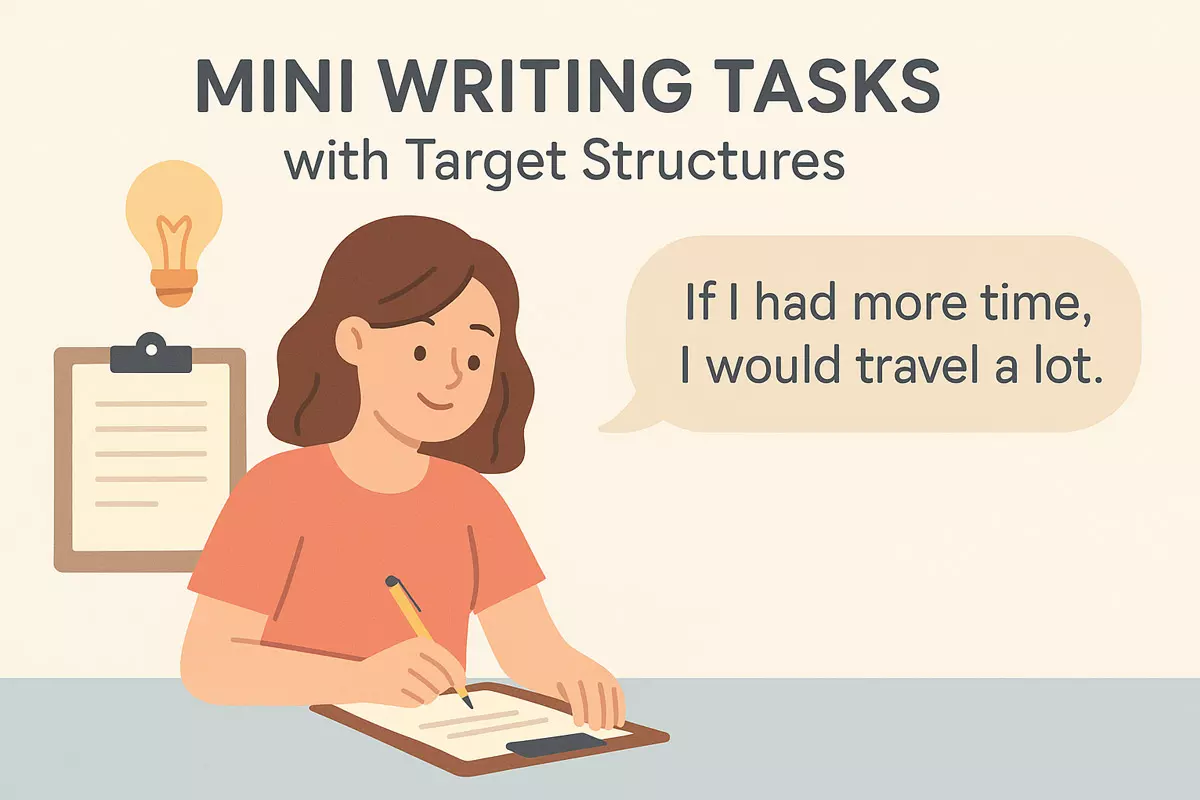 Here we why mini writing tasks are useful for B2 learners, which grammar points to target, tips for clear and structured writing, common mistakes and how to fix them, plus sample tasks and practice improving short texts.
Improving your English skills can be enjoyable and productive by concentrating on short exercises that target specific B2-level grammar points. By working on brief writing challenges, you give yourself the chance to practice new structures in a practical and manageable manner. This focused approach allows you to gradually build confidence and accuracy, making it easier to incorporate these grammar points into your everyday communication. Consistent practice with targeted exercises helps reinforce your understanding and supports steady progress in your language learning journey.
Purpose of Mini Writing Tasks
Mini writing tasks play a vital role in language learning, especially at the B2 level. Rather than overwhelming students with long essays, these short exercises allow focused practice on specific grammar structures, vocabulary, and communication skills. Learners can experiment with varied sentence patterns, connectors, and functional language in a low-pressure environment, which boosts both accuracy and confidence.
Why Use Mini Writing Tasks?
- Encourage regular, manageable practice without fatigue
- Target key grammatical points or lexical sets efficiently
- Provide immediate feedback for self-correction and growth
- Help develop fluency and flexibility in expressing ideas
- Promote creativity within clear boundaries
Short writing activities also prepare students for real-world situations. Tasks often mirror authentic communication—writing a short email, giving instructions, or summarizing information. By focusing on target structures, learners can consolidate newly acquired forms and notice typical mistakes.
Examples of Target Structures in Mini Tasks
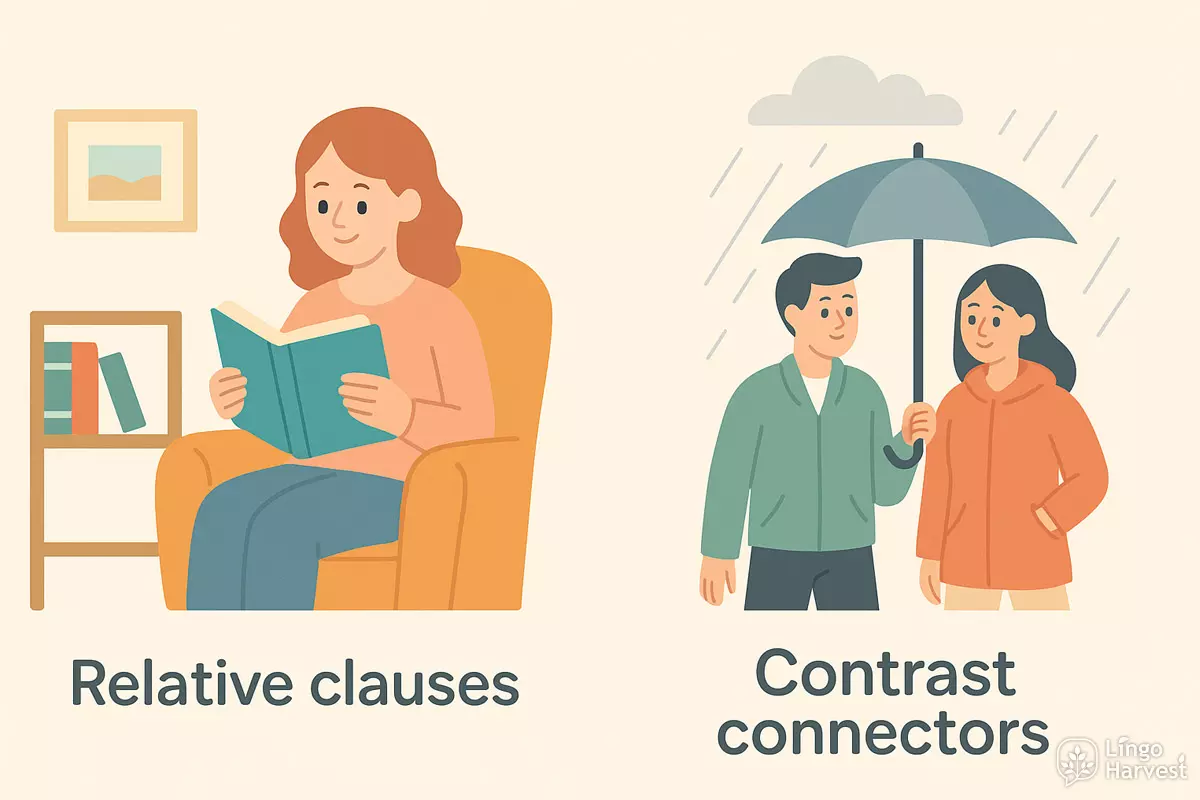
- Using relative clauses: The book that I borrowed was fascinating.
- Contrast connectors: Although it was raining, we went out.
- Indirect questions: Could you tell me where the station is?
- Modal verbs for advice: You should try the new restaurant.
- Passive forms: The meeting was canceled.
- Conditionals: If I had more time, I would travel.
- Reported speech: She said she would call later.
- Expressions for giving opinions: In my view, this is essential.
- Adverbial phrases: Frankly speaking, it was disappointing.
- Time expressions: I have lived here for five years.
- Comparatives and superlatives: This is the most interesting option.
- Purpose clauses: She studied hard so that she could pass.
- Gerunds and infinitives: I enjoy reading; I hope to visit soon.
- Linking words for sequencing: First, we discussed the plan. Then, we made changes.
Benefits for Learners
Brief writing challenges support autonomy and allow learners to focus on their own needs. Because tasks are short, students can complete several in a single lesson, gaining exposure to a range of language features. Teachers can easily adapt tasks to address common errors or introduce new topics, making the learning process dynamic.
Comparison: Mini Writing Tasks vs. Traditional Writing Assignments
| Mini Writing Tasks | Traditional Writing Assignments |
|---|---|
| Short, focused (1–5 sentences) | Longer texts (paragraphs, essays) |
| Target specific structures or functions | Require overall language integration |
| Quick feedback and revision possible | Slower correction cycle |
| Encourage experimentation and risk-taking | Emphasize accuracy and organization |
Choosing short writing activities with a clear focus on target language is a practical way to develop both accuracy and fluency at the intermediate level. These tasks are a flexible tool for both classroom and self-study settings.
Typical B2 Grammar Targets to Use
At the upper-intermediate level, learners are expected to handle a wide range of grammatical structures with a fair degree of accuracy. Mini writing tasks are most effective when they focus on specific forms that challenge B2 students, pushing them to use more nuanced language. Below are some of the most useful grammar points to include in targeted writing exercises at this level.
Key Areas for Practice
- Conditionals (especially second and third, plus mixed conditionals)
- Passive voice (all tenses, including reporting structures)
- Relative clauses (defining, non-defining, and reduced forms)
- Modal verbs for speculation, deduction, advice, and obligation (must, might, can't, should have, etc.)
- Inversion for emphasis (e.g., Not only did she..., Never have I...)
- Reported speech (statements, questions, commands, and reporting verbs)
- Linking words and discourse markers (however, although, in spite of, on the other hand, etc.)
- Gerunds and infinitives (especially with verbs that change meaning)
- Complex noun phrases (including participle and infinitive clauses)
- Wish, if only, and hypothetical past situations
- Future forms for predictions, plans, and arrangements (will, going to, present continuous, future perfect)
- Adverbial clauses (time, reason, contrast, purpose, and result)
- Causative structures (have/get something done)
- Emphatic structures (do/does/did for emphasis)
- Quantifiers and intensifiers (hardly any, quite a few, a great deal of, etc.)
- Word order for emphasis (fronting, cleft sentences)
- Advanced comparison structures (the more..., the more..., as...as, so...that)
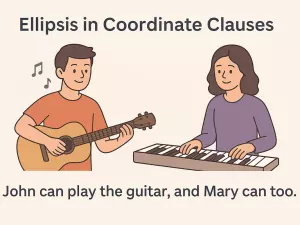
- Ellipsis and substitution (so do I, neither do I, etc.)
- Collocations with prepositions (afraid of, succeed in, interested in, etc.)
Examples: Passive vs. Active & Conditionals
| Structure | Example Sentence |
|---|---|
| Passive Voice (Present Perfect) | The report has been completed by the team. |
| Second Conditional | If I went abroad, I would improve my language skills. |
| Third Conditional | If she had known about the meeting, she would have come. |
| Reduced Relative Clause | The man standing by the door is my teacher. |
Choosing a variety of these grammatical structures for short writing practice helps learners internalize more advanced forms and express themselves with greater sophistication. Rotating through different targets also prevents repetition and encourages flexibility in written production. For best results, connect grammar points to real-life contexts and personalized topics.
How to Produce Clear, Compact Responses
Crafting brief and effective answers in mini writing tasks helps you show your understanding of target structures without unnecessary detail. Focus on expressing your ideas directly while using correct grammar and vocabulary. This approach is especially useful for B2 learners, where clarity and accuracy are both important.
Key Strategies for Conciseness
- Stick to the point: Address only what the question asks. Avoid unrelated information.
- Choose precise words: Use vocabulary that conveys your idea in fewer words.
- Limit sentence length: Combine ideas with conjunctions only when necessary.
- Edit for redundancy: Remove repeated or unnecessary words.
- Use target grammar: Show your knowledge of specific structures (e.g., conditionals, passive voice) as required.
Common Patterns for Compact Writing
To help you respond succinctly, here are some useful patterns and phrases. These can be adapted to fit different prompts and structures:
- I prefer X because… → I prefer tea because it helps me relax.
- If I had to choose, I’d pick… → If I had to choose, I’d pick the cheaper option.
- It depends on… → It depends on the weather.
- In my opinion, … → In my opinion, this plan is better.
- The main reason is… → The main reason is cost.
- This leads to… → This leads to better results.
- Compared to…, … → Compared to last year, sales increased.
- One advantage is… → One advantage is the low price.
- It is believed that… → It is believed that exercise improves mood.
- For example, … → For example, I walk every day.
- As a result, … → As a result, we finished on time.
- However, … → However, the idea may fail.
- Although…, … → Although it rained, we continued.
- In contrast, … → In contrast, her method is slower.
- Such as… → I love fruits such as apples.
- To sum up, … → To sum up, we learned a lot.
- Therefore, … → Therefore, we changed the plan.
- Firstly, … → Firstly, we need more data.
- I suggest… → I suggest trying again.
- It’s likely that… → It’s likely that he will win.
Comparing Expanded and Compact Responses
See how information can be condensed without losing meaning:
| Expanded Version | Compact Version |
|---|---|
| I think that studying in groups can be helpful because you can share ideas and help each other understand difficult topics. | Group study helps share ideas and clarify topics. |
| Although I enjoy watching movies at home, sometimes I prefer going to the cinema because of the atmosphere. | Sometimes I prefer the cinema for its atmosphere. |
| If I had more free time, I would probably take up a new hobby, such as learning to play the guitar or painting. | With more free time, I’d start a new hobby like guitar or painting. |
| Many people believe that exercise is important for staying healthy because it helps you maintain a good weight and reduces stress. | Exercise keeps you healthy by managing weight and reducing stress. |
Tips for Practicing
- After writing your answer, reread and cut any unnecessary words.
- Practice paraphrasing long sentences into shorter forms.
- Check if your response meets all the requirements of the prompt.
- Ask yourself: “Can I say this more simply?”
Developing clear, compact answers takes practice, but focusing on these strategies will help you communicate effectively and show strong command of target language structures.
Techniques for Showing Structure Control
Demonstrating mastery of specific grammatical forms in short writing tasks requires more than simply including the target structure. Writers should show they can use it flexibly, accurately, and in context. The following strategies help ensure that students not only use the required grammar, but do so in a way that highlights their understanding and control.
Varying Sentence Patterns
Using a mixture of simple, compound, and complex sentences can effectively display grammatical competence. For example, when practicing conditionals, try writing both first and second conditional sentences, or embedding them within longer statements.
- Start with a basic example, then expand: If it rains, I’ll stay home. → If it rains tomorrow, which seems likely, I’ll probably stay at home instead of going out.
- Combine multiple structures: Although I was tired, I finished my homework because I wanted good results.
Using Target Structures in Context
Authentic usage is key. Instead of isolated sentences, integrate the required form into a mini-dialogue, a short narrative, or an email. This shows understanding of when and how the structure is used.
- Write a brief dialogue using reported speech.
- Draft a short story that naturally includes relative clauses.
- Compose an email request using polite modal verbs.
Contrast and Comparison
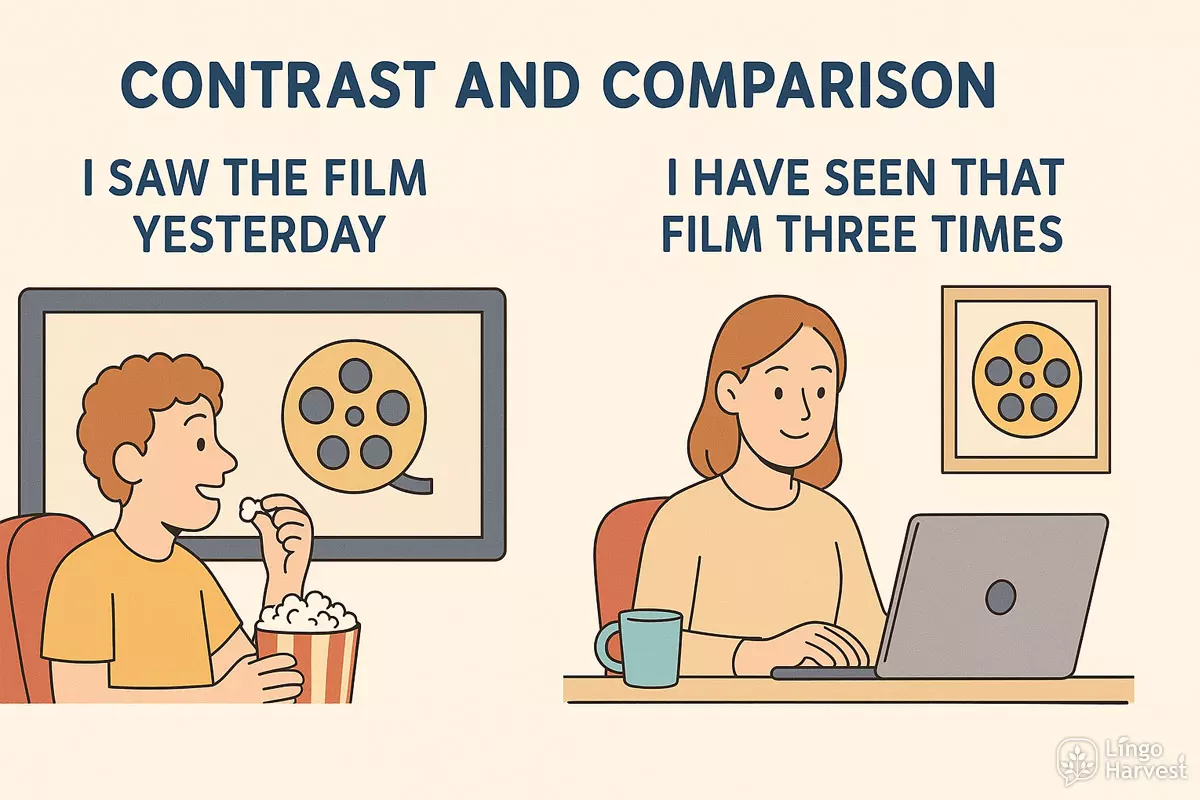
Highlighting differences between structures can clarify understanding. For example, compare past simple and present perfect, or direct and indirect questions. This approach is especially useful for mini writing tasks that target forms often confused by learners.
| Structure | Example Sentence |
|---|---|
| Past Simple | I saw the film yesterday. |
| Present Perfect | I have seen that film three times. |
| First Conditional | If it rains, we’ll cancel the picnic. |
| Second Conditional | If I won the lottery, I would travel the world. |
Checklist for Demonstrating Control
Before submitting a mini writing task, students can use a quick checklist to self-assess their use of the required structure:
- Did I use the target form correctly?
- Have I varied my vocabulary and sentence structure?
- Is the grammar used in a natural, meaningful context?
- Did I avoid repetition or overuse?
- Have I checked for common mistakes?
Ideas for Mini Writing Tasks
Here are practical prompts that encourage clear use of specific grammar points:
- Write a short review using comparatives and superlatives.
- Describe a memorable event with past perfect and past simple.
- Make polite requests using “could you…” and “would you mind…”
- Explain your future plans with “going to” and “will”.
- Give advice using “should” and “ought to”.
- Write five sentences with relative clauses (“who”, “which”, “where”).
- Report what someone said using reported speech.
- Describe a problem and suggest solutions using modal verbs.
- Write a set of instructions using imperatives and sequence words.
- Express preferences using “would rather” and “prefer”.
- Draft a short paragraph with at least three linkers (“however”, “because”, “although”).
- Write about your experiences using present perfect and time expressions.
- Formulate indirect questions for a survey.
- Describe hypothetical situations with conditionals.
- Summarize a story using passive voice.
- Make predictions using “might” and “may”.
Common Errors in B2 Writing and Fixes
At the upper-intermediate level, learners often face persistent issues that affect clarity and accuracy in their written English. Recognizing these typical mistakes and understanding how to correct them is essential for progress. Below, we explore frequent pitfalls and offer practical solutions for each.
Frequent Mistakes and How to Address Them
- Incorrect use of tenses: Mixing past, present, and future forms inappropriately can confuse readers. Review context and check verb consistency.
- Omitting articles ("a," "an," "the"): Articles are often left out or used incorrectly. Practice with sentences and notice usage in authentic texts.
- Word order errors: Placing adverbs, adjectives, and objects incorrectly disrupts sentence flow. Read your sentences aloud to spot awkward phrasing.
- Confusing prepositions: Words like "in," "on," "at," and "to" are easily mixed up. Learn common collocations and patterns.
- Run-on sentences: Trying to connect too many ideas with commas or without conjunctions makes writing hard to follow. Break long sentences into shorter, clear ones.
- Sentence fragments: Missing subjects or verbs leads to incomplete sentences. Double-check that every sentence is complete.
- Wrong relative pronoun ("who," "which," "that"): Use "who" for people, "which" for things, and "that" for both, depending on the clause.
- Subject-verb disagreement: Make sure the verb form matches the subject (singular/plural).
- Misusing modal verbs: Sometimes "could," "should," or "must" are used in the wrong context. Review their meanings and functions.
- Incorrect linking words: "However," "although," and "but" are often confused. Check if the words are joining clauses or sentences appropriately.
- Confusing similar vocabulary: Words like "affect/effect," "lose/loose," or "advise/advice" cause errors. Learn common pairs and their meanings.
- Spelling mistakes: Even at B2, spelling can be inconsistent. Use spellcheck tools and proofread carefully.
- Overusing simple structures: Relying too much on basic sentences limits expression. Practice using relative clauses, conditionals, and passive forms for variety.
- Punctuation errors: Misplaced commas or missing full stops can change meaning. Review punctuation rules and apply them consistently.
- Using informal language in formal tasks: Phrases like "gonna" or "wanna" are not suitable for essays or reports. Know the register required for each task.
- Unnecessary repetition: Repeating the same word or idea can make writing dull. Use synonyms and paraphrasing for better style.
- Misplaced modifiers: Place descriptive words close to what they describe to avoid confusion.
Examples: Common Mistakes and Corrections
| ❌ Typical Error | ✅ Improved Version |
|---|---|
| I am agree with your opinion. | I agree with your opinion. |
| He didn’t went to the meeting. | He didn’t go to the meeting. |
| She is married with a doctor. | She is married to a doctor. |
| It depends of the situation. | It depends on the situation. |
| People which travel a lot learn more. | People who travel a lot learn more. |
| There is too much informations. | There is too much information. |
| If I will see him, I tell him. | If I see him, I will tell him. |
| I look forward to see you. | I look forward to seeing you. |
| The book was boring, so I didn’t read it, I watched TV instead. | The book was boring, so I didn’t read it. I watched TV instead. |
| She gave to me the keys. | She gave me the keys. |
Tips to Reduce Mistakes
- Proofread your work before submitting it.
- Read model texts and notice how structures are used.
- Keep a personal error log and review it regularly.
- Ask for feedback from teachers or peers.
- Practice rewriting sentences with target grammar and vocabulary.
Focusing on these frequent issues and actively correcting them can significantly improve the quality and accuracy of your writing at B2 level. Consistent practice with feedback is key to making progress and writing more confidently.
Sample Mini Tasks with Model Patterns
To help learners develop confidence with B2-level grammar and vocabulary, here are practical mini writing tasks. Each activity targets a specific structure, such as conditional sentences, passive voice, or linking devices. By practicing these in short, focused prompts, students can internalize patterns and use them more naturally in context.
Common B2-Level Writing Patterns
- If I had known about the meeting, I would have attended.
- The report was completed by the team yesterday.
- Despite the rain, we decided to go hiking.
- It is said that the new policy will change everything.
- Not only did he finish early, but he also helped others.
- Unless you hurry, we’ll miss the train.
- Having finished his homework, he went out.
- They are believed to have left the country.
- In spite of his efforts, he failed the test.
- While I agree with your point, I think there are other factors.
- By the time we arrived, the film had already started.
- It was the first time she had tried sushi.
- He suggested that we meet at six o’clock.
- No sooner had I sat down than the phone rang.
- She wishes she had taken the job offer.
- I would rather you didn’t smoke here.
- Provided that you finish on time, you can leave early.
- Little did they know what was about to happen.
Mini Tasks: Practice Prompts
- Write two sentences using the passive voice to describe a recent event in your city.
- Express a regret about last weekend using the third conditional.
- Combine two ideas into one sentence using “despite” or “in spite of”.
- Write a sentence using “It is believed that…” about a current news topic.
- Use a linking word (e.g., although, whereas, however) to contrast two opinions about technology.
- Describe a hypothetical situation using “If I were…”
- Make a polite suggestion using “I think it would be better if…”
- Write a sentence with “No sooner… than…” about something surprising.
- Give advice using “You had better…”
- Express preference using “I would rather…”
Model Sentences: Comparison Table
| Target Structure | Model Example |
|---|---|
| Third Conditional | If I had studied harder, I would have passed the exam. |
| Passive Voice | The new library was opened last month. |
| Contrast Linker | Although it was cold, they went swimming. |
| Formal Reporting | It is reported that the project is ahead of schedule. |
| Inversion | Rarely have I seen such dedication. |
If you want to check how advanced your writing has become, you can measure the difficulty of your text using our CEFR Text Level Checker. It quickly analyses vocabulary, structure, and complexity to show whether your writing matches A2, B1, B2, or even C1 level. This helps you understand what to improve and track your progress more accurately.
Quick Practice: Identify the Structure
Read each sentence and write which grammatical structure is used (e.g., passive voice, inversion, third conditional):
- Not only did he forget her birthday, but he also missed the party.
- If they had left earlier, they wouldn’t have missed the flight.
- The results were announced yesterday.
- It is believed that the artist lives in Paris.
- Despite the difficulties, the team succeeded.
- Had I known, I would have helped.
- The cake was baked this morning.
- It is said that she speaks five languages.
- Although it was raining, the match continued.
- Rarely do we see such talent.
Show answers
- Inversion
- Third Conditional
- Passive Voice
- Passive Reporting Structure
- Contrast Linker (using "despite")
- Inversion in conditionals (no “if”)
- Passive Voice
- Passive Reporting Structure
- Contrast Linker (“although”)
- Inversion with frequency adverb (“rarely”)
Practice: Rewrite and Improve Short Texts
Working with short texts is a practical way to develop your ability to use target grammatical structures and more precise vocabulary. By rewriting and editing, you not only correct mistakes but also learn to express ideas more clearly and naturally.
Common Strategies for Improvement
- Replace basic verbs with more specific ones (e.g., "make" → "produce", "get" → "receive").
- Vary sentence length and structure for better flow.
- Use linking words to improve coherence (however, although, therefore, in addition).
- Upgrade adjectives and adverbs (e.g., "good" → "beneficial", "very quickly" → "rapidly").
- Convert simple sentences into complex or compound ones for B2-level sophistication.
- Eliminate repetition by using pronouns or synonyms.
- Check for grammar accuracy, especially tenses and prepositions.
- Include modal verbs for nuance (might, could, should).
- Apply passive voice where appropriate.
- Use relative clauses to add detail (who, which, that).
- Add introductory phrases or clauses for context.
- Replace informal language with more formal equivalents.
Task: Revise the Sentences
Rewrite each sentence below to make it more accurate, varied, and advanced. Focus on grammar, vocabulary, and structure.
- I think the movie is good.
- People use the internet a lot now.
- She finished her homework and went to bed.
- He did the work very fast.
- The weather was bad, so we stayed inside.
- Many students learn English.
- I bought a book. It was interesting.
- He can't come because he is sick.
- They made a decision.
- My friend likes to travel.
Show answers
- I believe the film was enjoyable.
- The internet is now widely used by people.
- After completing her homework, she went to bed.
- He completed the task rapidly.
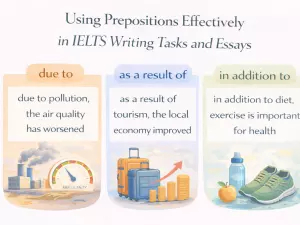
- Due to the poor weather, we remained indoors.
- A large number of students are studying English.
- I bought a book which I found fascinating.
- He is unable to attend because he is unwell.
- They reached a decision.
- My friend enjoys travelling.
Comparison: Basic vs. Improved Texts
| Basic Version | Improved Version |
|---|---|
| I think the movie is good. | I believe the film was enjoyable. |
| People use the internet a lot now. | The internet is now widely used by people. |
| She finished her homework and went to bed. | After completing her homework, she went to bed. |
| He did the work very fast. | He completed the task rapidly. |
| The weather was bad, so we stayed inside. | Due to the poor weather, we remained indoors. |
| Many students learn English. | A large number of students are studying English. |
| I bought a book. It was interesting. | I bought a book which I found fascinating. |
| He can't come because he is sick. | He is unable to attend because he is unwell. |
| They made a decision. | They reached a decision. |
| My friend likes to travel. | My friend enjoys travelling. |
Quick Self-Check: Spot the Weakness
For each sentence below, identify what could be improved (e.g., word choice, structure, coherence). Suggest a change in your own words.
- I woke up early and I made breakfast.
- She likes music and she plays the piano.
- They finished the project. It was difficult.
- He wanted to call her, but he forgot.
- We went outside and it started to rain.
- I saw the movie and I loved it.
- She studied hard. She passed the test.
- He was tired, but he kept working.
- They invited us, and we accepted.
- I cleaned my room. It looks great now.
Show answers
- Use participle clause: “After waking up early, I made breakfast.”
- Improve linking: “She likes music and also plays the piano.”
- Relative clause: “They finished the project, which was difficult.”
- Contrast + past form: “Although he wanted to call her, he forgot.”
- Contrast clause: “We went outside, but it started to rain.”
- Reduce repetition: “I saw the movie and loved it.”
- Cause–result: “Because she studied hard, she passed the test.”
- Concession: “He was tired, yet he kept working.”
- Remove unnecessary ‘and’: “They invited us, and we accepted the invitation.”
- Link ideas with result: “I cleaned my room, so it looks great now.”