Search the site
Search
Grammar ▾
▸ Articles
▸ Advanced Grammar
▸ Adjectives & Adverbs
▸ Conjunctions
▸ Conditionals
▸ Determiners
▸ Gerunds & Infinitives
▸ Grammar Practice
▸ Modal Verbs
▸ Nouns
▸ Parts of Speech
▸ Passive Voice
▸ Prepositions
▸ Pronouns
▸ Quantifiers
▸ Question Formation
▸ Reported Speech
▸ Verbs
Writing ▾
▸ Punctuation
▸ Sentence Structure
▸ Writing Mistakes
Vocabulary ▾
▸ Visual Vocabulary
▸ Food Vocabulary
▸ People Vocabulary
▸ Places Vocabulary
▸ Hobbies Vocabulary
▸ Home Vocabulary
▸ School Vocabulary
▸ Weather Vocabulary
▸ Basic Vocabulary
▸ General Vocabulary
Speaking ▾
▸ Conversational English
Calculators
Contacts
Home
» A1–A2 Beginner
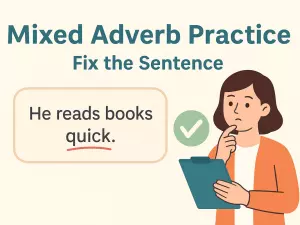
Mixed Adverb Practice: Fix the Sentence
This article reviews basic adverb types, highlights common beginner mistakes, and provides practice sentences with misplaced or missing adverbs. It includes an answer key and extra open-ended tasks to help you master adverb use.
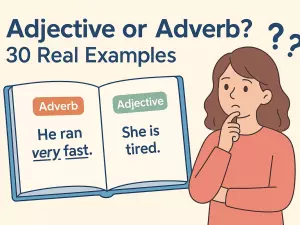
Adjective or Adverb? 30 Real Examples
Learn how to use adjectives and adverbs correctly, including confusing pairs like good and well. This guide includes 30 real-life examples, signal words, practical tips, and exercises for changing adjectives to adverbs and back.
Rewrite the Sentence Using a Stronger Adjective
Here we why strong adjectives sound more natural than weak ones, how to replace very plus an adjective with a single vivid word, gives practical examples and rewrites, explains tone differences, and offers practice to improve descriptions.
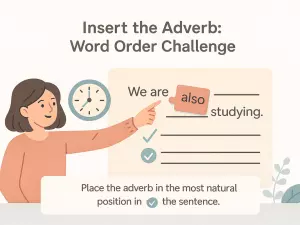
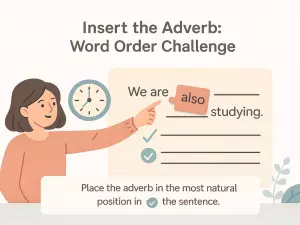
Insert the Adverb: Word Order Challenge
Here we basic rules for adverb placement, shows where to put time, manner, and frequency adverbs, and compares natural and unnatural orders. It includes a short exercise and an answer key with notes on the best adverb positions.
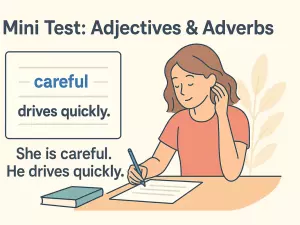
Mini Test: Adjectives & Adverbs in Short Paragraphs
Here we strategies for approaching short grammar tests, practicing with adjective and adverb tasks, and using gap-fill and error-spotting exercises. It also explains how to score yourself, reviews key beginner rules, and suggests next study steps.
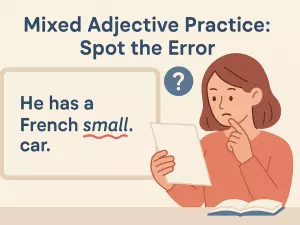
Mixed Adjective Practice: Spot the Error
This article reviews essential adjective rules, highlights typical beginner mistakes, and provides error-spotting sentences. It includes an answer key with explanations, strategies for self-checking, and extra sentences for additional practice.
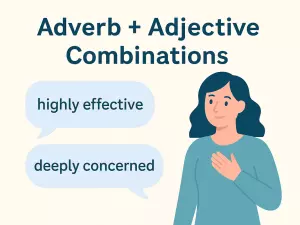
Adverb + Adjective Combinations (highly effective, deeply concerned)
The article defines English collocations, focusing on typical adverb and adjective pairs. It compares strong and weak combinations, formal and informal options, and offers practice selecting the most suitable adverb for each adjective.
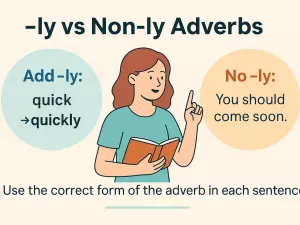
-ly vs Non-ly Adverbs: Formation Rules
Here we how to create adverbs from adjectives with -ly, points out adjectives that do not take -ly, discusses words whose meaning changes with -ly, reviews spelling changes, highlights common mistakes, and offers practice exercises.
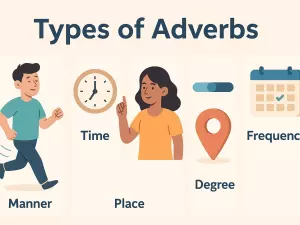
Types of Adverbs: Manner, Time, Place, Degree, Frequency
This article explains the main types of adverbs, including those of manner, time, place, frequency, and degree. It also provides practice in identifying and sorting adverbs into these categories based on their function in sentences.
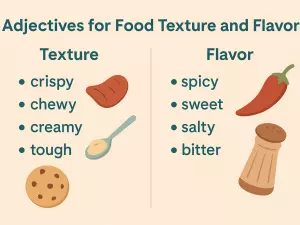
Adjectives for Food Texture and Flavor (Extended List)
This article introduces basic taste and texture adjectives like sweet, salty, crunchy, and creamy, along with positive words such as delicious and fresh. It covers expressing food preferences and includes simple examples and practice exercises.
Previous
1
...
20
21
22
23
24
25
26
27
28
...
34
Next