Search the site
Search
Grammar ▾
▸ Articles
▸ Advanced Grammar
▸ Adjectives & Adverbs
▸ Conjunctions
▸ Conditionals
▸ Determiners
▸ Gerunds & Infinitives
▸ Grammar Practice
▸ Modal Verbs
▸ Nouns
▸ Parts of Speech
▸ Passive Voice
▸ Prepositions
▸ Pronouns
▸ Quantifiers
▸ Question Formation
▸ Reported Speech
▸ Verbs
Writing ▾
▸ Punctuation
▸ Sentence Structure
▸ Writing Mistakes
Vocabulary ▾
▸ Visual Vocabulary
▸ Food Vocabulary
▸ People Vocabulary
▸ Places Vocabulary
▸ Hobbies Vocabulary
▸ Home Vocabulary
▸ School Vocabulary
▸ Weather Vocabulary
▸ Basic Vocabulary
▸ General Vocabulary
Speaking ▾
▸ Conversational English
Calculators
Contacts
Home
» A1–A2 Beginner
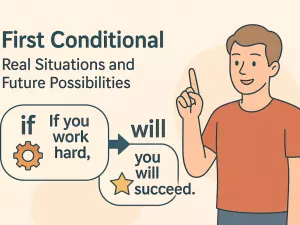
First Conditional: Real Situations and Future Possibilities
Here we the first conditional for real future situations, explaining its meaning, form, and use for plans, predictions, and warnings. It also discusses variations with will, won’t, may, might, can, word order, and includes practice exercises.
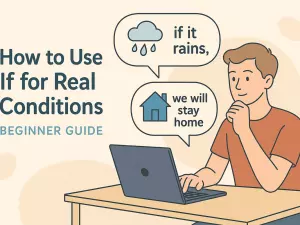
How to Use If for Real Conditions (Beginner Guide)
Here we how real conditional sentences work, when to use if in real-life situations, patterns for advice and predictions, sentence placement, common mistakes with will, and includes practice rewriting sentences to show correct real conditions.
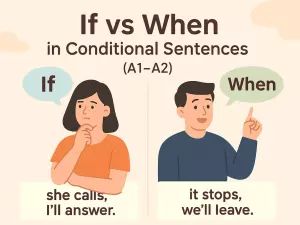
If vs When in Conditional Sentences (A1–A2)
Here we the difference between if and when, explains how changing one for the other affects meaning, outlines when each is typically used, reviews tense patterns, gives daily life examples, and offers practice in choosing the right word.
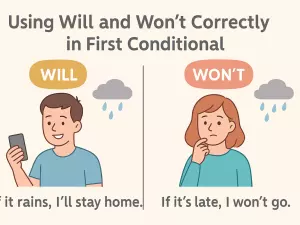
Using Will and Won’t Correctly in First Conditional
Here we how will and won’t express future results in first conditional sentences, why will can't be used in if-clauses, and how these forms signal promises, warnings, and predictions. It also discusses pronunciation, common mistakes, and offers practice.
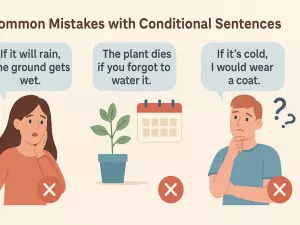
Common Mistakes with Basic Conditional Sentences
Here we frequent grammar mistakes in A1–A2 conditionals, like using will in if-clauses, word order errors, missing subjects, tense problems, and run-on sentences. It also provides practice correcting errors in sample conditional sentences.
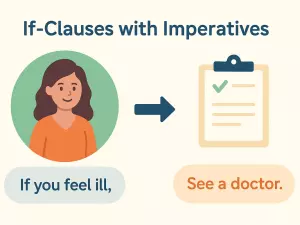
If-Clauses with Imperatives: Simple Instructions and Warnings
This article explains how to use if plus imperative structures to give advice, set safety rules, and provide directions. It covers patterns, differences from predictions, real-life examples, and offers practice creating these sentences.
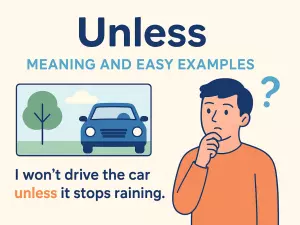
Unless for Beginners: Meaning and Easy Examples
Here we how unless works as the opposite of if not, when it sounds more natural, and how to avoid common mistakes like double negatives. It includes examples from daily life and practice exercises for using unless correctly.
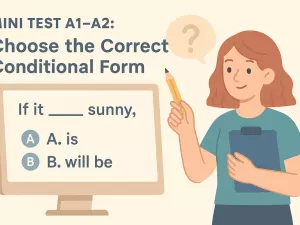
Mini Test A1–A2: Choose the Correct Conditional Form
This article offers a quick test on zero and first conditionals. It features multiple-choice questions, tasks on if vs when and will vs won’t, error identification, a mini writing task, and an answer key for self-assessment.
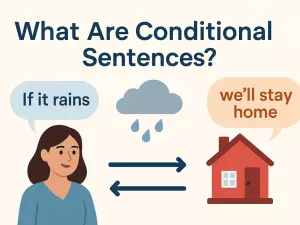
What Are Conditional Sentences? Simple Beginner Guide
Conditional sentences show that one result depends on a condition. Takeaway: find the if-part first, then ask what happens if it is true. This guide explains condition and result clauses, signal words, real and unreal meanings, everyday examples, and practice.
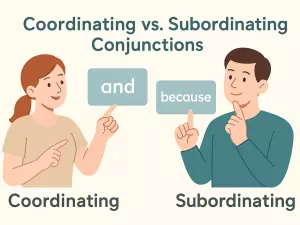
Coordinating vs Subordinating Conjunctions: Easy Explanation
The article defines conjunctions, clearly distinguishes coordinating and subordinating conjunctions with simple examples, uses diagrams to show main versus subordinate clauses, and provides practice classifying conjunction types.
Previous
1
...
17
18
19
20
21
22
23
24
25
...
34
Next