Search the site
Search
Grammar ▾
▸ Articles
▸ Advanced Grammar
▸ Adjectives & Adverbs
▸ Conjunctions
▸ Conditionals
▸ Determiners
▸ Gerunds & Infinitives
▸ Grammar Practice
▸ Modal Verbs
▸ Nouns
▸ Parts of Speech
▸ Passive Voice
▸ Prepositions
▸ Pronouns
▸ Quantifiers
▸ Question Formation
▸ Reported Speech
▸ Verbs
Writing ▾
▸ Punctuation
▸ Sentence Structure
▸ Writing Mistakes
Vocabulary ▾
▸ Visual Vocabulary
▸ Food Vocabulary
▸ People Vocabulary
▸ Places Vocabulary
▸ Hobbies Vocabulary
▸ Home Vocabulary
▸ School Vocabulary
▸ Weather Vocabulary
▸ Basic Vocabulary
▸ General Vocabulary
Speaking ▾
▸ Conversational English
Calculators
Contacts
Home
» A1–A2 Beginner
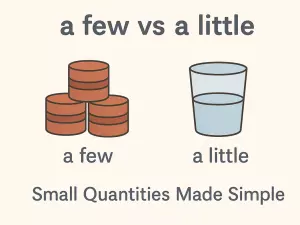
a few vs a little: Small Quantities Made Simple
Here we how to use a few and a little, focusing on their meanings, tone, and differences for countable and uncountable nouns. It also explains common phrases, frequent errors with fixes, and provides practice through short dialogues.
Much vs Many: Countable or Uncountable?
Use many with plural countable nouns and much with uncountable nouns. Takeaway: if you can count the items one by one, choose many; if you measure the amount as a whole, choose much. This guide explains the rule through questions, negatives, informal speech, shopping, cooking, and practice.
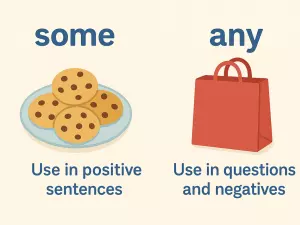
some vs any: The Beginner's Short Guide
The article reviews countable and uncountable nouns, how to use some and any in statements, questions, and negatives, when some is natural in offers and requests, fixed expressions, common mistakes, and includes practice exercises for rewriting.
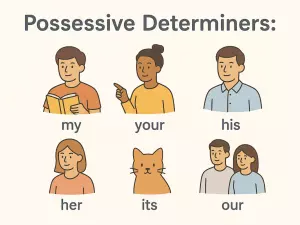
Possessive Determiners: my, your, his, her, its, our, their
The article explains how to use possessive determiners before nouns, focusing on agreement with the noun, not the speaker. It covers the difference between its and it's, common gender word confusions, real-life examples, and practice exercises.
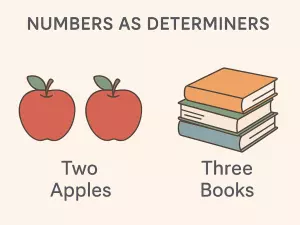
Numbers as Determiners: Two Apples, Three Books
This article explains number and noun agreement in English, including how to use numbers with singular, plural, and of-phrases like a group of. It covers real-life examples in shopping, cooking, and planning, plus common mistakes and practice tips.
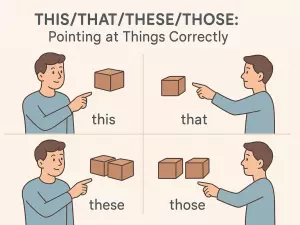
this/that/these/those: Pointing at Things Correctly
Here we how to use this, that, these, and those. It explains near versus far concepts, singular and plural forms, usage with nouns or alone, spoken gestures, common mistakes, and offers practice for identifying and producing correct phrases.
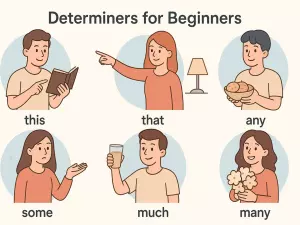
Determiners for Beginners: this, that, some, any, much, many
This article explains how determiners like this, that, some, any, much, and many work in sentences. It covers their use for distance, positivity or negativity, countable and uncountable nouns, and includes dialogues and practice exercises.
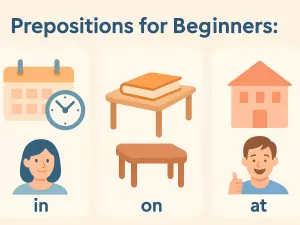
Prepositions in, on, at: Time and Place Guide for Beginners
Use in for wider periods and enclosed spaces, on for days, dates, and surfaces, and at for exact times and points. This guide gives you a simple decision system, real examples, common mistakes, and practice tasks so you can choose the right preposition faster.
the with Unique Things: the Sun, the Internet, the Police
Here we when to use "the" with unique things, compares its use with natural objects and institutions, explains regional differences like Internet vs. internet, discusses people groups such as the rich, highlights common errors, and provides practice.
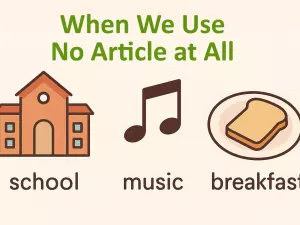
Zero Article: When We Use No Article at All
This article explains when to omit articles in English, such as with general statements, meals, sports, languages, places, transport, and set phrases. It also highlights common errors and offers exercises for practice.
Previous
1
...
25
26
27
28
29
30
31
32
33
34
Next