Search the site
Search
Grammar ▾
▸ Articles
▸ Advanced Grammar
▸ Adjectives & Adverbs
▸ Conjunctions
▸ Conditionals
▸ Determiners
▸ Gerunds & Infinitives
▸ Grammar Practice
▸ Modal Verbs
▸ Nouns
▸ Parts of Speech
▸ Passive Voice
▸ Prepositions
▸ Pronouns
▸ Quantifiers
▸ Question Formation
▸ Reported Speech
▸ Verbs
Writing ▾
▸ Punctuation
▸ Sentence Structure
▸ Writing Mistakes
Vocabulary ▾
▸ Visual Vocabulary
▸ Food Vocabulary
▸ People Vocabulary
▸ Places Vocabulary
▸ Hobbies Vocabulary
▸ Home Vocabulary
▸ School Vocabulary
▸ Weather Vocabulary
▸ Basic Vocabulary
▸ General Vocabulary
Speaking ▾
▸ Conversational English
Calculators
Contacts
Home
» A1–A2 Beginner
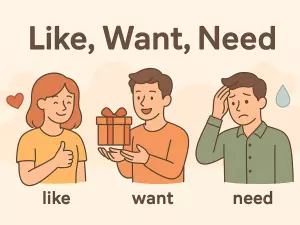
Like, Want, Need: Everyday Verbs with Examples
Here we the core meanings and differences between like, want, and need, explains their verb patterns, and shows how to soften requests. It includes real-life dialogues, common mistakes, and practice exercises for better usage.
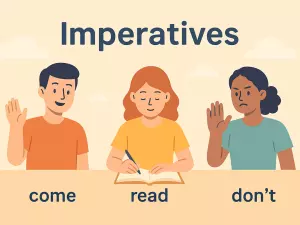
Imperatives: How to Give Simple Instructions in English
This article explains what the imperative form is, covers both positive and negative commands, and shows how to use polite language. It includes tips for sequencing instructions, examples from daily life, common mistakes, and practice exercises.
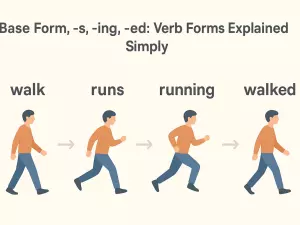
Base Form, -s, -ing, -ed: Verb Forms Explained Simply
Here we why verb forms matter at A1, explains using the base, -s, -ing, and -ed forms, covers spelling patterns, highlights common mistakes, and provides practice converting and using verbs correctly in sentences.
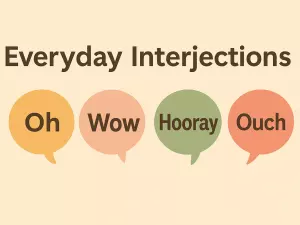
Speak Like in Real Life: 20 Interjections You'll Hear Every Day
Here we why interjections are key for fluency, lists the top 20 with meanings, explains pronunciation, provides mini-dialogues, highlights context warnings, suggests alternatives by tone, and offers self-check quizzes and practice drills.
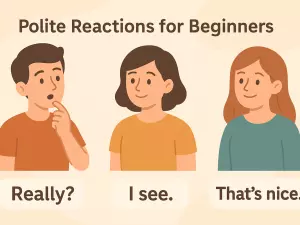
Polite Reactions for Beginners: Really?, I See, That's Nice
Here we polite reactions in English, such as showing interest without interrupting, agreeing or disagreeing gently, reacting to good or bad news, using sincere intonation, and avoiding empty phrases.
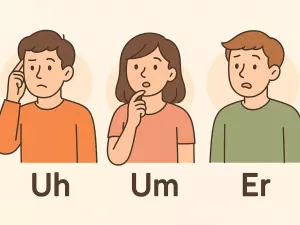
Everyday Sounds in English: Uh, Um, Er - How They're Used
Here we how fillers such as uh and um show thinking or help speakers hold their turn, when they are useful or distracting, how they're spelled and placed, effects from other languages, and practical ways to notice and reduce their use.
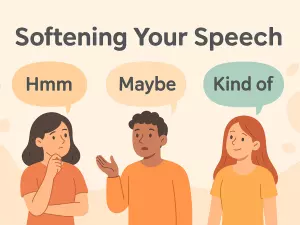
Softening Your Speech: Hmm, Maybe, Kind of
This article explains why we soften messages in English, how words like maybe and sort of add nuance, and how to stay clear yet polite. It covers pros and cons, typical mistakes, examples, and practice rewriting for softer tone.
Encouragement and Praise: Well Done! Good Job!
Here we when praise is most effective, practical phrases for study and work, the difference between targeted and generic praise, how to balance praise with advice, cultural notes on frequency, sample dialogues, and tips for avoiding overuse or sarcasm.
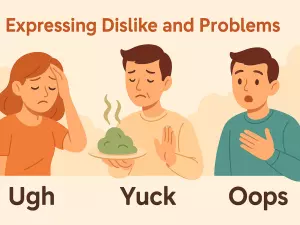
Expressing Dislike and Problems: Ugh, Yuck, Oops
This article teaches you how to politely show dislike and respond to small mistakes in English. It covers tone control, common situations like food or noise, formal alternatives, sample dialogues, and frequent learner mistakes.
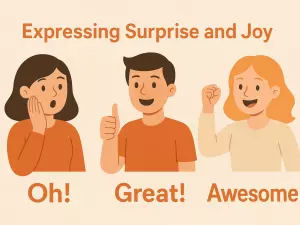
Expressing Surprise and Joy: Oh!, Great!, Awesome!
The article explains how to use positive exclamations like Oh!, Great!, and Awesome! in English, covering their meanings, strength, context, tone, punctuation, pronunciation, and when to use casual or neutral choices, with practice examples.
Previous
1
...
25
26
27
28
29
30
31
32
33
34
Next