Search the site
Search
Grammar ▾
▸ Articles
▸ Advanced Grammar
▸ Adjectives & Adverbs
▸ Conjunctions
▸ Conditionals
▸ Determiners
▸ Gerunds & Infinitives
▸ Grammar Practice
▸ Modal Verbs
▸ Nouns
▸ Parts of Speech
▸ Prepositions
▸ Pronouns
▸ Quantifiers
▸ Question Formation
▸ Reported Speech
▸ Verbs
Writing ▾
▸ Punctuation
▸ Sentence Structure
▸ Writing Mistakes
Vocabulary ▾
▸ Visual Vocabulary
▸ Food Vocabulary
▸ People Vocabulary
▸ Places Vocabulary
▸ Hobbies Vocabulary
▸ Home Vocabulary
▸ School Vocabulary
▸ Weather Vocabulary
▸ Basic Vocabulary
▸ General Vocabulary
Speaking ▾
▸ Conversational English
Calculators
Contacts
Home
»
English
»
Grammar
Grammar
This section focuses on English grammar explained in a simple and practical way. You will find clear rules, step-by-step examples, and common mistakes to avoid, helping you build a strong foundation for speaking and writing confidently.
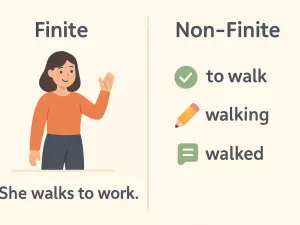
Finite and Non-Finite Verb Forms
This article explains how finite verbs indicate person and tense, while non-finite forms—infinitives, gerunds, and participles—have other functions. It includes examples and practice to help you identify each verb form in context.
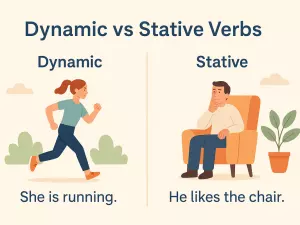
Dynamic vs Stative Verbs: Classification
This article explains dynamic and stative verbs, how statives work in continuous forms, and which verbs have dual meanings. It includes practical examples, common mistakes to avoid, and a short practice exercise.
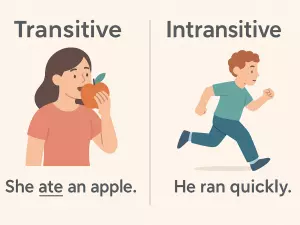
Transitive and Intransitive Verbs Explained
This article explains what transitive verbs need, covers the basics of direct objects, and contrasts them with intransitive verbs. It also shows verbs used both ways, gives practical examples, addresses common confusions, and provides practice items.
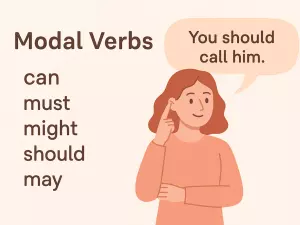
Modal Verbs: Structural Role
Here we what modal verbs express, lists the main modals, explains their verb structure and grammar rules, discusses degrees of certainty, points out common errors, and provides short practice exercises.
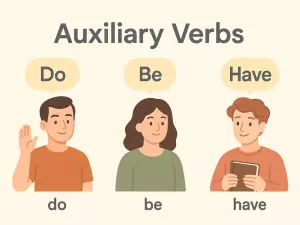
Auxiliary Verbs: Do, Be, Have
This article explains why auxiliary verbs matter and covers the forms of do, be, and have. It details how to use auxiliaries in questions and negatives, and includes practice sentences to help you understand their practical uses.
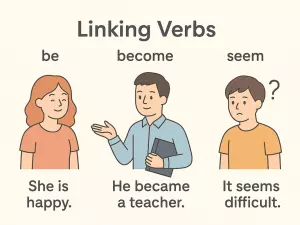
Linking Verbs: Be, Become, Seem
This article explains what linking verbs do, lists main examples, and compares them to action verbs. It covers how adjectives follow linking verbs, highlights common sentence patterns and mistakes, and includes a quick practice section.
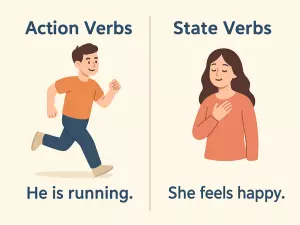
Action and State Verbs: Theoretical Difference
This article explains how action verbs express actions and state verbs show conditions or feelings. It highlights key differences, lists verbs not used in continuous forms, provides daily English examples, and offers practice sentences.
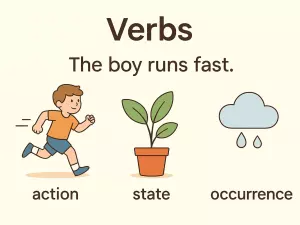
What Are Verbs? Core Definition
This article explains what verbs express, their main functions, and where they appear in sentences. It covers basic verb types and forms, highlights common beginner mistakes, and includes short practice tasks to help you improve.
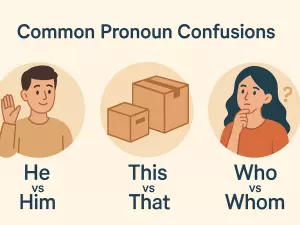
Common Pronoun Confusions in Theory
Here we common pronoun problems, such as he vs him, this vs that, and who vs whom. It explains confusing cases like reflexives and everybody vs every one, and offers sentence practice to improve your grammar.
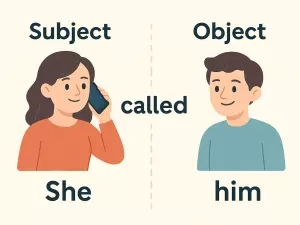
Case in English Pronouns: Subject vs Object
Here we when to use subject and object pronouns, how pronouns work after prepositions, and common mistakes in spoken English. It also provides quick tips and practice examples to help you master pronoun case.
Previous
1
...
100
101
102
103
104
105
106
107
108
...
124
Next