Search the site
Search
Grammar ▾
▸ Articles
▸ Advanced Grammar
▸ Adjectives & Adverbs
▸ Conjunctions
▸ Conditionals
▸ Determiners
▸ Gerunds & Infinitives
▸ Grammar Practice
▸ Modal Verbs
▸ Nouns
▸ Parts of Speech
▸ Prepositions
▸ Pronouns
▸ Quantifiers
▸ Question Formation
▸ Reported Speech
▸ Verbs
Writing ▾
▸ Punctuation
▸ Sentence Structure
▸ Writing Mistakes
Vocabulary ▾
▸ Visual Vocabulary
▸ Food Vocabulary
▸ People Vocabulary
▸ Places Vocabulary
▸ Hobbies Vocabulary
▸ Home Vocabulary
▸ School Vocabulary
▸ Weather Vocabulary
▸ Basic Vocabulary
▸ General Vocabulary
Speaking ▾
▸ Conversational English
Calculators
Contacts
Home
»
English
»
Grammar
Grammar
This section focuses on English grammar explained in a simple and practical way. You will find clear rules, step-by-step examples, and common mistakes to avoid, helping you build a strong foundation for speaking and writing confidently.
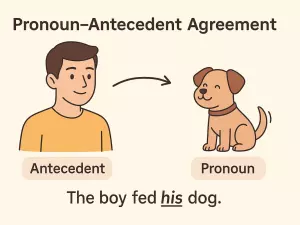
Pronoun–Antecedent Agreement Rules
Here we the basics of pronoun–antecedent agreement, including rules for singular, plural, collective, and indefinite pronouns. It also discusses gender-neutral choices, common mistakes, and offers practice in correcting agreement errors.
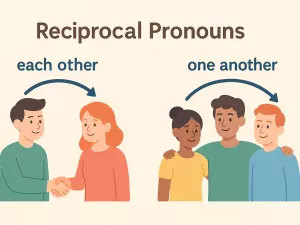
Reciprocal Pronouns: Each Other, One Another
Here we what reciprocal pronouns mean, the differences between each other and one another, where to place them in sentences, typical examples, common mistakes, and offers a brief practice to correct sentences using these pronouns.
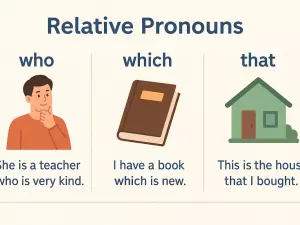
Relative Pronouns: Who, Which, That
Here we the meaning of relative pronouns, explains how to use who, which, and that, and distinguishes between defining and non-defining clauses. It also details comma rules and provides practice for combining sentences.
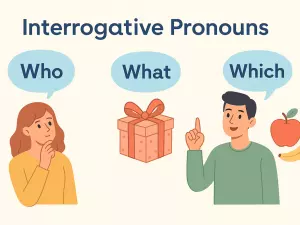
Interrogative Pronouns: Who, What, Which
This article explains interrogative pronouns, when to use each form, and their position in questions. It includes daily English examples, tips to avoid confusing them with determiners, and a short practice for building your own questions.
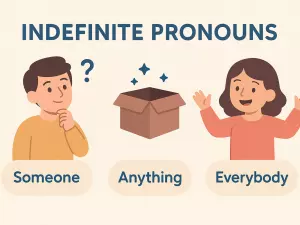
Indefinite Pronouns: Someone, Anything, Everybody
The article defines indefinite pronouns, explains how they refer to people, things, and quantities, and covers positive versus negative forms, verb agreement, differences between -one and -body endings, common learner errors, and includes practice exercises.
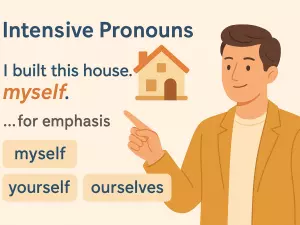
Intensive Pronouns: Emphasis Forms
Here we how intensive pronouns add emphasis, distinguishes them from reflexive pronouns, explains their placement and emphasis patterns, gives useful examples, highlights common misuse, and provides quick practice exercises.
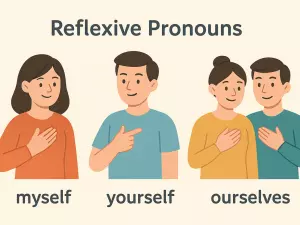
Reflexive Pronouns: Myself, Yourself, Ourselves
This article explains the meaning of reflexive pronouns, provides a full list, and details when to use them. It covers common verbs, mistakes beginners make, tips to avoid overuse, and offers practice sentences for learning.
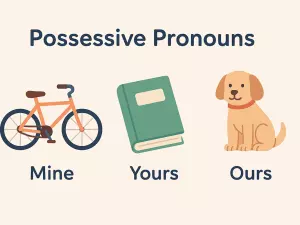
Possessive Pronouns: Mine, Yours, Ours
This article defines possession in English, provides a complete list of possessive pronouns, distinguishes them from possessive adjectives, demonstrates their use in sentences, discusses common confusions, and offers a short fill-in-the-blank practice.
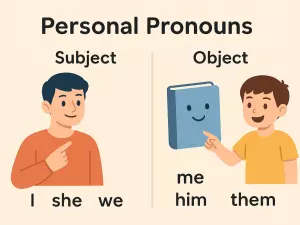
Personal Pronouns: Subject and Object
The article defines personal pronouns, lists subject and object pronouns, and explains their correct placement in sentences. It also points out common errors and offers practice exercises on choosing the correct pronoun form.
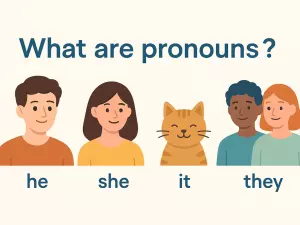
What Are Pronouns? Complete Introduction
Here we what pronouns do, the main types, and how they replace nouns in sentences. It also explains pronoun agreement, points out common beginner mistakes, and provides quick practice tasks to help you master pronouns.
Previous
1
...
101
102
103
104
105
106
107
108
109
...
124
Next