Search the site
Search
Grammar ▾
▸ Articles
▸ Advanced Grammar
▸ Adjectives & Adverbs
▸ Conjunctions
▸ Conditionals
▸ Determiners
▸ Gerunds & Infinitives
▸ Grammar Practice
▸ Modal Verbs
▸ Nouns
▸ Parts of Speech
▸ Prepositions
▸ Pronouns
▸ Quantifiers
▸ Question Formation
▸ Reported Speech
▸ Verbs
Writing ▾
▸ Punctuation
▸ Sentence Structure
▸ Writing Mistakes
Vocabulary ▾
▸ Visual Vocabulary
▸ Food Vocabulary
▸ People Vocabulary
▸ Places Vocabulary
▸ Hobbies Vocabulary
▸ Home Vocabulary
▸ School Vocabulary
▸ Weather Vocabulary
▸ Basic Vocabulary
▸ General Vocabulary
Speaking ▾
▸ Conversational English
Calculators
Contacts
Home
»
English
»
Grammar
Grammar
This section focuses on English grammar explained in a simple and practical way. You will find clear rules, step-by-step examples, and common mistakes to avoid, helping you build a strong foundation for speaking and writing confidently.
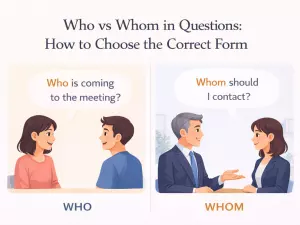
Who vs Whom in Questions: How to Choose the Correct Form
Here we why who and whom can be confusing in questions, explains their subject and object roles, preposition use, formal versus informal patterns, when who is acceptable, common mistakes, tests for correctness, and offers practice questions.
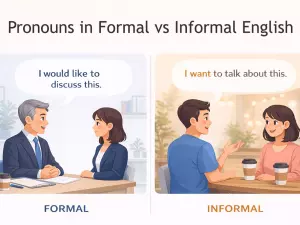
Pronouns in Formal vs Informal English
The article explains how pronoun use changes with formality, including contractions in speech, pronoun choices in emails and essays, first-person pronouns in formal contexts, avoiding overpersonal tones, register-mismatch mistakes, and sentence rewriting practice.
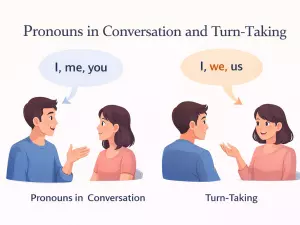
Pronouns in Conversation and Turn-Taking
This article explains how pronouns help manage conversational turns, refer back to shared information, and signal agreement or disagreement. It covers spoken patterns, learner issues, and includes practice dialogues with pronouns.
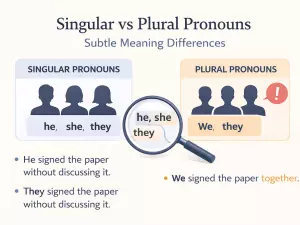
Singular vs Plural Pronouns: Subtle Meaning Differences
Here we how singular and plural pronouns affect meaning, including their use with collective and indefinite nouns, formal versus informal preferences, context-based shifts, common learner errors, and provides practice on choosing the right pronoun.
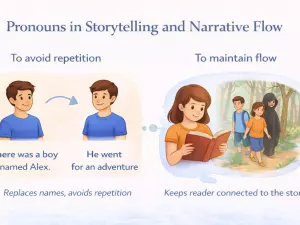
Pronouns in Storytelling and Narrative Flow
Here we how pronouns guide readers, introduce and refer to characters, keep stories clear, and manage shifts in focus. It also discusses pronoun use in dialogue versus narration, avoiding ambiguity, editing for clarity, and practical improvement.
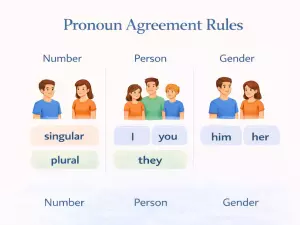
Pronoun Agreement Rules: Number, Person, and Gender
Here we pronoun agreement in English, focusing on number, person, and gender, including modern trends. It also discusses challenges with indefinite and collective nouns, common mistakes, editing tips, and provides practice correcting errors.
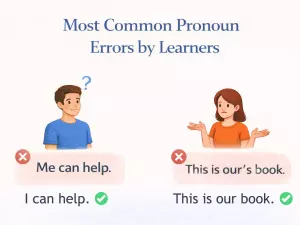
Most Common Pronoun Errors by Learners
Here we why pronoun errors are common, outlines frequent subject-object and agreement mistakes, misuse of reflexives, confusion with it, they, and this, register-related issues, and how errors vary by proficiency.
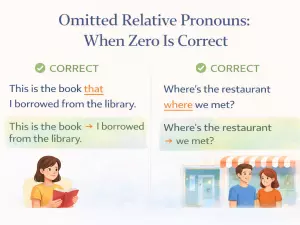
Omitted Relative Pronouns: When Zero Is Correct
This article explains zero relative pronouns, when you can omit them, and the difference between subject and object positions in clauses. It covers restrictions, usage in speech and writing, frequent learner mistakes, and practice tips.
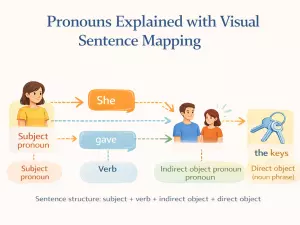
Pronouns Explained with Visual Sentence Mapping
This article explains how visual mapping clarifies pronoun reference. It covers marking nouns, linking pronouns to antecedents, fixing unclear references, mapping subject and object roles, handling clauses, and practicing clear rewrites.
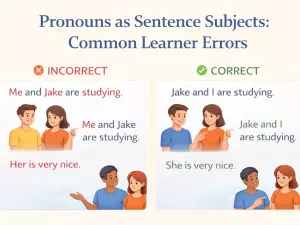
Pronouns as Sentence Subjects: Common Learner Errors
This article explains how to use subject pronouns like I, you, he, she, it, we, and they. It covers when to use pronouns instead of names, common mistakes, coordinated subjects, short answers, dummy subjects, and agreement.
Previous
1
...
37
38
39
40
41
42
43
44
45
...
124
Next