Search the site
Search
Grammar ▾
▸ Articles
▸ Advanced Grammar
▸ Adjectives & Adverbs
▸ Conjunctions
▸ Conditionals
▸ Determiners
▸ Gerunds & Infinitives
▸ Grammar Practice
▸ Modal Verbs
▸ Nouns
▸ Parts of Speech
▸ Prepositions
▸ Pronouns
▸ Quantifiers
▸ Question Formation
▸ Reported Speech
▸ Verbs
Writing ▾
▸ Punctuation
▸ Sentence Structure
▸ Writing Mistakes
Vocabulary ▾
▸ Visual Vocabulary
▸ Food Vocabulary
▸ People Vocabulary
▸ Places Vocabulary
▸ Hobbies Vocabulary
▸ Home Vocabulary
▸ School Vocabulary
▸ Weather Vocabulary
▸ Basic Vocabulary
▸ General Vocabulary
Speaking ▾
▸ Conversational English
Calculators
Contacts
Home
»
English
»
Grammar
Grammar
This section focuses on English grammar explained in a simple and practical way. You will find clear rules, step-by-step examples, and common mistakes to avoid, helping you build a strong foundation for speaking and writing confidently.
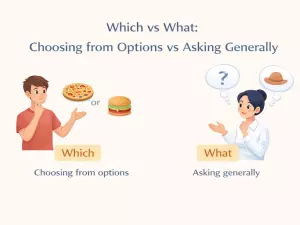
Which vs What: Choosing from Options vs Asking Generally
The article explains the key difference between which and what, discusses closed and open choice questions, and shows how to use each with or without nouns. It also covers implied options, usage in speech and writing, common mistakes, and context-based practice.
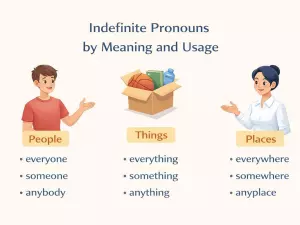
Indefinite Pronouns by Meaning and Usage
This article explains indefinite pronouns, grouping them by people, things, quantity, and negatives. It covers agreement patterns, highlights typical learner errors, and provides practice picking the correct group for different contexts.
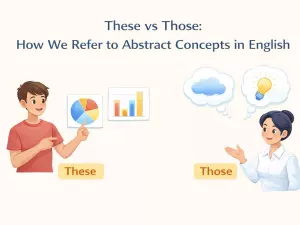
These vs Those: How We Refer to Abstract Concepts in English
Here we the core plural meaning of these and those, their use for ideas, facts, and arguments, how to show near or distant reference in abstract contexts, common mistakes, patterns in speech and writing, and offers practice rewriting sentences.
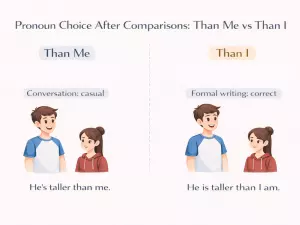
Pronoun Choice After Comparisons: Than Me vs Than I
This article explains why comparisons confuse pronouns, how than functions as a conjunction or preposition, and differences between formal and informal patterns.
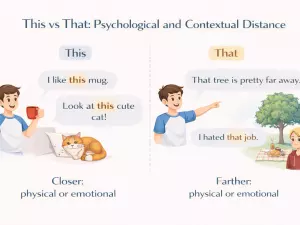
This vs That: Psychological and Contextual Distance
Here we the basic meanings of this and that, their use for physical and psychological distance, time, ideas, and situations, speaker attitude, and common learner mistakes.
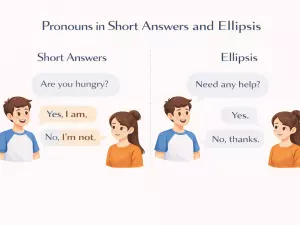
Pronouns in Short Answers and Ellipsis
This article explains what ellipsis is, why it is used in English, and how it helps make short answers with pronouns and auxiliaries. It covers avoiding repetition, common mistakes, spoken versus written patterns, and includes practice.
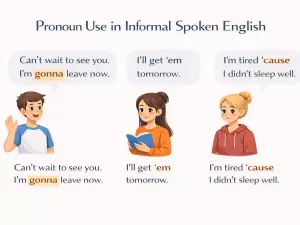
Pronoun Use in Informal Spoken English
Here we how pronouns work in casual speech, focusing on reduced forms, vague references like they or it, and differences from formal writing. It also highlights common learner mistakes and gives practice rewriting sentences informally.
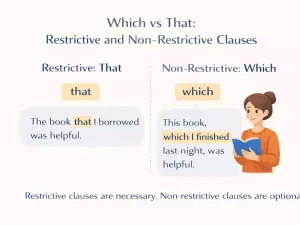
Which vs That: Restrictive and Non-Restrictive Clauses
This article explains restrictive and non-restrictive clauses, the meaning change caused by commas, and the difference between which and that. It covers American English rules, spoken versus written use, punctuation mistakes, and editing tips.
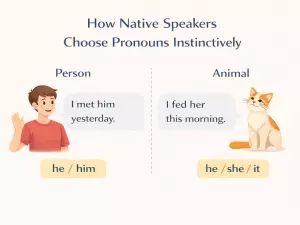
How Native Speakers Choose Pronouns Instinctively
The article explains why native speakers choose pronouns instinctively, how context and shared knowledge guide their choices, and how they avoid ambiguity.
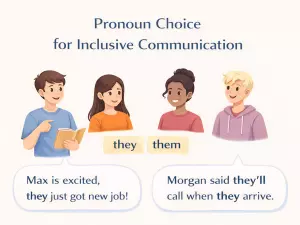
Pronoun Choice for Inclusive Communication
The article defines inclusive communication, covers respectful use of gender-neutral pronouns such as singular they, and explains how to avoid exclusion and common mistakes. It includes practical tips and sentence rewrites for using inclusive language professionally.
Previous
1
...
35
36
37
38
39
40
41
42
43
...
124
Next