Search the site
Search
Grammar ▾
▸ Articles
▸ Advanced Grammar
▸ Adjectives & Adverbs
▸ Conjunctions
▸ Conditionals
▸ Determiners
▸ Gerunds & Infinitives
▸ Grammar Practice
▸ Modal Verbs
▸ Nouns
▸ Parts of Speech
▸ Prepositions
▸ Pronouns
▸ Quantifiers
▸ Question Formation
▸ Reported Speech
▸ Verbs
Writing ▾
▸ Punctuation
▸ Sentence Structure
▸ Writing Mistakes
Vocabulary ▾
▸ Visual Vocabulary
▸ Food Vocabulary
▸ People Vocabulary
▸ Places Vocabulary
▸ Hobbies Vocabulary
▸ Home Vocabulary
▸ School Vocabulary
▸ Weather Vocabulary
▸ Basic Vocabulary
▸ General Vocabulary
Speaking ▾
▸ Conversational English
Calculators
Contacts
Home
»
English
»
Grammar
Grammar
This section focuses on English grammar explained in a simple and practical way. You will find clear rules, step-by-step examples, and common mistakes to avoid, helping you build a strong foundation for speaking and writing confidently.
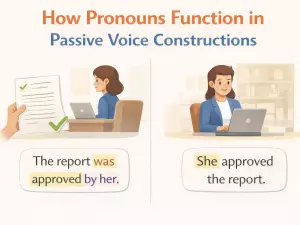
How Pronouns Function in Passive Voice Constructions
The article explains passive voice structure, pronoun placement, use of agent phrases, agentless passives, get-passives with pronouns, and formal versus informal styles. It also highlights common learner mistakes and offers practice rewriting actives as passives.
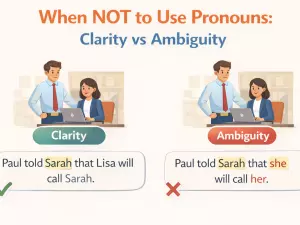
When NOT to Use Pronouns: Clarity vs Ambiguity
The article explains how pronouns can confuse readers through unclear antecedents, ambiguity, or overuse in dense text. It covers when repeating nouns is clearer, common mistakes, editing tips, examples, and a checklist for pronoun clarity.
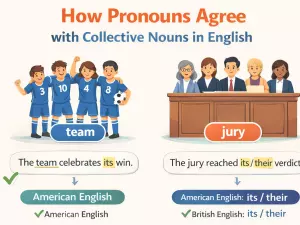
How Pronouns Agree with Collective Nouns in English
Here we what collective nouns are, how they agree with verbs and pronouns in both British and American English, meaning-based agreement, common learner errors, formal writing preferences, and includes practice with choosing the right pronouns.
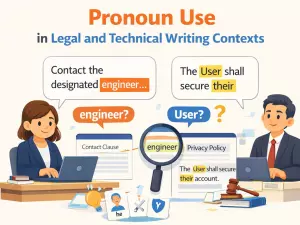
Pronoun Use in Legal and Technical Writing Contexts
Here we why pronouns are risky in legal and technical writing, examines clarity versus readability, details pronoun restrictions, and shows when repetition or impersonal terms are better.
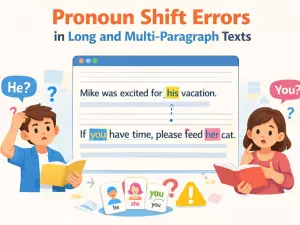
Pronoun Shift Errors in Long and Multi-Paragraph Texts
The article defines pronoun shift errors, explains shifts in person, number, and perspective, and shows why long texts make these mistakes more likely.
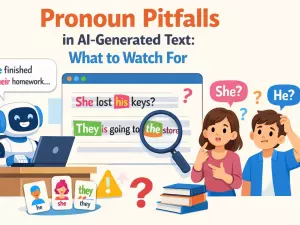
Pronoun Pitfalls in AI-Generated Text: What to Watch For
Here we why AI struggles with pronoun references, details common errors such as hallucinated or missing antecedents and vague pronouns, and provides editing tips, prompting strategies, review best practices, and hands-on editing exercises.
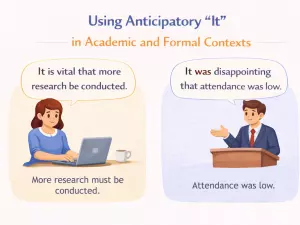
Using Anticipatory “It” in Academic and Formal Contexts
Here we what anticipatory it means, reasons for delaying heavy subjects in English, common academic patterns, it plus adjective plus clause structures, typical learner mistakes, and how to transform sentences into a more formal, impersonal style.
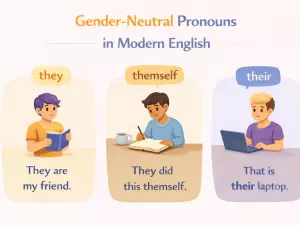
Gender-Neutral Pronouns in Modern English
This article explains the importance of gender-neutral pronouns, the rise of singular they, and alternatives to he or she in formal writing. It covers gender-neutral language at work, common concerns, acceptance levels, and practical rewriting tips.
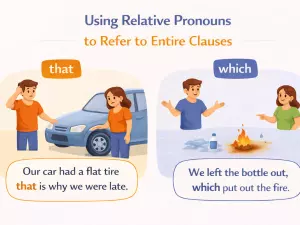
Using Relative Pronouns to Refer to Entire Clauses
Here we how relative pronouns like which can refer to entire ideas or clauses, explains differences between this, that, and relative which, addresses punctuation and ambiguity, and provides editing strategies and practice to improve clarity in writing.
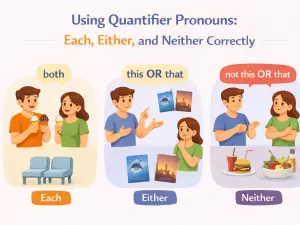
Using Quantifier Pronouns: Each, Either, and Neither Correctly
Here we how quantifier pronouns work, differences between each and every, using either and neither with choices and verb agreement, common mistakes, spoken versus written forms, and provides practice in selecting the right pronoun.
Previous
1
...
33
34
35
36
37
38
39
40
41
...
124
Next