Search the site
Search
Grammar ▾
▸ Articles
▸ Advanced Grammar
▸ Adjectives & Adverbs
▸ Conjunctions
▸ Conditionals
▸ Determiners
▸ Gerunds & Infinitives
▸ Grammar Practice
▸ Modal Verbs
▸ Nouns
▸ Parts of Speech
▸ Prepositions
▸ Pronouns
▸ Quantifiers
▸ Question Formation
▸ Reported Speech
▸ Verbs
Writing ▾
▸ Punctuation
▸ Sentence Structure
▸ Writing Mistakes
Vocabulary ▾
▸ Visual Vocabulary
▸ Food Vocabulary
▸ People Vocabulary
▸ Places Vocabulary
▸ Hobbies Vocabulary
▸ Home Vocabulary
▸ School Vocabulary
▸ Weather Vocabulary
▸ Basic Vocabulary
▸ General Vocabulary
Speaking ▾
▸ Conversational English
Calculators
Contacts
Home
»
English
»
Grammar
Grammar
This section focuses on English grammar explained in a simple and practical way. You will find clear rules, step-by-step examples, and common mistakes to avoid, helping you build a strong foundation for speaking and writing confidently.
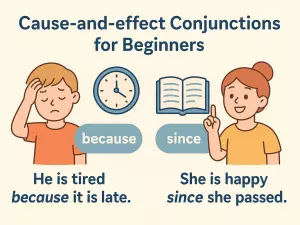
Cause-and-effect Conjunctions for Beginners: because, since
This article explains how to express cause and effect in everyday English sentences using because and since. It covers when to use each word, where to place reason clauses, punctuation rules, and includes practice matching reasons to results.
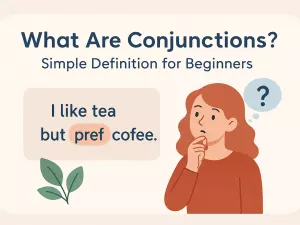
What Are Conjunctions? Simple Definition for Beginners
This article explains conjunctions as words that join other words, phrases, or clauses. It gives everyday examples, shows how they create longer sentences, highlights their role in clear communication, and includes a short quiz to identify conjunctions.
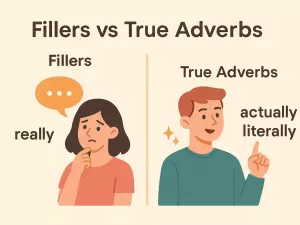
Fillers vs True Adverbs: really, actually, literally
Here we how fillers differ from meaningful adverbs, their effect on tone and clarity, and the correct use of really, actually, and literally. It also discusses overuse, gives examples, and offers practice in editing out fillers.
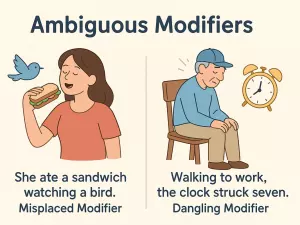
Ambiguous Modifiers: misplaced and dangling modifiers
Here we what ambiguity in modification is, defines misplaced and dangling modifiers, and explains how their incorrect placement changes meaning. It also offers rules for fixing ambiguous modifiers, real examples, and practice exercises for correction.
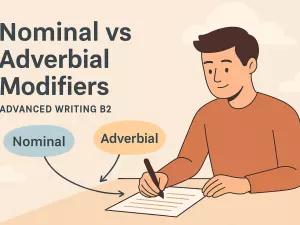
Nominal vs Adverbial Modifiers (advanced writing skill, но B2)
Here we how nominal and adverbial modifiers differ, how modifiers help clarify relationships between ideas, and placement rules for pre- and post-modifiers. It also gives examples, highlights common mistakes, and offers practice identifying modifier types.
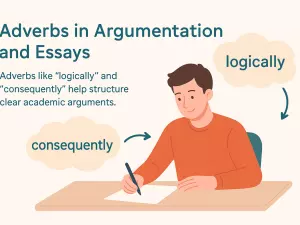
Adverbs in Argumentation and Essays (logically, consequently)
Here we how adverbs like logically, consequently, therefore, and similarly enhance logical flow in writing. It covers their meanings, correct placement in academic sentences, building coherent arguments, and provides examples and practice.
Using Adjectives in CVs and Job Applications
Here we how to use adjectives effectively in professional documents, especially CVs. It lists strong and weak adjectives, gives tips for describing skills and achievements clearly, provides sample CV bullet points, and includes practice exercises.
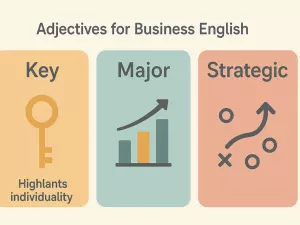
Adjectives for Business English: key, major, strategic
Here we how adjectives improve business communication, outlines common business descriptors, and explains their meanings.
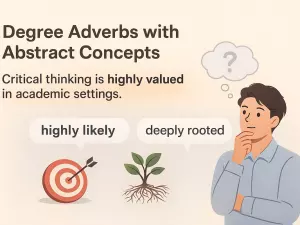
Degree Adverbs with Abstract Concepts (highly likely, deeply rooted)
Here we how degree adverbs intensify meaning, highlights strong collocations with abstract nouns, and discusses common mistakes with very and really. It also provides academic examples and practice for selecting the best degree adverbs.
Practical Test: Adjectives & Adverbs in Short Paragraphs
Here we an integrated test on adjectives and adverbs. It includes exercises on missing modifiers, selecting the correct adjective or adverb, checking word order and tone, detailed answer explanations, and a final paragraph writing task.
Previous
1
...
74
75
76
77
78
79
80
81
82
...
124
Next