Search the site
Search
Grammar ▾
▸ Articles
▸ Advanced Grammar
▸ Adjectives & Adverbs
▸ Conjunctions
▸ Conditionals
▸ Determiners
▸ Gerunds & Infinitives
▸ Grammar Practice
▸ Modal Verbs
▸ Nouns
▸ Parts of Speech
▸ Prepositions
▸ Pronouns
▸ Quantifiers
▸ Question Formation
▸ Reported Speech
▸ Verbs
Writing ▾
▸ Punctuation
▸ Sentence Structure
▸ Writing Mistakes
Vocabulary ▾
▸ Visual Vocabulary
▸ Food Vocabulary
▸ People Vocabulary
▸ Places Vocabulary
▸ Hobbies Vocabulary
▸ Home Vocabulary
▸ School Vocabulary
▸ Weather Vocabulary
▸ Basic Vocabulary
▸ General Vocabulary
Speaking ▾
▸ Conversational English
Calculators
Contacts
Home
»
English
»
Grammar
Grammar
This section focuses on English grammar explained in a simple and practical way. You will find clear rules, step-by-step examples, and common mistakes to avoid, helping you build a strong foundation for speaking and writing confidently.
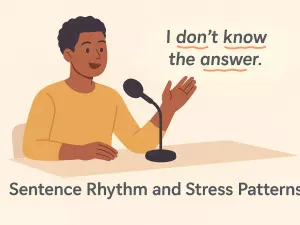
Sentence Rhythm and Stress Patterns for Natural Delivery
Here we the meaning of rhythm in English, stressing content versus function words, how intonation affects meaning, using pausing and chunking for clarity, typical rhythm patterns, common mistakes, and practical exercises for marking stress.
Editing Chains: Remove Fillers, Strengthen Verbs, Simplify Nouns
The article introduces editing chains and guides you through spotting fillers, cutting redundancies, using stronger verbs, and simplifying noun-heavy phrases. It also covers improving sentence flow and provides before-and-after examples plus editing practice.
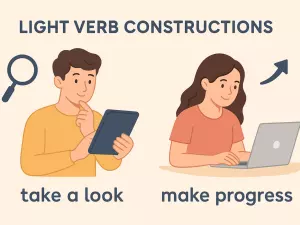
Light Verb Constructions (take a look, make progress)
The article defines light verb constructions, lists frequent light verbs such as take, make, have, and give, explains their function and usage differences, contrasts them with full verbs, and provides academic examples and practice exercises.
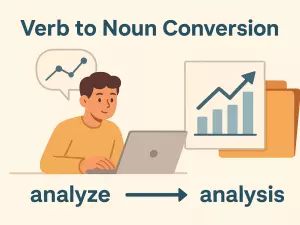
Verb to Noun Conversion for Formal Writing (analyze → analysis)
This article explains verb to noun conversion, key suffixes like -tion and -ment, how meanings shift, and when to use these nouns in reports and essays. It warns against overuse and offers practice for balancing verb and noun forms.
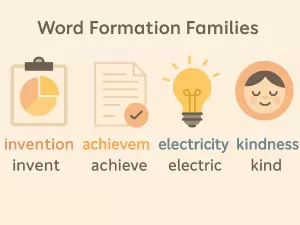
Word Formation Families: -tion / -ment / -ity / -ness
Here we word-formation families, showing how suffixes like -tion, -ment, -ity, and -ness turn words into nouns. It explains meaning patterns, spelling changes, register notes, building word lists, avoiding near synonyms, and offers practice tasks.
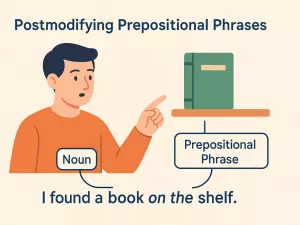
Postmodifying Prepositional Phrases after Nouns
This article explains postmodification in noun phrases, covering noun plus prepositional phrase structures, types of meaning like place or time, the difference between pre- and post-modifiers, stacking phrases, avoiding ambiguity, style tips, and practice exercises.
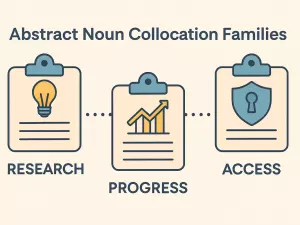
Abstract Noun Collocation Families (research, progress, access)
The article explains what abstract nouns are, why collocations matter, and which verbs, adjectives, and prepositions commonly pair with research, progress, and access. It also offers tips and practice for expanding effective academic collocations.
Advanced Collective Noun Agreement: audience are / audience is
Here we what collective nouns are in English grammar, explains notional versus grammatical agreement, compares British and American usage, discusses verb and pronoun agreement patterns, and gives editing practice to help avoid typical errors.
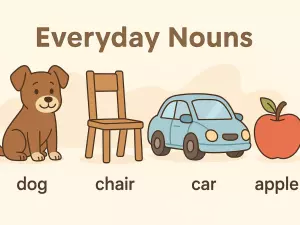
100+ Everyday Nouns You'll Use from Day One
The article defines everyday nouns and their main categories, such as people, places, things, and time. It also covers common nouns learners first encounter, basic grammar rules, frequent collocations, typical mistakes, and provides short practice exercises.
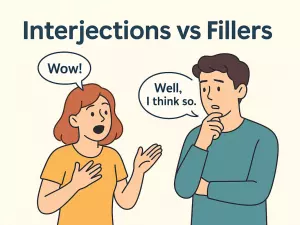
Interjections vs Fillers: Structural Difference
The article defines interjections and fillers, compares their grammar and discourse roles, and lists their typical forms. It also gives examples to highlight the differences and offers a quick practice to help you recognize them in real conversations.
Previous
1
...
93
94
95
96
97
98
99
100
101
...
124
Next