This, These, That, Those in Everyday English

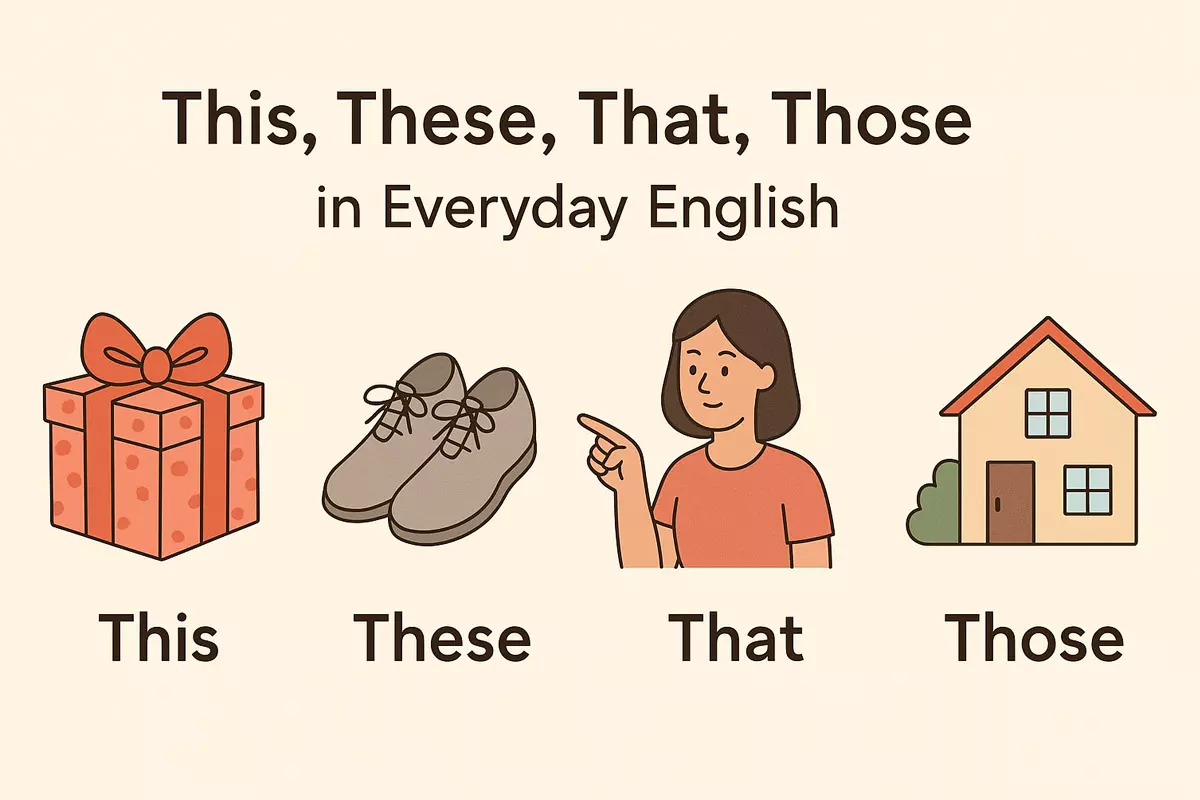 This article explains demonstratives, showing how to use this and these for nearby objects and that and those for distant ones. It covers using demonstratives with nouns, highlights common mistakes, and includes a practice exercise.
We often point to people, objects, or ideas when we speak, and English uses demonstratives to make those references clear. Words like this, that, these, and those help show whether something is near or far, singular or plural. Using them correctly makes speech more natural and helps listeners understand exactly what you mean in both everyday and formal communication.
What Are Demonstratives?
Demonstratives are words that identify specific people, things, or ideas in relation to the speaker. In English, the main demonstratives are this, that, these, and those. These belong to the broader category of English pronouns. They show two things at once: whether the reference is near or far, and whether it is singular or plural.
How Demonstratives Work
The choice between these terms depends on two factors:
- Distance: Is the noun close to or far from the speaker?
- Number: Is the noun singular or plural?
For example, “this” is used for a single item close to you, while “those” refers to multiple items farther away.
Quick Reference: Demonstrative Forms
| Word | Singular/Plural | Near/Far | Example |
|---|---|---|---|
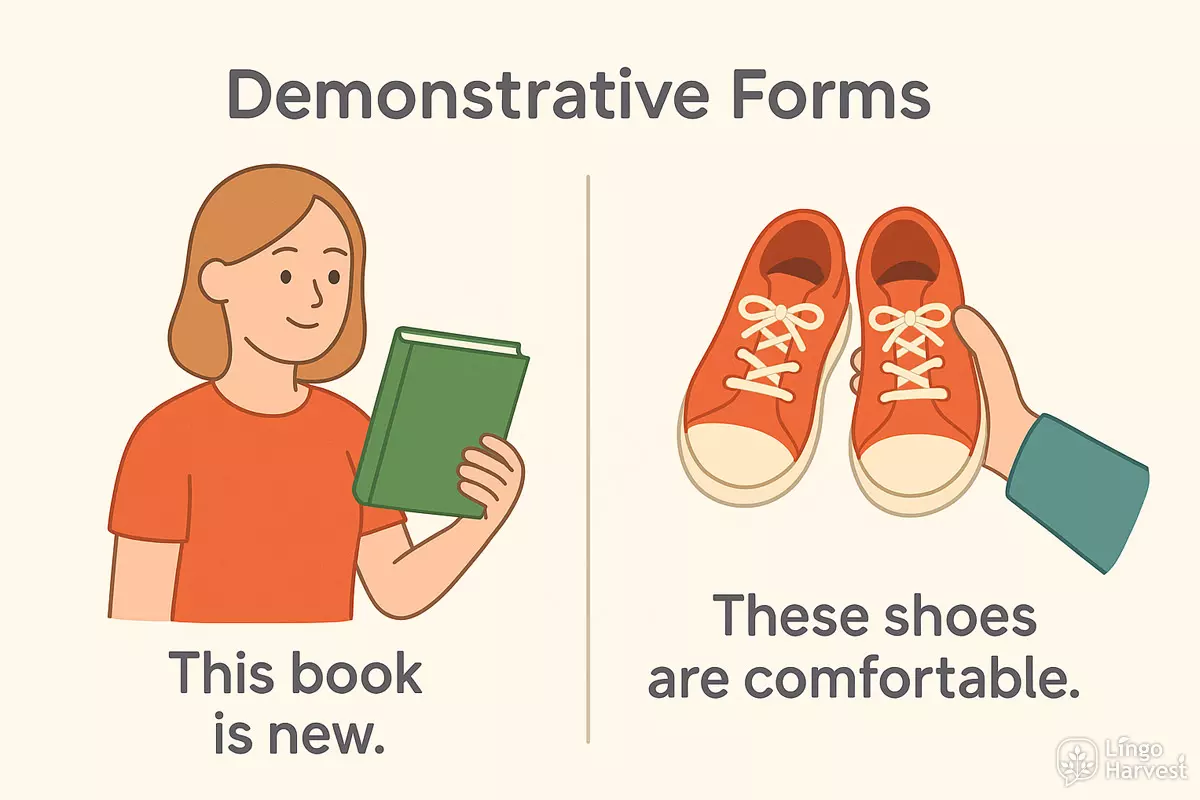
| This | Singular | Near | This book is new. |
| These | Plural | Near | These shoes are comfortable. |
| That | Singular | Far | That car is fast. |
| Those | Plural | Far | Those houses look old. |
Ways Demonstratives Are Used
Demonstratives can work in two main ways. If you want a deeper explanation of how they function in English grammar, see our complete guide to demonstrative pronouns.
- As determiners before a noun: This song is catchy.
- As pronouns standing alone: I’ll take these.
They can also refer to ideas, situations, or comments, not only physical objects. Demonstratives are commonly used as pronouns for things and ideas. For example: That was a good question. / I don’t agree with this.
Demonstratives as Determiners vs Pronouns
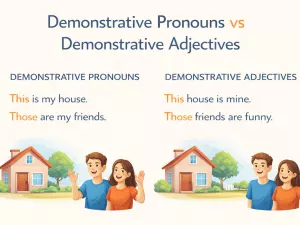
Demonstratives can appear before a noun or stand alone. When they come before a noun, they function as determiners. When they stand alone, they function as pronouns.
| Function | Example | Explanation |
|---|---|---|
| Determiner | This book is heavy. | The demonstrative comes before the noun. |
| Pronoun | This is heavy. | The noun is not repeated because it is understood. |
Common Demonstrative Examples
Here are a few simple examples of demonstratives in everyday English:
- This is my seat.
- Can you pass me that pen?
- These are my friends.
- I remember those days.
- This tastes amazing.
- Are those yours?
These examples show that demonstratives can refer to objects, people, experiences, and ideas. They help make meaning more precise by showing exactly what the speaker refers to.
This vs These for Near Objects
Choosing between this and these depends on number, not on meaning alone. Both refer to things that are close to the speaker. Use this with a singular noun and these with a plural noun.
When to Use "This"
“This” is singular. Use it when you’re talking about just one object or person that is nearby. For example:
- This book is interesting. (one book, close to you)
- Who is this person? (one person, next to you)
- This chair is comfortable. (one chair, near you)
When to Use "These"
“These” is plural. It’s the right choice when you have two or more things close to you. Some examples:
- These apples are fresh. (several apples, on the table)
- Can you pass me these papers? (a stack of papers nearby)
- These shoes fit well. (a pair of shoes you’re holding)
Quick Comparison
To help you remember, here’s a side-by-side look at how “this” and “these” are used with objects close at hand:
| Singular: This | Plural: These |
|---|---|
| This pen is blue. | These pens are blue. |
| I like this photo. | I like these photos. |
| This child is my cousin. | These children are my cousins. |
| Is this your key? | Are these your keys? |
| This cup is empty. | These cups are empty. |
| This idea sounds good. | These ideas sound good. |
| I need this document. | I need these documents. |
| This flower smells nice. | These flowers smell nice. |
| Can you see this mark? | Can you see these marks? |
| This question is easy. | These questions are easy. |
Tips to Remember
- Use this with one nearby person or thing.
- Use these with two or more nearby people or things.
- Check the noun first: singular or plural.
- If the object is close and the noun is plural, these is the right choice.
Understanding the distinction helps you sound more natural when talking about things nearby, whether you’re picking up one object or several.
That vs Those for Far Objects
Use that and those for people, things, or ideas that are not close to the speaker. That is singular, while those is plural. This distinction helps make your meaning clear when referring to something at a distance or outside your immediate context.
How to Choose: Singular or Plural?
If you are talking about one item, use "that." For example, if you see a bicycle across the street, you might say, "That is my bike." When there are multiple items, switch to "those": "Those are my friends over there." This simple rule helps avoid confusion when referring to people or things that are not within arm’s reach.
Common Examples in Everyday Conversation
- That mountain looks beautiful from here.
- Could you hand me that book on the shelf?
- I don’t like that kind of music.
- Those clouds mean it might rain soon.
- Are those your shoes by the door?
- Look at those birds in the sky!
- That restaurant across the street is new.
- Those houses are very old.
- I remember that day very well.
- Those apples on the tree look ripe.
- Can you see that sign in the distance?
- Those lights are very bright at night.
Quick Reference Table
| Form | Example Sentence |
|---|---|
| That (singular, far) | That car is mine. → (one car, not near) |
| Those (plural, far) | Those dogs are barking. → (several dogs, not near) |
| That (used for ideas/events) | That was a great movie. → (referring to something mentioned or experienced previously) |
| Those (used for repeated events/things) | Those were the days! → (refers to a period in the past, not specific items) |
Tips for Everyday Use
- Use "that" for just one object, person, or idea that is not close.
- Choose "those" when talking about more than one thing far away.
- These words can also refer to past events or things not physically present.
- Adding a gesture or pointing often helps clarify your meaning.
Using Demonstratives with Nouns
When demonstratives come before nouns, they must match both the number of the noun and the speaker’s sense of distance. This makes noun phrases like this book, these books, that book, and those books easy to understand and grammatically correct.
Basic Pattern
- This + singular noun: this apple
- These + plural noun: these apples
- That + singular noun: that apple
- Those + plural noun: those apples
Examples with Nouns
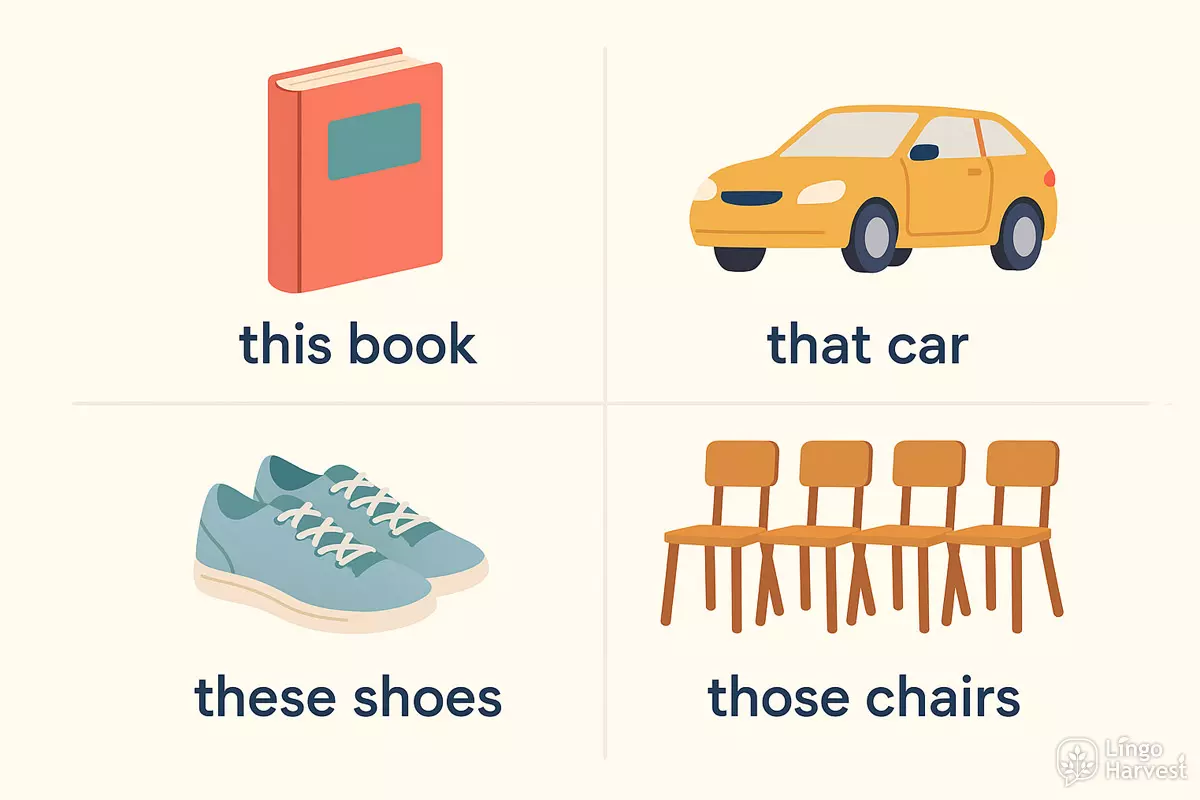
- this book
- these shoes
- that car
- those chairs
- this idea
- these questions
- that movie
- those buildings
Quick Reference
| Form | Number | Distance | Example |
|---|---|---|---|
| This | Singular | Near | this pen |
| These | Plural | Near | these pens |
| That | Singular | Far | that pen |
| Those | Plural | Far | those pens |
Important Rules
- Use this and that with singular nouns only.
- Use these and those with plural nouns only.
- Place the demonstrative before the noun: these keys, not keys these.
- Choose near or far based on the speaker’s point of view.
Once you get used to matching number and distance, using demonstratives with nouns becomes much easier and more natural.
Demonstratives for Time and Ideas
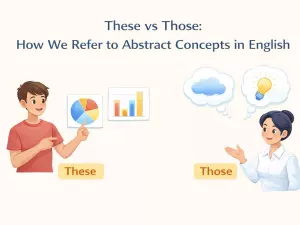
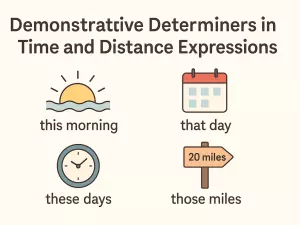
Demonstratives are not used only for physical objects. They can also refer to time, situations, and ideas. In these cases, the meaning of “near” and “far” becomes more abstract.
- This morning has been very busy.
- I will never forget that day.
- These days, many people work remotely.
- That was a surprising answer.
Here the demonstratives help the speaker refer to experiences, memories, or current situations rather than objects in physical space.
Common Mistakes
Using "this," "these," "that," and "those" can be tricky, especially for learners who don’t have similar words in their native language. Many people confuse which term to use for singular or plural objects, or mix up when to indicate something is near or far. These mix-ups can lead to misunderstandings or awkward sentences.
Mixing Up Singular and Plural Forms with Pronouns
One of the most frequent errors is using the wrong demonstrative with singular or plural nouns. This type of mistake is common when learning pronouns. You can also review other typical problems in our guide to common pronoun mistakes and fixes.
- Saying “this apples” instead of “these apples” ❌
- Writing “those book” instead of “those books” ❌
- Using “these chair” instead of “these chairs” ❌
Remember: "this" and "that" are for singular nouns, while "these" and "those" are for plural nouns.
Confusing Near and Far References
Another stumbling block is choosing the right word based on distance.
- “This table” (table is close to the speaker) ✅
- “That table” (table is farther from the speaker) ✅
- Mixing them up: pointing to a distant object and saying “this” ❌
Incorrect Agreement with Verbs and Pronouns
Another common problem is incorrect agreement between the demonstrative and the verb. Singular forms usually go with singular verbs, and plural forms go with plural verbs.
- These is my friend. ❌ → This is my friend. ✅
- Those is my favorite. ❌ → That is my favorite. ✅
- This are my keys. ❌ → These are my keys. ✅
Summary Table: Correct Usage Patterns
| Demonstrative | Singular/Plural | Near/Far | Example |
|---|---|---|---|
| This | Singular | Near | This pen is blue. |
| These | Plural | Near | These apples are fresh. |
| That | Singular | Far | That car is fast. |
| Those | Plural | Far | Those dogs are barking. |
Extra Tips to Avoid Errors
- Check whether the noun is singular or plural before choosing the demonstrative.
- Decide whether the person, thing, or idea feels near or far in context.
- Make sure the verb matches: this is, these are, that is, those are.
- Practice with real-life examples so the pattern becomes automatic.
With practice and attention to these patterns, you’ll quickly become more confident and accurate in everyday English conversations.
Practice: Choose Correct Demonstrative
Now it’s time to practice choosing the correct demonstrative. In each exercise, focus on two things: whether the noun is singular or plural, and whether the person, object, or idea is near or far in context.
Quick Selection: Fill in the Blank
For each sentence, choose the correct demonstrative ("this," "these," "that," or "those") to fill in the blank.
- ______ book on my desk is very interesting.
- Could you hand me ______ pens over there?
- I love ______ shoes you are wearing.
- ______ is my favorite mug (pointing to a mug in your hand).
- ______ mountains in the distance look beautiful.
- Do you remember ______ day we met?
- ______ cookies smell delicious (cookies are on the table right in front of you).
- ______ isn’t what I ordered (pointing to a dish just brought to your table).
- ______ ideas you mentioned earlier are really creative.
- ______ chair is broken (the chair is far from you).
Show answers
- This
- those
- those
- This
- Those
- that
- These
- This
- Those
- That
Choose the Right Word: Everyday Situations
Select which demonstrative fits best for each scenario below:
- Pointing to a nearby notebook: ______ notebook is mine.
- Talking about several distant buildings: ______ buildings are historical.
- Holding a cup and showing it: ______ is my favorite cup.
- Gesturing at shoes by the door (not near you): ______ shoes need cleaning.
- Pointing to a pen in your hand: ______ pen writes very smoothly.
- Looking at a car across the street: ______ car belongs to our neighbor.
- Showing a nearby chair: ______ chair is broken.
- Talking about books on a far shelf: ______ books are very old.
- Holding a photo and showing it: ______ is my family photo.
- Pointing to apples on a table near you: ______ apples look fresh.
- Gesturing at a house on the hill far away: ______ house is beautiful.
- Talking about socks under the bed (not near you): ______ socks smell terrible.
- Showing a nearby phone: ______ phone is brand new.
- Pointing to stars in the sky: ______ stars are bright tonight.
Show answers
- This
- Those
- This
- Those
- This
- That
- This
- Those
- This
- These
- That
- Those
- This
- Those
Correct the Mistakes
Each sentence below contains a mistake with demonstratives. Identify the error and correct it.
- This apples are sweet.
- Those is my bag.
- These chair is broken.
- That shoes look expensive.
- This are my notebooks.
- Those book belongs to Anna.
- This pencils are mine.
- These dog is very friendly.
- That apples look fresh.
- Those car is very fast.
- This shoes are uncomfortable.
- These is my favorite song.
Show answers
- These apples are sweet.
- That is my bag.
- This chair is broken.
- Those shoes look expensive.
- These are my notebooks.
- That book belongs to Anna.
- These pencils are mine.
- This dog is very friendly.
- Those apples look fresh.
- That car is very fast.
- These shoes are uncomfortable.
- This is my favorite song.
Regular practice with real situations will help you choose this, these, that, and those more confidently. Understanding how pronouns work in real speech will also help your English sound more natural. For more examples, see our guide on how pronouns sound natural in English.