Search the site
Search
Grammar ▾
▸ Articles
▸ Advanced Grammar
▸ Adjectives & Adverbs
▸ Conjunctions
▸ Conditionals
▸ Determiners
▸ Gerunds & Infinitives
▸ Grammar Practice
▸ Modal Verbs
▸ Nouns
▸ Parts of Speech
▸ Passive Voice
▸ Prepositions
▸ Pronouns
▸ Quantifiers
▸ Question Formation
▸ Reported Speech
▸ Verbs
Writing ▾
▸ Punctuation
▸ Sentence Structure
▸ Writing Mistakes
Vocabulary ▾
▸ Visual Vocabulary
▸ Food Vocabulary
▸ People Vocabulary
▸ Places Vocabulary
▸ Hobbies Vocabulary
▸ Home Vocabulary
▸ School Vocabulary
▸ Weather Vocabulary
▸ Basic Vocabulary
▸ General Vocabulary
Speaking ▾
▸ Conversational English
Calculators
Contacts
Home
» A1–A2 Beginner
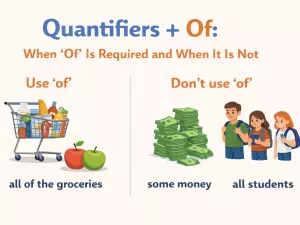
Quantifiers + Of: When “Of” Is Required and When It Is Not
Here we how to use of with quantifiers, including when it is needed before nouns or pronouns, common patterns with words like some and most, typical learner mistakes, and provides examples and practice distinguishing correct usage.
Too Much vs Too Many vs Too: Expressing Excess in English
Here we the core meaning of excess in English, explains how to use too, too much, and too many with countable and uncountable nouns, highlights common mistakes, discusses word order, and gives practical examples and exercises.
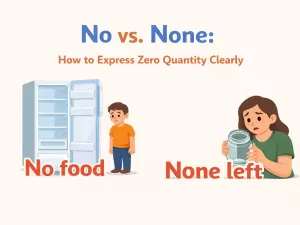
No vs None: How to Express Zero Quantity Clearly
The article explains how to use no and none, showing their roles as determiner and pronoun. It covers agreement rules, double negatives, common errors, and gives clear examples and practice for choosing the correct word in everyday situations.
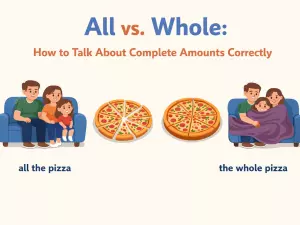
All vs Whole: How to Talk About Complete Amounts Correctly
Here we the core meanings of all and whole, the types of nouns each can modify, and differences in sentence position.
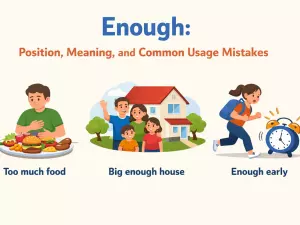
Enough: Position, Meaning, and Common Usage Mistakes
Here we how to use enough with nouns, adjectives, and verbs, highlights the difference between enough and sufficient, explains how placement affects meaning, discusses common word order mistakes, and provides practice with real examples.
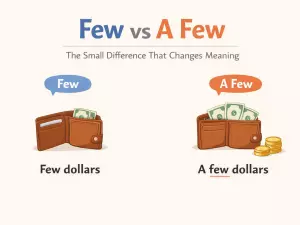
Few vs A Few: The Small Difference That Changes Meaning
The article explains the core difference between few and a few, focusing on their negative or positive attitudes toward quantity. It covers usage with countable nouns, common mistakes, sentence patterns, contextual shifts, clear examples, and practice.
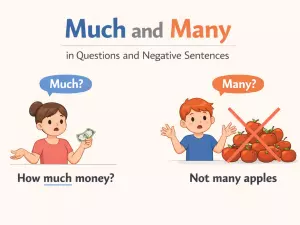
Much and Many in Questions and Negative Sentences
Here we how to use much and many with countable and uncountable nouns, their roles in questions and negatives, formal tone differences, alternatives for positives, typical placement, common mistakes, and offers practice for choosing the right word.
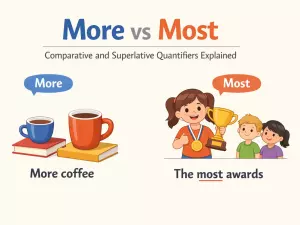
More vs Most: Comparative and Superlative Quantifiers Explained
Here we how to use 'more' and 'most' for comparisons and superlatives, including their use with countable and uncountable nouns, sentence patterns, meaning shifts, and common mistakes. It also provides examples and practice for accurate usage.
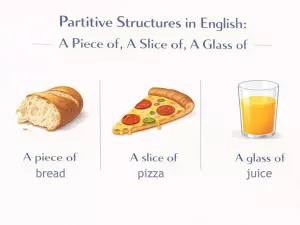
Partitive Structures in English: A Piece of, A Slice of, A Glass of
Here we the purpose and use of partitive structures in English, common partitives for different items, how they differ from countable nouns, typical sentence patterns, clarity issues, frequent mistakes, real-life examples, and practice exercises.
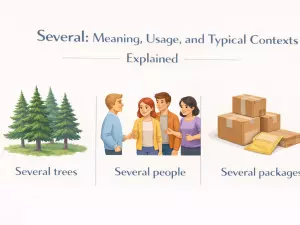
Several: Meaning, Usage, and Typical Contexts Explained
Here we how to use several in English, including its approximate amount, how it differs from a few, and which nouns it matches. It also covers sentence placement, tone in neutral writing, common misconceptions, examples, and practice tips.
Previous
1
...
7
8
9
10
11
12
13
14
15
...
34
Next