Search the site
Search
Grammar ▾
▸ Articles
▸ Advanced Grammar
▸ Adjectives & Adverbs
▸ Conjunctions
▸ Conditionals
▸ Determiners
▸ Gerunds & Infinitives
▸ Grammar Practice
▸ Modal Verbs
▸ Nouns
▸ Parts of Speech
▸ Passive Voice
▸ Prepositions
▸ Pronouns
▸ Quantifiers
▸ Question Formation
▸ Reported Speech
▸ Verbs
Writing ▾
▸ Punctuation
▸ Sentence Structure
▸ Writing Mistakes
Vocabulary ▾
▸ Visual Vocabulary
▸ Food Vocabulary
▸ People Vocabulary
▸ Places Vocabulary
▸ Hobbies Vocabulary
▸ Home Vocabulary
▸ School Vocabulary
▸ Weather Vocabulary
▸ Basic Vocabulary
▸ General Vocabulary
Speaking ▾
▸ Conversational English
Calculators
Contacts
Home
» A1–A2 Beginner
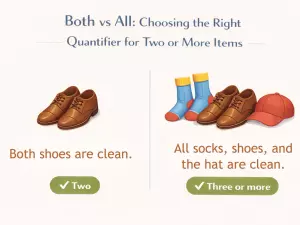
Both vs All: Choosing the Right Quantifier for Two or More Items
This article explains the difference between both and all, covering when to use them with two items or larger sets. It also discusses agreement with verbs and pronouns, word order, common mistakes, real examples, usage differences, and practice tips.
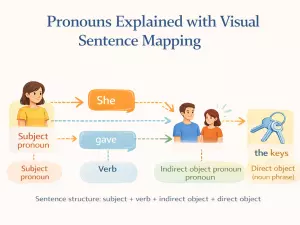
Pronouns Explained with Visual Sentence Mapping
This article explains how visual mapping clarifies pronoun reference. It covers marking nouns, linking pronouns to antecedents, fixing unclear references, mapping subject and object roles, handling clauses, and practicing clear rewrites.
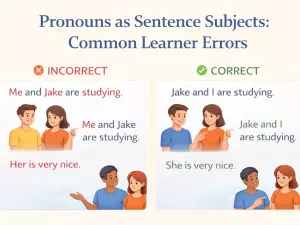
Pronouns as Sentence Subjects: Common Learner Errors
This article explains how to use subject pronouns like I, you, he, she, it, we, and they. It covers when to use pronouns instead of names, common mistakes, coordinated subjects, short answers, dummy subjects, and agreement.
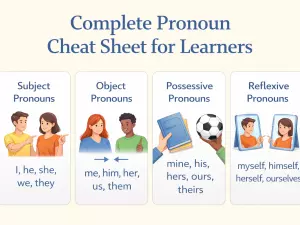
Complete Pronoun Cheat Sheet for Learners
The article summarizes all main pronoun types, covering personal, possessive, reflexive, demonstrative, relative, interrogative, and indefinite pronouns. It also explains common errors, agreement rules, and provides a brief practice section.
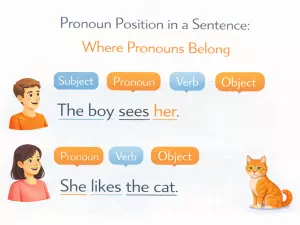
Pronoun Position in a Sentence: Where Pronouns Belong
Here we English pronoun placement, including subject and object order, use with negatives and auxiliary verbs, placement in questions and imperatives, handling double objects, common mistakes, and offers practice with sentence reordering.
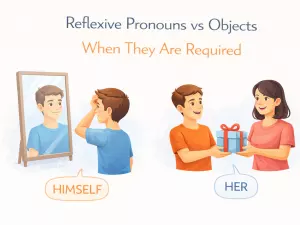
Reflexive Pronouns vs Objects: When They Are Required
Here we the list and meaning of reflexive pronouns, explains differences like myself vs me, shows when reflexives are required, highlights common verbs and errors, explains set phrases, and provides practice choosing the right form in sentences.
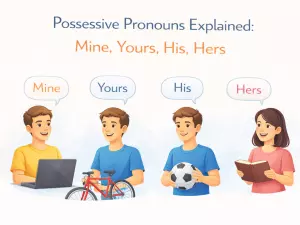
Possessive Pronouns Explained: Mine, Yours, His, Hers
Here we the difference between possessive pronouns and adjectives, lists all possessive pronouns, explains how to use them naturally in sentences and short answers, warns about mistakes like its vs it’s, and gives rewrite practice.
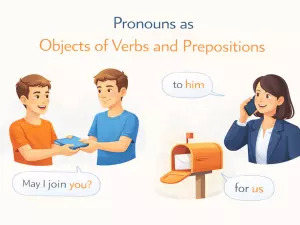
Pronouns as Objects of Verbs and Prepositions
This article explains what object pronouns are and when to use them, including as objects of verbs and prepositions. It covers common errors, their use in questions and with infinitives or -ing forms, word order with two objects, and includes practice exercises.
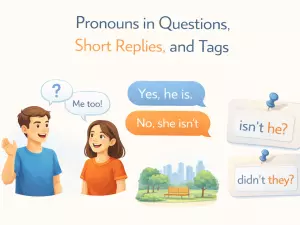
Pronouns in Questions, Short Replies, and Tags
This article explains choosing correct pronouns in questions, forming short replies, and building tag questions with proper pronoun and auxiliary agreement. It highlights common mistakes and includes practice with everyday spoken English structures.
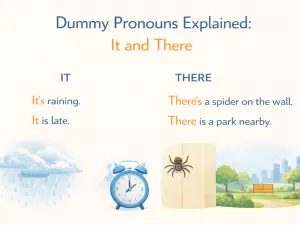
Dummy Pronouns Explained: It and There
This article explains dummy pronouns like it and there, showing how they work with weather, time, distance, and situations. It covers existential there, agreement rules, common mistakes, and offers practice with correct sentence patterns.
Previous
1
...
8
9
10
11
12
13
14
15
16
...
34
Next