What Are Conditional Sentences? Simple Beginner Guide

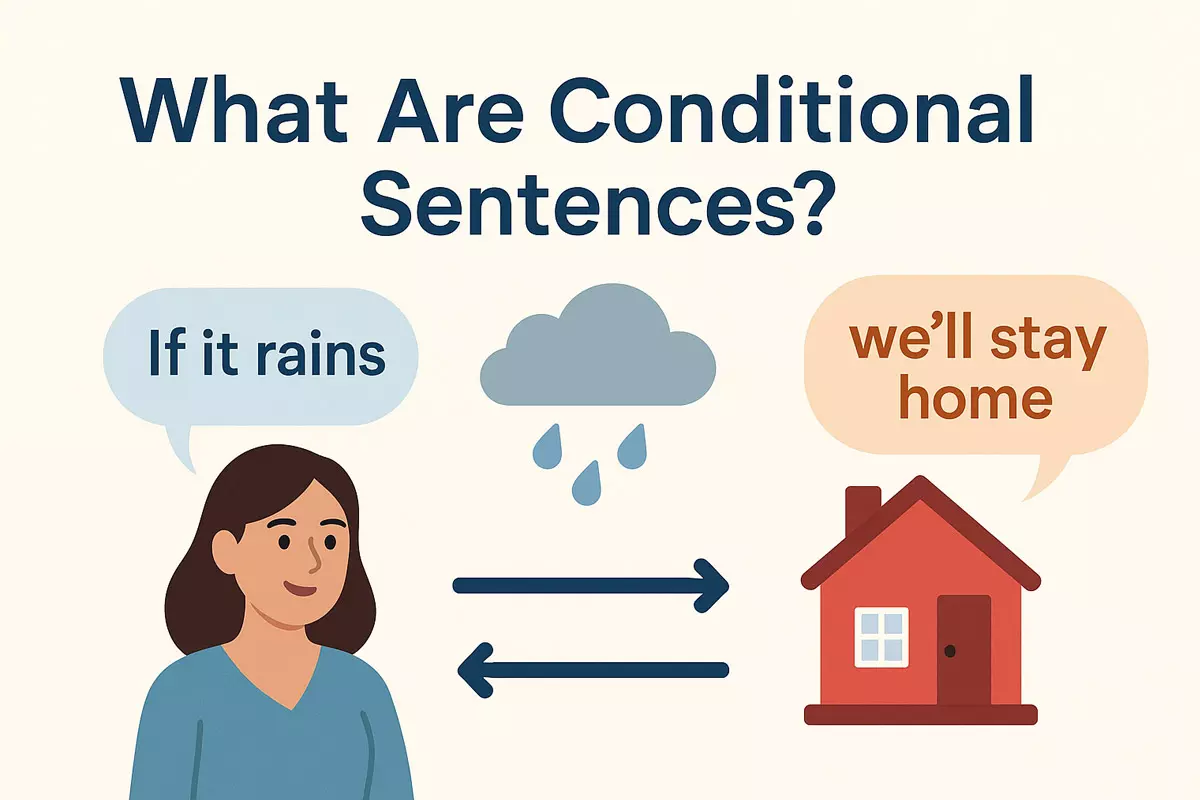 Conditional sentences show that one result depends on a condition. Takeaway: find the if-part first, then ask what happens if it is true. This guide explains condition and result clauses, signal words, real and unreal meanings, everyday examples, and practice.
- What a conditional sentence is in simple terms
- How condition and result clauses work together
- Key words that signal conditional meaning
- Examples from everyday English situations
- Difference between real and unreal conditions at beginner level
- Common beginner mistakes with conditionals
- Practice: identify condition and result
- FAQ
Conditional sentences help you talk about situations where one thing depends on another. Takeaway: a conditional sentence usually has two parts: the condition and the result. If the condition is true, possible, imagined, or remembered, the result tells us what happens, would happen, or would have happened.
What a conditional sentence is in simple terms
A conditional sentence is a sentence that connects a situation with a result. In beginner English, the easiest way to understand it is as an if → result idea.
For example:
- If it rains, we will stay inside.
In this sentence, if it rains is the condition. We will stay inside is the result. The result depends on the condition.
Basic parts of a conditional sentence
| Part | Function | Example part |
|---|---|---|
| Condition clause | Shows the situation, requirement, possibility, or imagined event | If you study |
| Result clause | Shows what happens, will happen, would happen, or would have happened | you will improve |
Common uses of conditional sentences
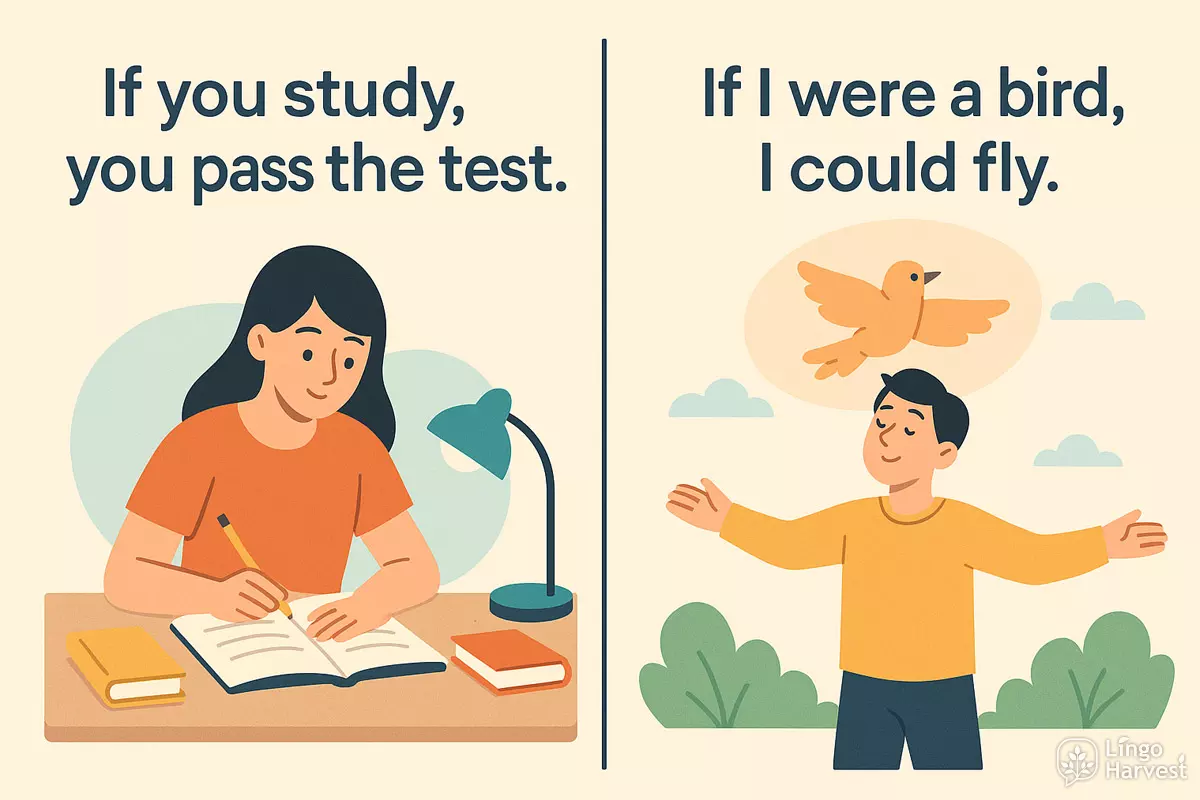
- To describe facts: If you heat ice, it melts.
- To talk about future possibilities: If I finish early, I will call you.
- To give warnings: If you touch that pan, you will burn your hand.
- To make offers: If you need help, let me know.
- To give advice: If I were you, I would wait.
- To imagine unreal situations: If I had more free time, I would learn guitar.
- To talk about regrets: If I had left earlier, I would have caught the train.
Simple beginner pattern
| Pattern | Example | Meaning |
|---|---|---|
| If + condition, result | If you are tired, take a break. | The result depends on the condition. |
| Result + if + condition | Take a break if you are tired. | Same meaning, different order. |
How condition and result clauses work together
A conditional sentence works because two clauses are connected logically. The condition clause sets up the situation. The result clause tells us what follows from that situation.
Condition first, result second
When the condition comes first, English usually uses a comma after the condition clause.
- If it rains, we will stay home.
- If you need help, call me.
- If the shop is open, I will buy some bread.
- If you heat water, it boils.
Result first, condition second
The sentence can also begin with the result. In this order, English usually does not use a comma before the if clause.
- We will stay home if it rains.
- Call me if you need help.
- I will buy some bread if the shop is open.
- Water boils if you heat it.
Same meaning, different order
| Condition first | Result first |
|---|---|
| If you study every day, your grammar improves. | Your grammar improves if you study every day. |
| If she calls, I will answer. | I will answer if she calls. |
| If I had more money, I would travel more. | I would travel more if I had more money. |
| If they had invited us, we would have gone. | We would have gone if they had invited us. |
Useful structure table
At beginner level, you do not need to master every advanced conditional immediately. Start by recognizing the basic relationship between the condition and the result.
| Meaning | Simple pattern | Example |
|---|---|---|
| General truth | If + present, present | If you heat ice, it melts. |
| Real future possibility | If + present, will + verb | If it rains, we will stay inside. |
| Imaginary present/future | If + past, would + verb | If I had more time, I would study more. |
| Imaginary past | If + past perfect, would have + past participle | If I had known, I would have helped. |
For facts and automatic results, you can study the zero conditional separately.
Key words that signal conditional meaning
The word if is the most common signal of a conditional sentence, but English has other words and phrases that can introduce conditional meaning. These words show that one thing depends on another.
Common conditional signal words
| Signal word or phrase | Meaning | Example |
|---|---|---|
| if | Basic condition | If you need help, ask me. |
| unless | If not | Unless you hurry, we will miss the bus. |
| as long as | Only if the condition is true | You can stay as long as you follow the rules. |
| provided that | Formal requirement | You can enter provided that you show your ID. |
| even if | The result happens despite the condition | I will go even if it rains. |
| in case | Preparation for a possible situation | Take a jacket in case it gets cold. |
| when | A condition that is expected or repeated | When you finish, send me a message. |
| otherwise | If not, then this result happens | Leave now; otherwise, you will be late. |
Unless means if not
Unless is one of the most common beginner traps. It already has a negative meaning, so do not add another negative unless you really need one.
- Correct: Unless you study, you won’t pass.
- Meaning: If you do not study, you won’t pass.
- Incorrect for most beginner contexts: Unless you don’t study, you won’t pass.
For more focused examples, review unless examples.
If vs when
If suggests that something may or may not happen. When suggests that something is expected to happen.
- If I see Anna, I will tell her. (Maybe I will see her, maybe not.)
- When I see Anna, I will tell her. (I expect to see her.)
- If the shop is open, I will buy milk. (I do not know if it is open.)
- When the shop opens, I will buy milk. (I expect it to open.)
Examples from everyday English situations
Conditional sentences are not only grammar exercises. They appear in plans, warnings, advice, offers, rules, and everyday decisions. The more you notice them in real situations, the easier they become.
Everyday scenarios using conditionals
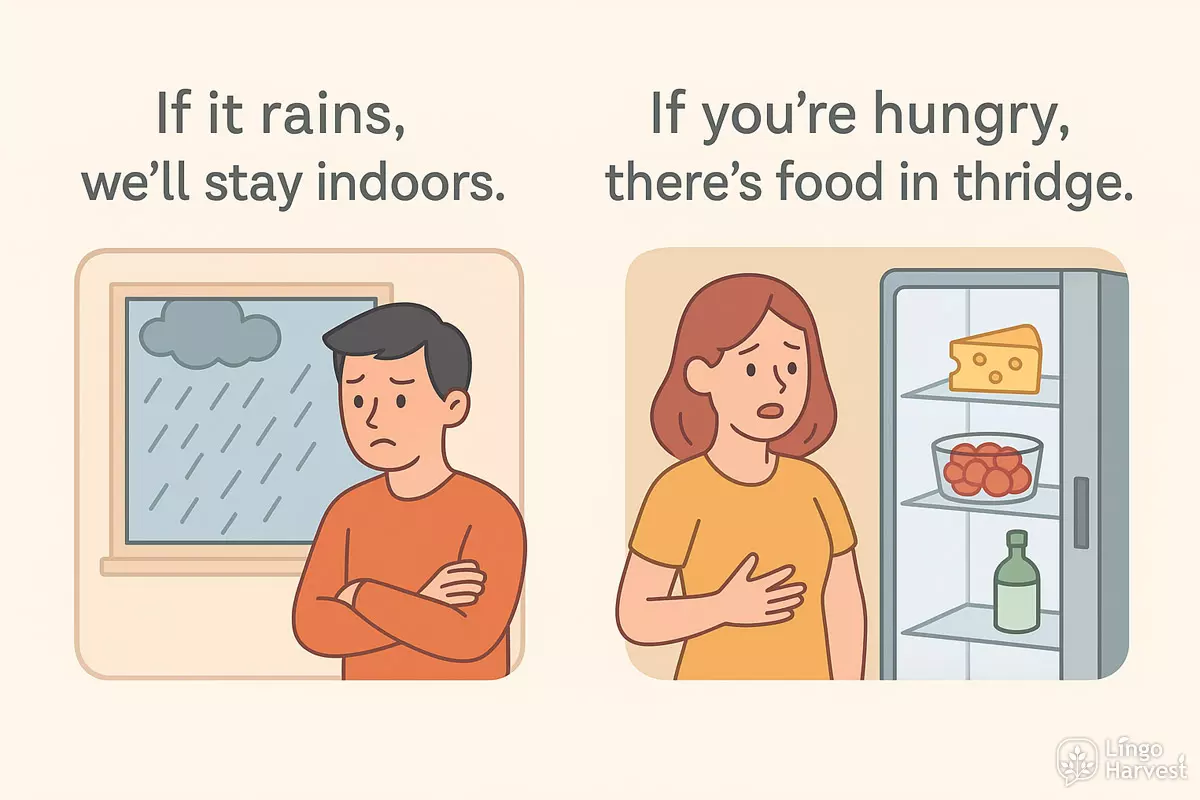
- If it rains, we’ll stay indoors. (A possible future plan.)
- If you’re hungry, there’s food in the fridge. (An offer or solution.)
- If I finish work early, I’ll call you. (A future arrangement.)
- If you don’t hurry, you’ll miss the bus. (A warning.)
- If you heat ice, it melts. (A general truth.)
- If I were you, I’d take the job. (Advice.)
- If she had known about the party, she would have come. (A missed past situation.)
- If we had more time, we could visit the museum. (An unreal present situation.)
- If they call, let me know. (An instruction.)
- If he studies harder, he might pass the exam. (A possibility.)
- If you see Sam, tell him I’m looking for him. (A message.)
- If you mix blue and yellow, you get green. (A result of an action.)
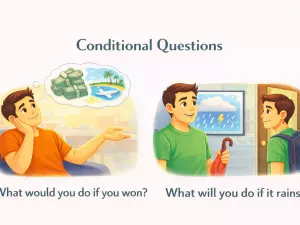
- If I win the lottery, I’ll travel the world. (A dream about the future.)
- If she doesn’t reply soon, I’ll send another email. (A next step.)
- If you had asked, I would have helped. (Regret about the past.)
Common everyday functions
| Function | Conditional example | What it does |
|---|---|---|
| Plan | If the weather is good, we will go hiking. | Shows a future plan that depends on a condition. |
| Warning | If you leave now, you will miss the ending. | Shows a possible negative result. |
| Advice | If I were you, I would talk to her. | Uses an imagined situation to give advice. |
| Offer | If you need a ride, I can drive you. | Offers help under a condition. |
| Rule | If you borrow the book, return it by Friday. | Gives a requirement or instruction. |
For future possibilities like If it rains, I will stay home, continue with the first conditional guide.
Difference between real and unreal conditions at beginner level
The most important beginner difference is between real conditions and unreal conditions. Real conditions are possible, likely, repeated, or true. Unreal conditions are imaginary, unlikely, impossible, or about a past situation that did not happen.
Real conditions: possible or true situations
Real conditionals talk about things that can happen, often happen, or are generally true.
- If you press this button, the machine starts.
- If I see her tomorrow, I will give her the message.
- If the restaurant is open, we can eat there.
- If you study regularly, your English improves.
- If it gets cold tonight, we will close the windows.
Unreal conditions: imagined or unlikely situations
Unreal conditionals talk about situations that are not real now, not likely, impossible, or only imagined.
- If I had wings, I would fly.
- If he were taller, he could reach the shelf.
- If I had more free time, I would travel more.
- If you won a million dollars, what would you buy?
- If she lived closer, we would see her more often.
Imaginary past conditions
Some conditionals describe a past situation that did not happen. These often express regret, criticism, or a different imagined result.
- If I had known about the meeting, I would have attended.
- If they had left earlier, they would have caught the train.
- If she had studied harder, she might have passed.
- If you had called me, I could have helped.
Beginner comparison table
| Type | Meaning | Basic pattern | Example |
|---|---|---|---|
| Real general condition | Always true or repeated | If + present, present | If you heat ice, it melts. |
| Real future condition | Possible future result | If + present, will + verb | If I see him, I will tell him. |
| Second conditional | Imaginary or unlikely present/future | If + past, would + verb | If I had a car, I would drive to work. |
| Third conditional | Imaginary past result | If + past perfect, would have + past participle | If I had known, I would have helped. |
Beginner shortcut
- Real: possible, likely, repeated, or true.
- Unreal: imagined, unlikely, impossible, or not true now.
- Unreal past: did not happen, but you imagine a different past result.
Common beginner mistakes with conditionals
Most conditional mistakes happen because learners mix the condition and result patterns. The sentence may still be understandable, but the time meaning can become unclear.
Mistake 1: using will after if in a basic first conditional
In the basic first conditional, use present simple after if, not will.
- Incorrect: If it will rain, we will stay home.
- Correct: If it rains, we will stay home.
- Incorrect: If she will call, I will answer.
- Correct: If she calls, I will answer.
Mistake 2: forgetting the comma when the if-clause comes first
- Less clear: If you need help call me.
- Better: If you need help, call me.
- Also correct: Call me if you need help.
Mistake 3: confusing real and unreal meaning
- If I have time, I will help you. (Real possibility.)
- If I had time, I would help you. (Unreal now; I probably do not have time.)
- If she studies, she will pass. (Possible future.)
- If she studied, she would pass. (Imaginary or less likely.)
Mistake 4: using unless with an extra negative
- Incorrect: Unless you don’t hurry, we will miss the train.
- Correct: Unless you hurry, we will miss the train.
- Meaning: If you do not hurry, we will miss the train.
Quick mistake table
| Incorrect | Correct | Reason |
|---|---|---|
| If I will see him, I will tell him. | If I see him, I will tell him. | Use present simple after if in basic future conditionals. |
| If I am you, I would wait. | If I were you, I would wait. | If I were you is the standard advice phrase. |
| If she would study, she would pass. | If she studied, she would pass. | Use past simple in the unreal condition clause. |
| Unless you don’t call, I will leave. | Unless you call, I will leave. | Unless already means if not. |
| If you had told me, I would help. | If you had told me, I would have helped. | Use would have + past participle for an unreal past result. |
Practice: identify condition and result
Practice helps you see the structure faster. Start by identifying the condition and the result. Then practice choosing the correct conditional meaning.
Exercise 1: Find the condition and result
Read each sentence. Identify the condition and the result.
- If it rains, we will stay indoors.
- You can join us if you finish your homework.
- If I had a car, I would drive to work.
- If you see Anna, tell her I called.
- If they had studied harder, they would have passed the exam.
- If the shop is open, I’ll buy some bread.
- She will call you if she arrives early.
- If the weather is nice, we might have a picnic.
- If you mix red and blue, you get purple.
- If I were you, I would take the job.
- If you heat ice, it melts.
- If you had told me, I could have helped.
Show answers
- Condition: If it rains
Result: we will stay indoors. - Condition: if you finish your homework
Result: You can join us. - Condition: If I had a car
Result: I would drive to work. - Condition: If you see Anna
Result: tell her I called. - Condition: If they had studied harder
Result: they would have passed the exam. - Condition: If the shop is open
Result: I’ll buy some bread. - Condition: if she arrives early
Result: She will call you. - Condition: If the weather is nice
Result: we might have a picnic. - Condition: If you mix red and blue
Result: you get purple. - Condition: If I were you
Result: I would take the job. - Condition: If you heat ice
Result: it melts. - Condition: If you had told me
Result: I could have helped.
Exercise 2: Choose the meaning
Choose the best meaning: real possibility, general truth, unreal present/future, or unreal past.
- If you heat water to 100°C, it boils.
- If I see Tom tomorrow, I will ask him.
- If I lived near the beach, I would swim every morning.
- If she had called earlier, we would have waited.
- If it snows tonight, school may close.
- If I were you, I would not send that email.
- If you mix yellow and blue, you get green.
- If they had listened, they would have avoided the mistake.
- If he finishes early, he can leave.
- If I knew her number, I would call her.
Show answers
- General truth.
- Real possibility.
- Unreal present/future.
- Unreal past.
- Real possibility.
- Unreal present/future.
- General truth.
- Unreal past.
- Real possibility.
- Unreal present/future.
Exercise 3: Homework — write your own conditional sentences
Write one sentence for each prompt. Then compare your answers with the sample answers.
- Write one conditional sentence about weather.
- Write one conditional sentence about studying.
- Write one conditional sentence with unless.
- Write one conditional sentence giving advice with If I were you.
- Write one conditional sentence about food or cooking.
- Write one conditional sentence about travel.
- Write one unreal sentence about money.
- Write one unreal past sentence about a missed chance.
- Write one conditional sentence with the result first.
- Write one conditional sentence with in case.
Show sample answers
- If it rains tomorrow, I will take an umbrella.
- If you study every day, your vocabulary will improve.
- Unless we leave now, we will be late.
- If I were you, I would ask for more information.
- If you add too much salt, the soup will taste bad.
- If our flight is delayed, we will call the hotel.
- If I had more money, I would buy a small apartment.
- If I had applied earlier, I might have got the job.
- I will text you if I finish early.
- Take your charger in case your phone battery dies.
For more exercises after this lesson, continue with conditional practice.
FAQ
1. What is a conditional sentence?
A conditional sentence is a sentence that shows a condition and a result. For example, in If it rains, we will stay home, the condition is if it rains, and the result is we will stay home.
2. What are the two parts of a conditional sentence?
The two main parts are the condition clause and the result clause. The condition clause gives the situation. The result clause explains what happens if that situation is true, possible, imagined, or remembered.
3. Does a conditional sentence always use if?
No. Many conditional sentences use if, but other words can also show conditional meaning, such as unless, as long as, provided that, even if, in case, and otherwise.
4. What is the difference between if and when?
If means something may or may not happen. When means the speaker expects it to happen. For example, If she calls suggests uncertainty, while When she calls suggests that the call is expected.
5. What is a real conditional?
A real conditional talks about something possible, likely, repeated, or generally true. For example: If I finish early, I will call you. The condition is realistic, and the result is possible.
6. What is an unreal conditional?
An unreal conditional talks about something imagined, unlikely, impossible, or not true now. For example: If I had more time, I would travel more. The sentence imagines a situation that is not real at the moment.
7. Why do we say if I were you?
If I were you is a fixed and standard phrase for giving advice. It uses an unreal situation because the speaker is imagining being another person. For example: If I were you, I would wait.
8. Do I use will after if?
In basic first conditional sentences, do not use will after if. Say If it rains, I will stay home, not If it will rain, I will stay home. The result clause can use will.
9. What is the easiest way to identify a conditional sentence?
Look for a condition word such as if, unless, or as long as. Then ask two questions: What is the condition? and What is the result? This helps you understand the sentence structure quickly.