Search the site
Search
Grammar ▾
▸ Articles
▸ Advanced Grammar
▸ Adjectives & Adverbs
▸ Conjunctions
▸ Conditionals
▸ Determiners
▸ Gerunds & Infinitives
▸ Grammar Practice
▸ Modal Verbs
▸ Nouns
▸ Parts of Speech
▸ Passive Voice
▸ Prepositions
▸ Pronouns
▸ Quantifiers
▸ Question Formation
▸ Reported Speech
▸ Verbs
Writing ▾
▸ Punctuation
▸ Sentence Structure
▸ Writing Mistakes
Vocabulary ▾
▸ Visual Vocabulary
▸ Food Vocabulary
▸ People Vocabulary
▸ Places Vocabulary
▸ Hobbies Vocabulary
▸ Home Vocabulary
▸ School Vocabulary
▸ Weather Vocabulary
▸ Basic Vocabulary
▸ General Vocabulary
Speaking ▾
▸ Conversational English
Calculators
Contacts
Home
» B1–B2 Intermediate
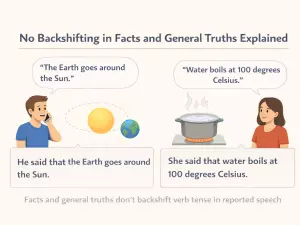
No Backshifting in Facts and General Truths Explained
The article explains why facts and general truths use the present tense, how to distinguish facts from opinions, and when context affects tense choice. It also covers scientific statements and frequent mistakes learners make with tenses.
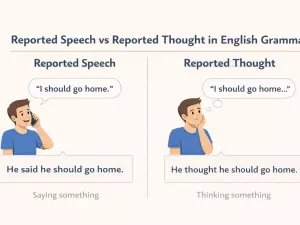
Reported Speech vs Reported Thought in English Grammar
The article compares reported speech and reported thought, highlights common verbs used for reported thought, explains grammar and tense patterns, discusses stylistic differences, and clarifies common areas where learners get confused.
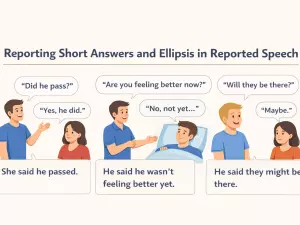
Reporting Short Answers and Ellipsis in Reported Speech
Here we how short answers and ellipsis work in reported speech, restoring omitted information, reporting yes or no answers, and understanding context dependency. It also explains differences in formality and highlights common learner mistakes.
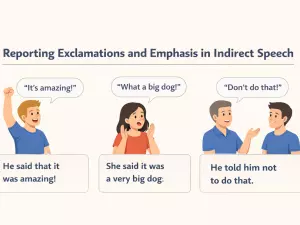
Reporting Exclamations and Emphasis in Indirect Speech
This article explains how exclamations in direct speech are reported indirectly. It covers removing exclamatory structures, verbs for reporting exclamations, maintaining emotion and emphasis, tone changes, and common learner mistakes.
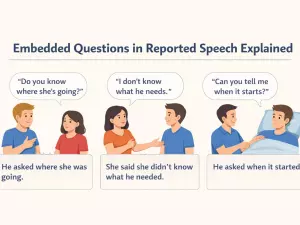
Embedded Questions in Reported Speech Explained
The article defines embedded questions, explains their word order, and shows how they differ from direct questions. It also details how to report yes/no and wh-embedded questions and points out common structural mistakes.
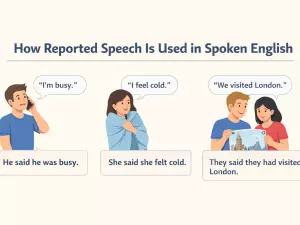
How Reported Speech Is Used in Spoken English
Here we key features of reported speech in conversation, including common reporting verbs, simplification in informal contexts, and optional tense changes. It also addresses natural speech rhythm, omissions, and frequent spoken usage mistakes.
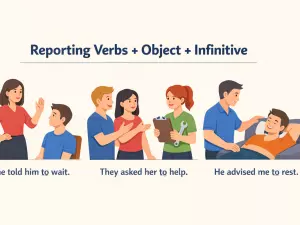
Reporting Verbs with Object and Infinitive Structure
The article defines the object-infinitive structure, names verbs that use it, explains where to place pronouns, and shows how meaning or emphasis may shift. It also covers negative and passive forms, plus common mistakes learners make.
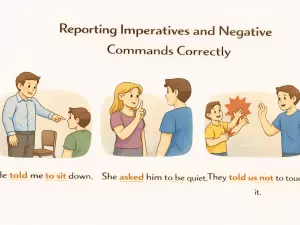
Reporting Imperatives and Negative Commands Correctly
This article explains how to report positive and negative commands, how to use tell and ask, and how to change pronouns and references. It also points out common mistakes learners make when reporting imperatives.
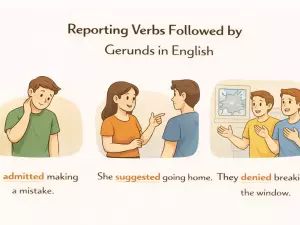
Reporting Verbs Followed by Gerunds in English
Here we how gerunds are used in reported speech, details which reporting verbs require gerunds, and explains the meanings these patterns convey. It also contrasts gerunds with infinitives, discusses formality, and points out common learner errors.
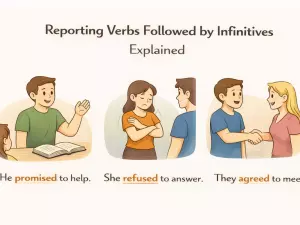
Reporting Verbs Followed by Infinitives Explained
Here we how infinitive structures work in reported speech, lists common reporting verbs with infinitives, and explains object plus infinitive patterns. It also discusses meaning differences, negative forms, and common structural mistakes.
Previous
1
...
8
9
10
11
12
13
14
15
16
...
43
Next