Search the site
Search
Grammar ▾
▸ Articles
▸ Advanced Grammar
▸ Adjectives & Adverbs
▸ Conjunctions
▸ Conditionals
▸ Determiners
▸ Gerunds & Infinitives
▸ Grammar Practice
▸ Modal Verbs
▸ Nouns
▸ Parts of Speech
▸ Passive Voice
▸ Prepositions
▸ Pronouns
▸ Quantifiers
▸ Question Formation
▸ Reported Speech
▸ Verbs
Writing ▾
▸ Punctuation
▸ Sentence Structure
▸ Writing Mistakes
Vocabulary ▾
▸ Visual Vocabulary
▸ Food Vocabulary
▸ People Vocabulary
▸ Places Vocabulary
▸ Hobbies Vocabulary
▸ Home Vocabulary
▸ School Vocabulary
▸ Weather Vocabulary
▸ Basic Vocabulary
▸ General Vocabulary
Speaking ▾
▸ Conversational English
Calculators
Contacts
Home
» B1–B2 Intermediate
Question Formation in Conditional Sentences
This article explains how to form conditional questions, covering zero, first, second, third, and mixed conditionals. It highlights common learner mistakes and provides practice exercises for self-assessment and improvement.
Intonation in English Questions: Rising and Falling Patterns
Here we why intonation is important in questions, details rising and falling intonation patterns for different question types, explores how intonation reflects speaker attitude, and includes tips, common mistakes, and practice exercises.
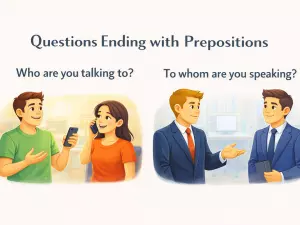
Questions Ending with Prepositions: Spoken vs Formal Use
Here we why English questions can end with prepositions, differences between spoken and formal styles, when this sounds natural, and how to rephrase if needed. It also addresses common learner concerns and provides practice exercises.
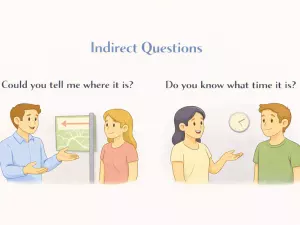
Indirect Questions in English: Polite Forms and Examples
This article explains what indirect questions are, why they're used, their word order, and the difference between indirect yes/no and WH-questions. It covers common introductory phrases, typical learner mistakes, and offers practice exercises.
Negative Questions in English: Meaning and Usage
Here we what negative questions are, how to form them with auxiliaries, be, and modals, their meanings and uses for confirmation, differences between formal and informal forms, common learner mistakes, and offers practice exercises.
How to Form Questions in the Present Perfect Tense
Here we how to form present perfect questions, when to use have or has, creating yes/no and WH-questions, using words like ever, never, already, and yet, understanding time references, avoiding common mistakes, and includes practice exercises.
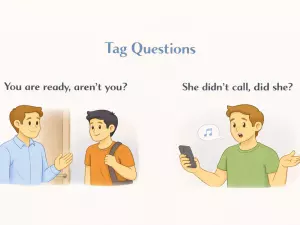
Tag Questions in English: Structure and Intonation
This article explains what tag questions are, their basic structure, and how positive and negative forms work. It covers intonation, using modals and imperatives, common mistakes, and includes practice exercises for self-assessment.
How to Form Questions in the Past Perfect Tense
Here we how to form past perfect questions, including the use of had, yes/no and WH-questions, and differences from past simple. It also discusses typical contexts, common mistakes, and provides practice exercises for self-check.
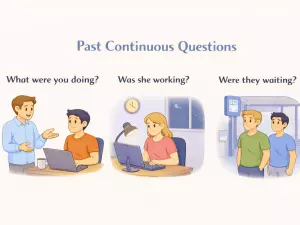
How to Form Questions in the Past Continuous Tense
Here we forming past continuous questions, choosing was or were, making yes/no and WH-questions, using time markers, and avoiding common mistakes. It also compares past continuous with past simple and offers practice exercises for self-check.
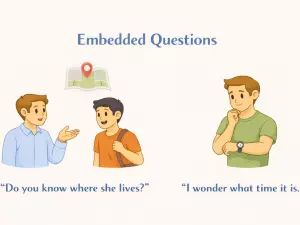
Embedded Questions in English Statements Explained
This article explains what embedded questions are, how they differ from direct questions, and the correct word order. It also covers embedded yes/no and WH-questions, reporting verbs, common mistakes, and practice exercises.
Previous
1
...
10
11
12
13
14
15
16
17
18
...
43
Next