Search the site
Search
Grammar ▾
▸ Articles
▸ Advanced Grammar
▸ Adjectives & Adverbs
▸ Conjunctions
▸ Conditionals
▸ Determiners
▸ Gerunds & Infinitives
▸ Grammar Practice
▸ Modal Verbs
▸ Nouns
▸ Parts of Speech
▸ Passive Voice
▸ Prepositions
▸ Pronouns
▸ Quantifiers
▸ Question Formation
▸ Reported Speech
▸ Verbs
Writing ▾
▸ Punctuation
▸ Sentence Structure
▸ Writing Mistakes
Vocabulary ▾
▸ Visual Vocabulary
▸ Food Vocabulary
▸ People Vocabulary
▸ Places Vocabulary
▸ Hobbies Vocabulary
▸ Home Vocabulary
▸ School Vocabulary
▸ Weather Vocabulary
▸ Basic Vocabulary
▸ General Vocabulary
Speaking ▾
▸ Conversational English
Calculators
Contacts
Home
» B1–B2 Intermediate
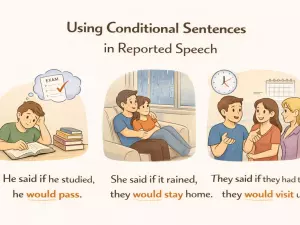
Using Conditional Sentences in Reported Speech
This article explains how to report conditional sentences in indirect speech. It covers reporting zero, first, second, and third conditionals, how to adjust tenses and modals, preserve meaning, and avoid common errors with conditionals.
Attitude Verbs in Reported Speech: Admit, Deny, Insist
The article explains how attitude verbs such as admit, deny, and insist express a speaker’s stance and emotion. It covers differences in meaning, grammar patterns, formality, tone, and common mistakes in their use.
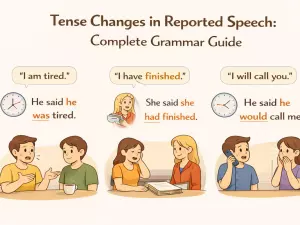
Tense Changes in Reported Speech: Complete Grammar Guide
Here we why tenses change in reported speech, explains present and past tense shifts, addresses how to report future intentions, discusses the impact of time references, and points out common mistakes with tense logic.
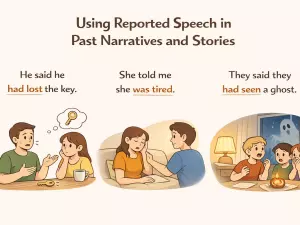
Using Reported Speech in Past Narratives and Stories
Here we how reported speech is used in narratives, the importance of tense consistency, and how to shift perspective when recounting past events.
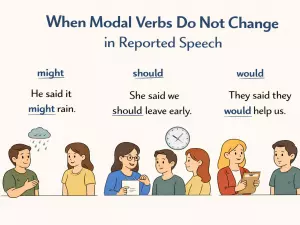
When Modal Verbs Do Not Change in Reported Speech
This article explains why some modal verbs do not change in reported speech, focusing on their use for general truths and present or future situations. It also covers logical vs. grammatical changes, speaker intention, and common learner mistakes.
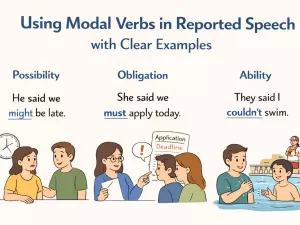
Using Modal Verbs in Reported Speech with Clear Examples
Here we how modal verbs function and change in reported speech, including typical transformations and meaning shifts.
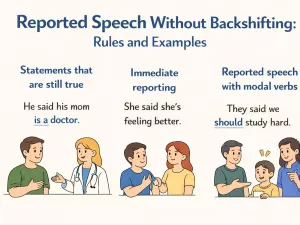
Reported Speech Without Backshifting: Rules and Examples
Here we the meaning of backshifting in reported speech, situations where it is not used, and how present relevance or unchanged facts affect its use. It also discusses the role of speaker intention, context, and typical confusion about optional backshifting.
Questions with Quantifiers in English: Rules and Examples
This article explains how to use quantifiers like much, many, few, little, some, and any in questions. It covers their roles with countable and uncountable nouns, highlights common mistakes, and includes practice exercises with self-checks.
Questions with Comparatives and Superlatives: Who, Which
Here we how to form comparative and superlative questions, use than and of in questions, and handle irregular forms. It also highlights common mistakes, provides natural usage examples, and offers practice exercises with self-check.
Clarification Questions in English: Asking for Confirmation
Here we what clarification questions are and when to use them. It details common question patterns, intonation, WH-words, polite strategies, frequent learner mistakes, and includes practice exercises for self-assessment.
Previous
1
...
9
10
11
12
13
14
15
16
17
...
43
Next