Search the site
Search
Grammar ▾
▸ Articles
▸ Advanced Grammar
▸ Adjectives & Adverbs
▸ Conjunctions
▸ Conditionals
▸ Determiners
▸ Gerunds & Infinitives
▸ Grammar Practice
▸ Modal Verbs
▸ Nouns
▸ Parts of Speech
▸ Passive Voice
▸ Prepositions
▸ Pronouns
▸ Quantifiers
▸ Question Formation
▸ Reported Speech
▸ Verbs
Writing ▾
▸ Punctuation
▸ Sentence Structure
▸ Writing Mistakes
Vocabulary ▾
▸ Visual Vocabulary
▸ Food Vocabulary
▸ People Vocabulary
▸ Places Vocabulary
▸ Hobbies Vocabulary
▸ Home Vocabulary
▸ School Vocabulary
▸ Weather Vocabulary
▸ Basic Vocabulary
▸ General Vocabulary
Speaking ▾
▸ Conversational English
Calculators
Contacts
Home
» B1–B2 Intermediate
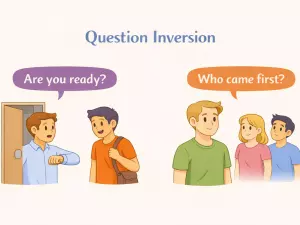
Inversion in English Questions: Rules and Exceptions
Here we what inversion in questions means, standard rules, how to use inversion with auxiliary, be, and modal verbs, cases without inversion, exceptions, and common word order mistakes. It also provides practice exercises for self-assessment.
Subject vs Object Questions in English Explained
The article defines subject and object questions, compares their word order and auxiliary verb use, explains WH-word roles, covers common learner mistakes, offers tips to identify question types, and includes practice exercises for self-check.
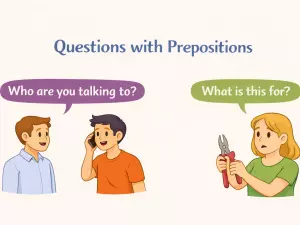
Question Formation with Prepositions in English
This article explains how prepositions work with question words in English. It covers prepositions before and after WH-words, formal and informal usage, common mistakes, natural spoken patterns, and includes practice exercises.
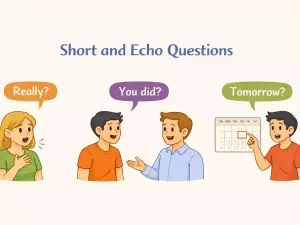
Short Questions and Echo Questions in Conversation
Here we the definitions and spoken formation of short and echo questions, their use for expressing surprise or interest, intonation patterns, common learner mistakes, and offers practice exercises for self-assessment.
Questions with Used to and Would in English
Here we the meanings of used to and would, how to form questions with both, and their differences in questions. It also discusses time references, common mistakes, spoken vs written usage, and provides practice exercises.
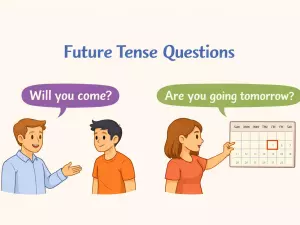
How to Form Questions in Future Tenses in English
This article explains how to ask future questions in English using will, going to, and present continuous forms. It covers when to use each, common mistakes, real-life examples, and offers practice exercises for self-assessment.
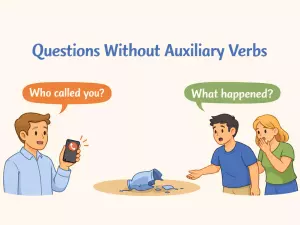
Questions Without Auxiliary Verbs: Rules and Examples
This article explains questions in English that do not use auxiliary verbs, focusing on subject questions. It covers when auxiliaries are omitted, key question words, word order, common mistakes, and includes practice exercises.
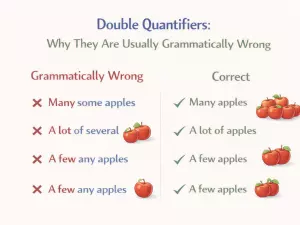
Double Quantifiers: Why They Are Usually Grammatically Wrong
The article defines double quantifiers, explains why English avoids them, highlights typical mistakes and their causes, distinguishes emphasis from errors, presents rare acceptable cases, and provides guidance and practice for correcting double quantifier usage.
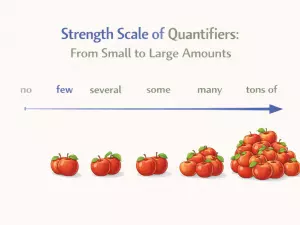
Strength Scale of Quantifiers: From Small to Large Amounts
Here we how quantifiers work as a scale, how to rank them by strength, and why their meanings can overlap or shift with context. It covers common mistakes, visual tools for comparison, and offers practice with real-life examples.
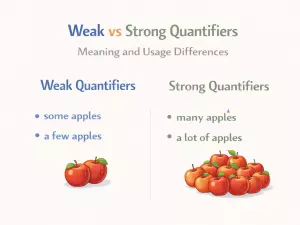
Weak vs Strong Quantifiers: Meaning and Usage Differences
Here we what makes quantifiers weak or strong, how this influences a speaker’s attitude and emphasis, typical examples, contextual and register differences, frequent learner errors, and provides real-life comparisons and practice exercises.
Previous
1
...
11
12
13
14
15
16
17
18
19
...
43
Next