Search the site
Search
Grammar ▾
▸ Articles
▸ Advanced Grammar
▸ Adjectives & Adverbs
▸ Conjunctions
▸ Conditionals
▸ Determiners
▸ Gerunds & Infinitives
▸ Grammar Practice
▸ Modal Verbs
▸ Nouns
▸ Parts of Speech
▸ Passive Voice
▸ Prepositions
▸ Pronouns
▸ Quantifiers
▸ Question Formation
▸ Reported Speech
▸ Verbs
Writing ▾
▸ Punctuation
▸ Sentence Structure
▸ Writing Mistakes
Vocabulary ▾
▸ Visual Vocabulary
▸ Food Vocabulary
▸ People Vocabulary
▸ Places Vocabulary
▸ Hobbies Vocabulary
▸ Home Vocabulary
▸ School Vocabulary
▸ Weather Vocabulary
▸ Basic Vocabulary
▸ General Vocabulary
Speaking ▾
▸ Conversational English
Calculators
Contacts
Home
» B1–B2 Intermediate
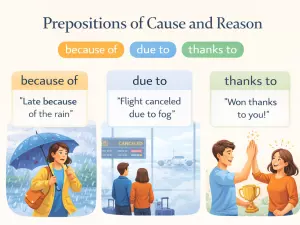
Prepositions of Cause and Reason: because of, due to, thanks to
This article explains how to correctly use cause and reason prepositions such as because of, due to, thanks to, owing to, and on account of. It covers stylistic choices, formal register, objectivity, and common structural errors.
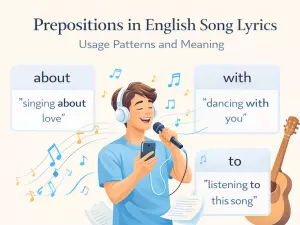
Prepositions in English Song Lyrics: Usage Patterns and Meaning
The article examines how song lyrics use non-standard prepositions for rhythm, rhyme, and regional style, explores reductions and metaphors, discusses dropped prepositions, narrative effects, and provides activities to distinguish artistic choices from standard grammar.
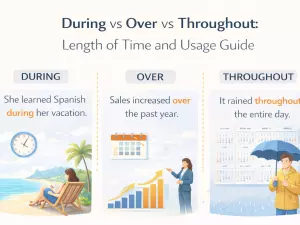
During vs Over vs Throughout: Length of Time and Usage Guide
The article explains how to use during, over, and throughout to distinguish specific events, trends, and uninterrupted periods. It covers their nuances, common collocations, and how context shapes meaning, with examples from history and science.
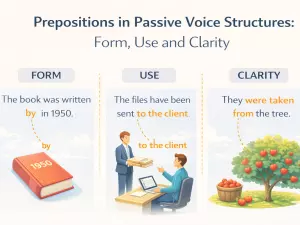
Prepositions in Passive Voice Structures: Form, Use and Clarity
This article explains how to use prepositions like by, with, and through in passive constructions, discusses fixed prepositions after participles, and offers guidance on phrasal verbs, academic passive, and clear reporting. It also includes practice for formal writing.
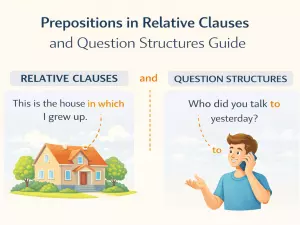
Prepositions in Relative Clauses and Question Structures Guide
Here we rules for preposition placement in English, including stranding versus fronting, academic use with whom or which, and recognizing structures where fronting is impossible. It also addresses punctuation, register, pitfalls, and rewriting practice.
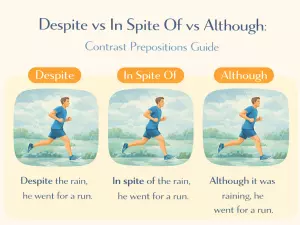
Despite vs In Spite Of vs Although: Contrast Prepositions Guide
This article distinguishes clauses and phrases with although and despite, explains noun and gerund use after in spite of, shows when to use notwithstanding in formal writing, clarifies even though vs. despite the fact that, and corrects common errors like despite of.
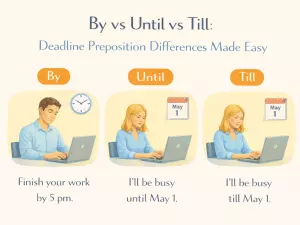
By vs Until vs Till: Deadline Preposition Differences Made Easy
The article clarifies how by and until function as deadline markers, explains their grammatical pairing with different verb types, explores formal and informal usage, addresses common errors, and guides on drafting clear, deadline-focused business instructions.
Because of vs Due to vs Owing to: Reason Prepositions Explained
The article distinguishes adjectival due to from adverbial because of, reviews grammar rules for due to, discusses formal alternatives like owing to and on account of, covers clausal transformation, sentence placement, redundancy, and optimal usage in academic or news…
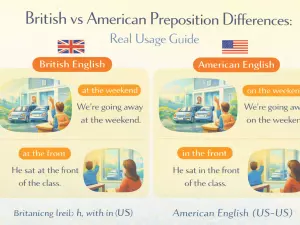
British vs American Preposition Differences: Real Usage Guide
The article compares British and American English prepositions, covering weekend expressions, university and hospital phrases, team-related language, and form completion.
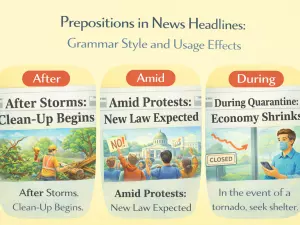
Prepositions in News Headlines: Grammar Style and Usage Effects
Here we how prepositions shape news headlines, including telegraphic speech, functional substitution, and geopolitical framing. It also compares tabloid and broadsheet styles, emotional triggers in clickbait, ambiguity, and headline rewriting.
Previous
1
...
18
19
20
21
22
23
24
25
26
...
43
Next