Search the site
Search
Grammar ▾
▸ Articles
▸ Advanced Grammar
▸ Adjectives & Adverbs
▸ Conjunctions
▸ Conditionals
▸ Determiners
▸ Gerunds & Infinitives
▸ Grammar Practice
▸ Modal Verbs
▸ Nouns
▸ Parts of Speech
▸ Passive Voice
▸ Prepositions
▸ Pronouns
▸ Quantifiers
▸ Question Formation
▸ Reported Speech
▸ Verbs
Writing ▾
▸ Punctuation
▸ Sentence Structure
▸ Writing Mistakes
Vocabulary ▾
▸ Visual Vocabulary
▸ Food Vocabulary
▸ People Vocabulary
▸ Places Vocabulary
▸ Hobbies Vocabulary
▸ Home Vocabulary
▸ School Vocabulary
▸ Weather Vocabulary
▸ Basic Vocabulary
▸ General Vocabulary
Speaking ▾
▸ Conversational English
Calculators
Contacts
Home
» B1–B2 Intermediate
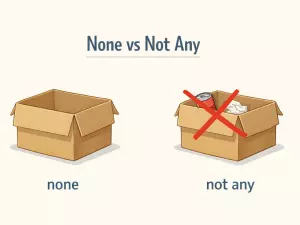
None vs Not Any: Formal and Informal Usage Compared
The article clarifies the meanings of none and not any, compares their use as pronoun or determiner, addresses tone and formality, explains sentence patterns and verb agreement, points out common mistakes, and gives practice choosing the right form in context.
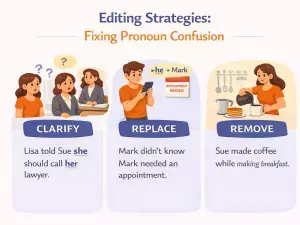
Editing Strategies: Fixing Pronoun Confusion
Here we why pronoun confusion happens in drafts, how to identify unclear antecedents, and methods for clarifying reference. It also discusses when to use nouns instead of pronouns, restructuring sentences, and offers editing examples and practice.
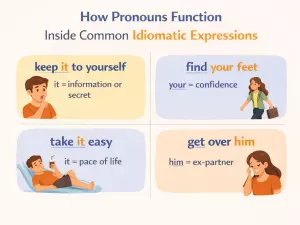
How Pronouns Function Inside Common Idiomatic Expressions
Here we why pronouns in idioms are often fixed, gives examples where pronouns can't be changed without losing meaning, compares spoken and written usage, and offers practice to help learners avoid literal interpretation mistakes.
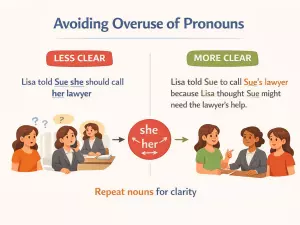
Avoiding Overuse of Pronouns in Clear and Effective Writing
This article explains when pronouns help or hinder clarity, how to recognize pronoun overload, and ways to balance nouns and pronouns. It covers editing tips, examples, and practice exercises to improve readability and avoid reader fatigue.
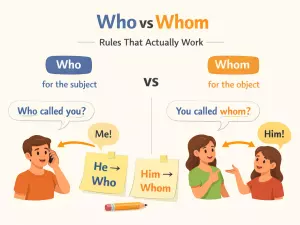
Who vs Whom: Rules That Actually Work
Here we why who and whom are confusing, explains subject and object roles, and shows correct use in statements, questions, and after prepositions. It also discusses formal vs informal usage, common errors, and offers practice to decide which to use.
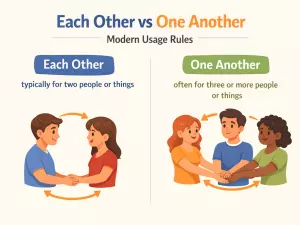
Each Other vs One Another: Modern Usage Rules
Here we what reciprocal pronouns mean, how traditional rules differ from modern usage, when to use each other or one another, and typical learner mistakes. It includes natural examples and a practice section on choosing the correct form.
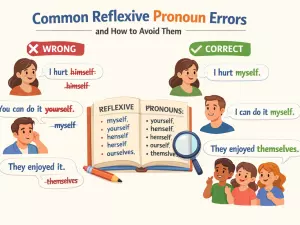
Common Reflexive Pronoun Errors and How to Avoid Them
Here we common errors with reflexive pronouns, including confusing them with object pronouns, omitting them when required, overusing myself, using them incorrectly with certain verbs or after prepositions, and distinguishing between correct and natural usage.
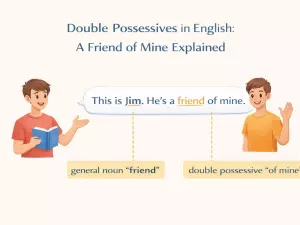
Double Possessives in English: A Friend of Mine Explained
Here we what double possessives are, their common forms like a friend of mine, how they differ from simple possession, when they sound natural, usage restrictions, typical mistakes, spoken versus written preferences, and practice sentences.
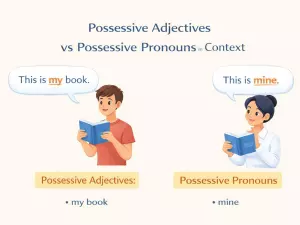
Possessive Adjectives vs Possessive Pronouns in Context
Here we how to distinguish possessive adjectives from pronouns, compares forms like my vs mine and your vs yours, explains when to use each in conversation, addresses common errors, and includes practice choosing the correct possessive form.
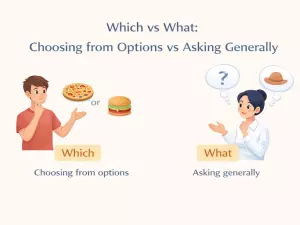
Which vs What: Choosing from Options vs Asking Generally
The article explains the key difference between which and what, discusses closed and open choice questions, and shows how to use each with or without nouns. It also covers implied options, usage in speech and writing, common mistakes, and context-based practice.
Previous
1
...
14
15
16
17
18
19
20
21
22
...
43
Next