Search the site
Search
Grammar ▾
▸ Articles
▸ Advanced Grammar
▸ Adjectives & Adverbs
▸ Conjunctions
▸ Conditionals
▸ Determiners
▸ Gerunds & Infinitives
▸ Grammar Practice
▸ Modal Verbs
▸ Nouns
▸ Parts of Speech
▸ Passive Voice
▸ Prepositions
▸ Pronouns
▸ Quantifiers
▸ Question Formation
▸ Reported Speech
▸ Verbs
Writing ▾
▸ Punctuation
▸ Sentence Structure
▸ Writing Mistakes
Vocabulary ▾
▸ Visual Vocabulary
▸ Food Vocabulary
▸ People Vocabulary
▸ Places Vocabulary
▸ Hobbies Vocabulary
▸ Home Vocabulary
▸ School Vocabulary
▸ Weather Vocabulary
▸ Basic Vocabulary
▸ General Vocabulary
Speaking ▾
▸ Conversational English
Calculators
Contacts
Home
» B1–B2 Intermediate
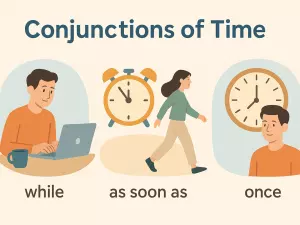
Conjunctions of Time (B1–B2): while, as soon as, once
This article explains how time conjunctions like while, as soon as, and once order actions on a timeline. It covers their use in real examples, rules for tense, and tips for avoiding will in future sentences, plus practice exercises.
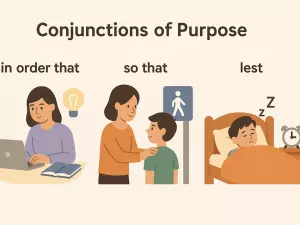
Conjunctions of Purpose: in order that, so that, lest
The article reviews purpose clauses, showing how and why we use so that, in order that, and lest. It explains their meanings, verb forms, frequency in modern English, and includes practice rewriting sentences with these conjunctions.
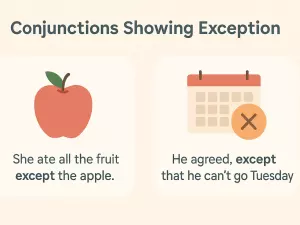
Conjunctions Showing Exception: except, except that
Here we the meaning of exceptions in grammar, explains how to use except and except that for different types of exclusions, highlights common mistakes with except and besides, and provides examples and practice sentences for clarity.
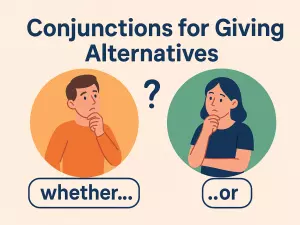
Conjunctions for Giving Alternatives: whether…or
This article explains the difference between if and whether in reported and indirect questions, details the structure of whether…or with verbs and clauses, covers using whether…or not for outcomes, shows formal uses, common phrases, and practice…
Conjunctions for Showing Comparison: as…as, than
This article reviews how to form comparative and equality structures in English, covers adjective and adverb comparisons with than, explains as…as usage, word order in long clauses, common mistakes, collocations, and provides practice sentences.
Reason vs Contrast Conjunctions: avoiding confusion
Here we reason and contrast conjunctions, shows how confusing them alters meaning, and lists signal words to tell them apart. It also gives examples, practical steps, and exercises to help you choose the right conjunction in context.
Conjunctions with Gerunds and Infinitives
The article reviews when to use gerunds and infinitives, details which conjunctions require each, explains time words like before and after with -ing, covers infinitives of purpose, compares clause lengths, and gives practice rewriting sentences.
Correlative Conjunctions: both…and, not only…but also
This article defines correlative conjunctions, explains how they work in pairs, covers structures and examples with both…and, either…or, neither…nor, and not only…but also, highlights parallel structure rules, common errors, and offers practice…
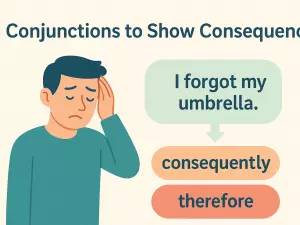
Conjunctions to Show Consequence: consequently, therefore
This article explains how to use therefore and consequently to connect ideas and show results in sentences. It covers their meaning, form, punctuation, differences from conjunctions, formal use in writing, alternatives, and sentence-joining practice.
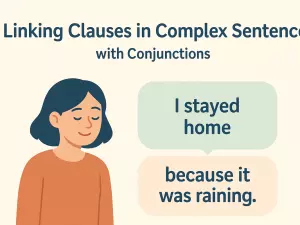
Linking Clauses in Complex Sentences with Conjunctions
Here we how to distinguish simple, compound, and complex sentences, explains clause types and conjunction use, discusses word order for emphasis, punctuation in complex sentences, and offers strategies and practice for writing clear, effective sentences.
Previous
1
...
30
31
32
33
34
35
36
37
38
...
43
Next