Search the site
Search
Grammar ▾
▸ Articles
▸ Advanced Grammar
▸ Adjectives & Adverbs
▸ Conjunctions
▸ Conditionals
▸ Determiners
▸ Gerunds & Infinitives
▸ Grammar Practice
▸ Modal Verbs
▸ Nouns
▸ Parts of Speech
▸ Passive Voice
▸ Prepositions
▸ Pronouns
▸ Quantifiers
▸ Question Formation
▸ Reported Speech
▸ Verbs
Writing ▾
▸ Punctuation
▸ Sentence Structure
▸ Writing Mistakes
Vocabulary ▾
▸ Visual Vocabulary
▸ Food Vocabulary
▸ People Vocabulary
▸ Places Vocabulary
▸ Hobbies Vocabulary
▸ Home Vocabulary
▸ School Vocabulary
▸ Weather Vocabulary
▸ Basic Vocabulary
▸ General Vocabulary
Speaking ▾
▸ Conversational English
Calculators
Contacts
Home
» C1 Advanced
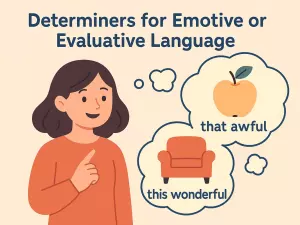
Determiners for Emotive or Evaluative Language
This article explains how determiners like that, this, certain, and such affect emotional tone, showing distance, disapproval, or sympathy. It covers their use in conversation, opinion writing, and media, with practice on rewriting sentences.
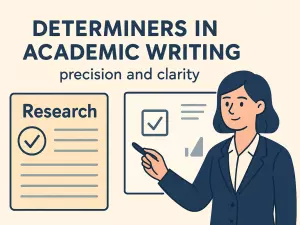
Determiners in Academic Writing: precision and clarity
Here we how determiners shape academic style, focusing on clear definite and indefinite reference, avoiding ambiguity in complex noun phrases, and maintaining consistent reference. It includes examples and practice for refining academic sentences.
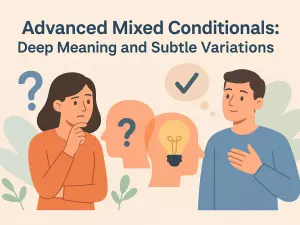
Advanced Mixed Conditionals: Deep Meaning and Subtle Variations
This article explains advanced mixed conditionals, focusing on how to link past causes to present results and present conditions to past outcomes. It covers subtle shifts in tone, common patterns in writing, and practice transforming standard forms.
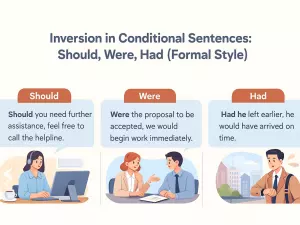
Inversion in Conditional Sentences: Should, Were, Had (Formal Style)
Here we what inversion in conditionals is, how to use should, were, and had for inversion, and how tone and formality differ from standard if-clauses. It also discusses avoiding ambiguity and offers examples and practice exercises.
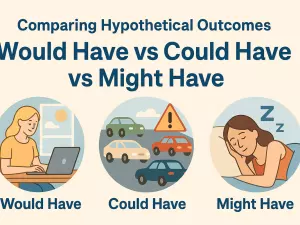
Comparing Hypothetical Outcomes: Would Have vs Could Have vs Might Have
The article clarifies how would have, could have, and might have differ in meaning, certainty, and possibility when talking about past hypotheticals. It discusses how modal choice shapes interpretation, highlights common learner errors, and provides targeted practice.
Conditionals in Academic and Professional Writing
Here we how conditionals function in formal analysis and argumentation, outlines preferred patterns for assumptions, predictions, and limitations in research writing, and offers examples and practice for revising informal conditionals into formal ones.
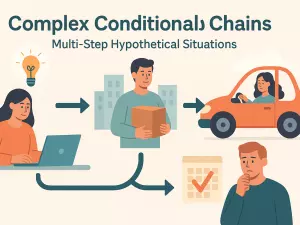
Complex Conditional Chains: Multi-Step Hypothetical Situations
Here we what multi-step conditional chains are, how to construct sequences of dependent conditions and outcomes, strategies for clarity in lengthy logic, appropriate tone in technical writing, practical examples, and exercises for building such chains.
Using Conditionals to Express Criticism, Advice, and Softened Opinions
This article explains how to use conditionals like would, could, and might to soften criticism, give polite advice, and make strategic suggestions. It includes workplace and academic examples, common mistakes, and practice exercises.
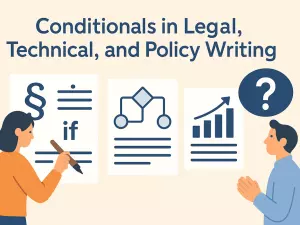
Conditionals in Legal, Technical, and Policy Writing
Here we the importance of conditional structures in legal and technical texts, compares strict and flexible conditions, highlights ambiguity risks, reviews common formatting patterns, and gives practical examples and tips for clear drafting.
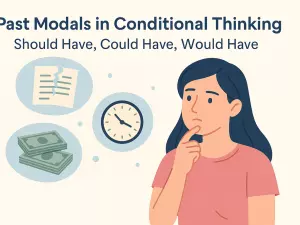
Past Modals in Conditional Thinking: Should Have, Could Have, Would Have
Here we the meanings of past modals in hypothetical or evaluative contexts, including should have for criticism or expectation, could have for missed opportunities, and would have for imagined results.
Previous
1
...
16
17
18
19
20
21
22
23
24
...
31
Next