Search the site
Search
Grammar ▾
▸ Articles
▸ Advanced Grammar
▸ Adjectives & Adverbs
▸ Conjunctions
▸ Conditionals
▸ Determiners
▸ Gerunds & Infinitives
▸ Grammar Practice
▸ Modal Verbs
▸ Nouns
▸ Parts of Speech
▸ Prepositions
▸ Pronouns
▸ Quantifiers
▸ Question Formation
▸ Reported Speech
▸ Verbs
Writing ▾
▸ Punctuation
▸ Sentence Structure
▸ Writing Mistakes
Vocabulary ▾
▸ Visual Vocabulary
▸ Food Vocabulary
▸ People Vocabulary
▸ Places Vocabulary
▸ Hobbies Vocabulary
▸ Home Vocabulary
▸ School Vocabulary
▸ Weather Vocabulary
▸ Basic Vocabulary
▸ General Vocabulary
Speaking ▾
▸ Conversational English
Calculators
Contacts
Home
»
English
»
Grammar
Grammar
This section focuses on English grammar explained in a simple and practical way. You will find clear rules, step-by-step examples, and common mistakes to avoid, helping you build a strong foundation for speaking and writing confidently.
Adding Place Words to Sentences: In, At, On, Here, There
This article explains how to use prepositions for place, like in, at, and on, to describe locations. It covers their differences, gives real examples, and includes practice exercises to help you use them correctly in sentences.
Adding Time Words to Sentences: When, Today, Tomorrow
Here we common time words in English, explains where to place them in sentences, and presents typical time expressions. It also includes practice exercises for adding time phrases to improve sentence clarity.
Polite English with Can and Could
This article explains how to use can and could in polite speech, covering requests, offers, permissions, and when to use formal or informal tone. It includes examples and practice for making sentences more polite in common situations.
Have to vs Must: Simple Beginner Grammar
Here we the meaning and strength of obligation, explains when to use have to and must in both spoken and written English, highlights common confusions, and provides practice to help you select the correct form.
Using Should for Advice and Suggestions
This article explains when to use should for giving advice, how to form positive and negative sentences, and introduces common expressions like you should try. It also includes practice exercises for giving advice with should in daily English.
Using Must for Obligation and Strong Rules
The article explains how to use must for necessity and rules, how to form positive and negative sentences, and compares must with have to. It also covers polite versus firm commands, common mistakes, and includes practice exercises.
Using Can’t for Prohibition and Rules
Here we how can’t is used to talk about rules, the difference between can’t and mustn’t, common mistakes learners make, and provides practice exercises to rewrite rules using can’t. It focuses on practical grammar points.
Using Can for Permission in English
Here we the correct use of can and may when making requests, explains their use in both formal and informal contexts, provides common polite expressions, and includes practice tasks to help you ask for permission using can.
Using Can for Ability and Skills
This article explains how to use 'can' to express abilities, make positive and negative sentences, ask questions, and discuss skills. It highlights common mistakes and provides practice activities with real examples for better understanding.
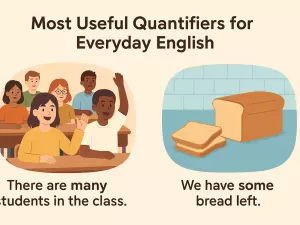
Most Useful Quantifiers for Everyday English
The article defines quantifiers, explains basic ones such as some, many, much, few, and little, and demonstrates their use with count and noncount nouns. It also covers their order in sentences and includes practice activities.
Previous
1
...
105
106
107
108
109
110
111
112
113
...
124
Next