Search the site
Search
Grammar ▾
▸ Articles
▸ Advanced Grammar
▸ Adjectives & Adverbs
▸ Conjunctions
▸ Conditionals
▸ Determiners
▸ Gerunds & Infinitives
▸ Grammar Practice
▸ Modal Verbs
▸ Nouns
▸ Parts of Speech
▸ Prepositions
▸ Pronouns
▸ Quantifiers
▸ Question Formation
▸ Reported Speech
▸ Verbs
Writing ▾
▸ Punctuation
▸ Sentence Structure
▸ Writing Mistakes
Vocabulary ▾
▸ Visual Vocabulary
▸ Food Vocabulary
▸ People Vocabulary
▸ Places Vocabulary
▸ Hobbies Vocabulary
▸ Home Vocabulary
▸ School Vocabulary
▸ Weather Vocabulary
▸ Basic Vocabulary
▸ General Vocabulary
Speaking ▾
▸ Conversational English
Calculators
Contacts
Home
»
English
»
Grammar
Grammar
This section focuses on English grammar explained in a simple and practical way. You will find clear rules, step-by-step examples, and common mistakes to avoid, helping you build a strong foundation for speaking and writing confidently.
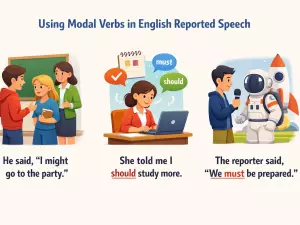
Using Modal Verbs in English Reported Speech
This article explains how indirect speech can change modal verbs, which ones usually shift, and when can becomes could. It also covers modals in reported questions and requests, cases where modals stay the same, how context affects meaning, and practice exercises.
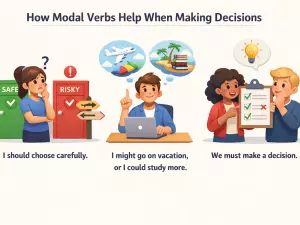
How Modal Verbs Help When Making Decisions
This article explains how speakers use modal verbs to think through decisions, offer options and recommendations, and compare alternatives with could, might, and should. It includes conversation examples, shows how tone and context affect choice, and ends with practice exercises.
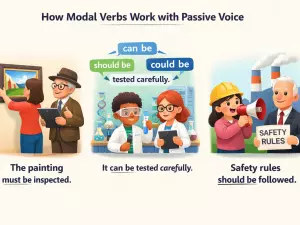
How Modal Verbs Work with Passive Voice
Covers how modal verbs work with the passive voice, using the modal plus be plus past participle pattern. Explains how focus shifts from the doer to the action, gives real examples like can be completed and must be approved, and shows use in instructions, reports, and formal writing, plus practice exercises.
Modal Verbs for Everyday Decisions and Solutions
This article explains how modal verbs help you suggest possible solutions, discuss choices, and explore alternatives using could and might. It includes everyday problem-solving examples, shows how modals express uncertainty, compares multiple options, and offers practice exercises.
Perfect Modal Constructions and Their Meaning
This article explains what modal perfect constructions mean in English, how modal verbs pair with have plus a past participle, and what forms like could have, may have, and must have express. It includes past-completed examples, result/guess uses, and practice exercises.
Using Modal Verbs for Hypothetical Situations
This article explains how English speakers talk about imagined or unreal situations using modal verbs. It covers would, could, and might patterns, how they show up in conditional thinking, differences from real statements, everyday examples, and practice exercises.
How to Give Advice About the Past with Modal Verbs
This article explains how English speakers use modal verbs to judge past decisions, especially should have, with examples of mistakes and missed options. It shows how past advice differs from criticism, when people reflect on outcomes, and includes practice exercises.
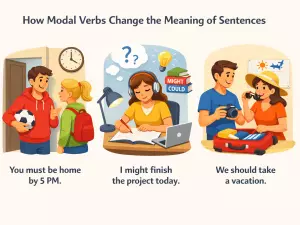
How Modal Verbs Change the Meaning of Sentences
This article explains how modal verbs can drastically shift meaning, letting the same sentence show certainty, obligation, or possibility. It shows how context, tone, and goals change interpretation, and includes practice exercises rewriting sentences with different modals.
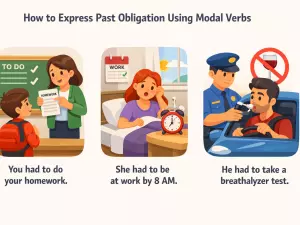
How to Express Past Obligation Using Modal Verbs
It explains how English talks about past responsibilities, including structures for past necessity and expectations and the difference between had to and should have. You’ll see examples of past rules and duties, how speakers justify earlier requirements in explanations or storytelling, plus practice exercises.
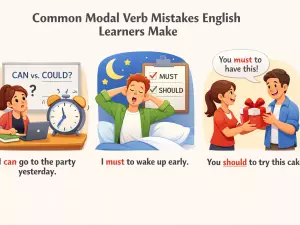
Common Modal Verb Mistakes English Learners Make
The article explains why modal verbs confuse learners and the typical mistakes from picking the wrong modal or using the wrong verb form after it. It also covers mix-ups like may vs might vs could, errors in negatives and questions, and includes exercises to fix these issues.
Previous
1
2
3
4
5
6
7
8
9
10
...
124
Next