Search the site
Search
Grammar ▾
▸ Articles
▸ Advanced Grammar
▸ Adjectives & Adverbs
▸ Conjunctions
▸ Conditionals
▸ Determiners
▸ Gerunds & Infinitives
▸ Grammar Practice
▸ Modal Verbs
▸ Nouns
▸ Parts of Speech
▸ Passive Voice
▸ Prepositions
▸ Pronouns
▸ Quantifiers
▸ Question Formation
▸ Reported Speech
▸ Verbs
Writing ▾
▸ Punctuation
▸ Sentence Structure
▸ Writing Mistakes
Vocabulary ▾
▸ Visual Vocabulary
▸ Food Vocabulary
▸ People Vocabulary
▸ Places Vocabulary
▸ Hobbies Vocabulary
▸ Home Vocabulary
▸ School Vocabulary
▸ Weather Vocabulary
▸ Basic Vocabulary
▸ General Vocabulary
Speaking ▾
▸ Conversational English
Calculators
Contacts
Home
»
English
»
Grammar
Grammar
This section focuses on English grammar explained in a simple and practical way. You will find clear rules, step-by-step examples, and common mistakes to avoid, helping you build a strong foundation for speaking and writing confidently.
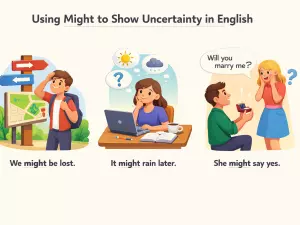
Using Might to Show Uncertainty in English
This article explains how might signals uncertainty or weak probability, why speakers use it to avoid strong predictions, and how it fits when talking about possible future outcomes. It also covers cautious opinions, differences from other modals, and practice exercises.
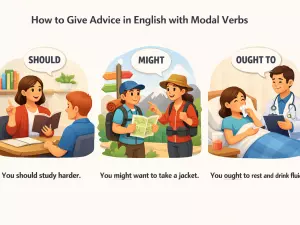
How to Give Advice in English with Modal Verbs
This article explains common advice modals and how should, ought to, and could change the tone. It shows sentence patterns and everyday examples, how modals soften or strengthen advice, common learner mistakes, context tips, plus exercises and practice.
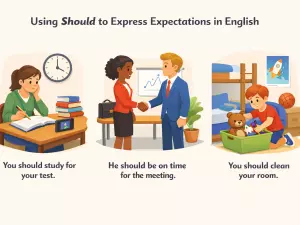
Using Should to Express Expectations in English
This article explains how should can mean advice or an expected outcome, and when it describes what normally happens or predicts likely results. It shows common sentence patterns, how context shifts tone, typical learner mistakes, and practice exercises.
How to Express Obligation and Rules Using Modal Verbs
Here we modal verbs for obligation and necessity, comparing must, have to, and should by strength and showing how they work in rules, formal regulations, and negative forms. It uses everyday examples, explains personal vs external obligation, flags common learner mistakes, and includes practice exercises.
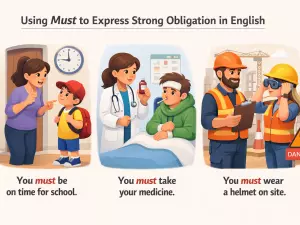
Using Must to Express Strong Obligation in English
This article explains how must expresses strong necessity, strict rules, and urgency, and how it differs from have to when talking about personal vs external obligations. It also shows how negatives change meaning and includes exercises to practice must in obligation contexts.
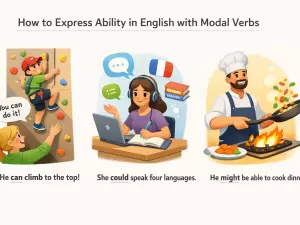
How to Express Ability in English with Modal Verbs
Learn how English shows ability with modal verbs. Youll compare can, could, and be able to, use can for present skills, could for past or general ability, and see when be able to fits other tenses. Includes everyday examples, common mistakes, and practice exercises.
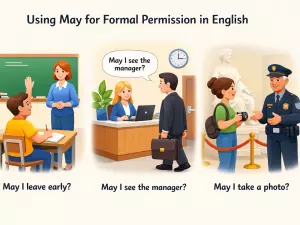
Using May for Formal Permission in English
This article explains why may became the traditional verb for permission, where it still fits best in formal English, and how may questions differ from everyday can requests. It gives classroom, office, and announcement examples, notes modern spoken alternatives, covers negatives, and includes practice exercises.
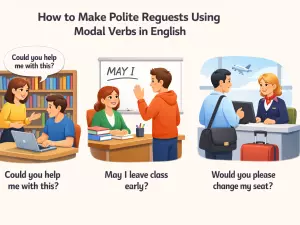
How to Make Polite Requests Using Modal Verbs in English
Here we modal verbs for polite requests, showing how can, could, and would signal different politeness levels, plus key sentence patterns and softeners like please or possibly. Youll get daily examples, context tips from native speakers, common learner errors, and practice exercises.
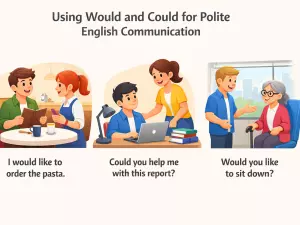
Using Would and Could for Polite English Communication
This article explains why English speakers use modal verbs to sound polite, how would and could change a request’s tone, and the difference between asking willingness vs ability. It covers common forms like would you/could you, real service and daily examples, softening tactics, plus practice exercises.
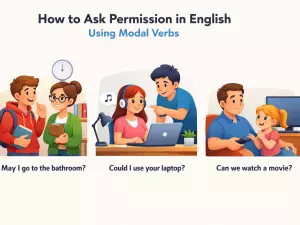
How to Ask Permission in English Using Modal Verbs
Here we the modal verbs used to ask permission in English, focusing on how can, could, and may differ in politeness and formality, and when may sounds more formal. It also explains how tone affects these questions, with everyday examples, common learner mistakes, and practice exercises.
Previous
1
...
3
4
5
6
7
8
9
10
11
...
126
Next