Search the site
Search
Grammar ▾
▸ Articles
▸ Advanced Grammar
▸ Adjectives & Adverbs
▸ Conjunctions
▸ Conditionals
▸ Determiners
▸ Gerunds & Infinitives
▸ Grammar Practice
▸ Modal Verbs
▸ Nouns
▸ Parts of Speech
▸ Passive Voice
▸ Prepositions
▸ Pronouns
▸ Quantifiers
▸ Question Formation
▸ Reported Speech
▸ Verbs
Writing ▾
▸ Punctuation
▸ Sentence Structure
▸ Writing Mistakes
Vocabulary ▾
▸ Visual Vocabulary
▸ Food Vocabulary
▸ People Vocabulary
▸ Places Vocabulary
▸ Hobbies Vocabulary
▸ Home Vocabulary
▸ School Vocabulary
▸ Weather Vocabulary
▸ Basic Vocabulary
▸ General Vocabulary
Speaking ▾
▸ Conversational English
Calculators
Contacts
Home
»
English
»
Grammar
Grammar
This section focuses on English grammar explained in a simple and practical way. You will find clear rules, step-by-step examples, and common mistakes to avoid, helping you build a strong foundation for speaking and writing confidently.
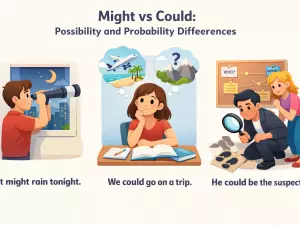
Might vs Could: Possibility and Probability Differences
This article explains how English uses might and could for uncertainty, how might can sound less likely than could, and shows sentence comparisons that shift certainty. It covers cautious vs typical contexts, nuance when both fit, interchangeability in speech, and practice exercises.
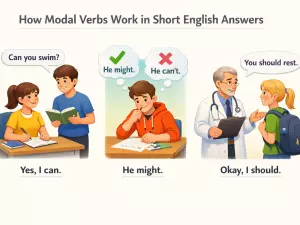
How Modal Verbs Work in Short English Answers
This article explains what short answers are and why English uses them, how modal verbs shape yes/no replies, and how to form affirmative and negative short answers with common contractions. You’ll see everyday examples, when to use them, common learner errors, plus exercises to practice.
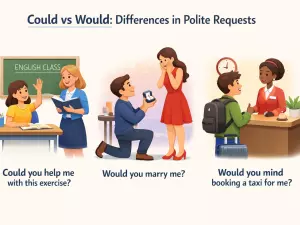
Could vs Would: Differences in Polite Requests
This article explains how could and would work in polite requests, focusing on ability vs willingness, common patterns like could you and would you, and how context and tone affect what sounds natural. It also covers real examples, learner mistakes, and practice exercises.
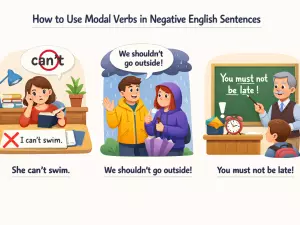
How to Use Modal Verbs in Negative English Sentences
Learn how to make modal verbs negative with not and short forms like can’t, won’t, shouldn’t, and mustn’t, and how these negatives change meaning in real speech. It also explains must not vs do not have to, highlights common learner mistakes, and includes exercises on prohibition and lack of obligation.
Can vs May: Permission Rules in English Grammar
This article explains how can and may both ask permission, why may is traditionally more formal, and why everyday English often uses can. It gives formal and informal examples, notes where may still appears officially, covers negatives/refusals, common learner mistakes, and practice exercises.
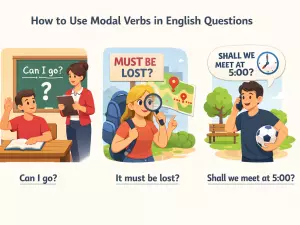
How to Use Modal Verbs in English Questions
Learn how to form questions with modal verbs without do, using the right word order. You will see common patterns with can, could, may, and should, how they change tone for requests, offers, and permission, plus everyday examples, typical mistakes, and practice exercises.
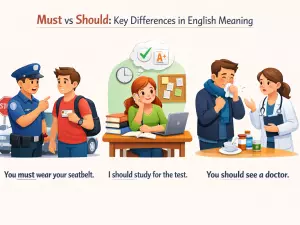
Must vs Should: Key Differences in English Meaning
This article explains the difference between strong obligation and recommended action, showing how must signals necessity while should offers advice. It compares strict rules vs softer suggestions, notes when must sounds too strong, covers context, negatives, common mistakes, and practice exercises.
How to Use Would for Polite Speech and Hypotheticals
This article shows how would makes requests, offers, invitations, and questions sound more polite in everyday English. It also covers would for hypothetical situations and conditionals, how it differs from will, common mistakes, and practice exercises.
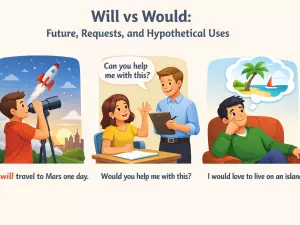
Will vs Would: Future, Requests, and Hypothetical Uses
This article explains how will shows future intentions and snap decisions, while would introduces hypothetical situations. It covers requests and offers, conditionals that need would, tone shifts and softening, common mix-ups, plus exercises to practice the difference.
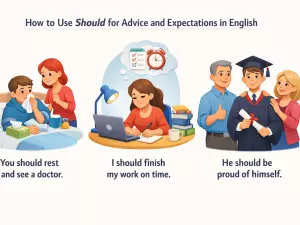
How to Use Should for Advice and Expectations in English
This article explains how should is used for advice, polite suggestions, and expectations about what’s likely or appropriate. It covers negative and question forms, everyday examples, differences from must and ought to, common learner mistakes, and practice exercises.
Previous
1
...
4
5
6
7
8
9
10
11
12
...
126
Next