Search the site
Search
Grammar ▾
▸ Articles
▸ Advanced Grammar
▸ Adjectives & Adverbs
▸ Conjunctions
▸ Conditionals
▸ Determiners
▸ Gerunds & Infinitives
▸ Grammar Practice
▸ Modal Verbs
▸ Nouns
▸ Parts of Speech
▸ Prepositions
▸ Pronouns
▸ Quantifiers
▸ Question Formation
▸ Reported Speech
▸ Verbs
Writing ▾
▸ Punctuation
▸ Sentence Structure
▸ Writing Mistakes
Vocabulary ▾
▸ Visual Vocabulary
▸ Food Vocabulary
▸ People Vocabulary
▸ Places Vocabulary
▸ Hobbies Vocabulary
▸ Home Vocabulary
▸ School Vocabulary
▸ Weather Vocabulary
▸ Basic Vocabulary
▸ General Vocabulary
Speaking ▾
▸ Conversational English
Calculators
Contacts
Home
»
English
»
Grammar
Grammar
This section focuses on English grammar explained in a simple and practical way. You will find clear rules, step-by-step examples, and common mistakes to avoid, helping you build a strong foundation for speaking and writing confidently.
Passive Gerunds and Passive Infinitives Explained
This article explains what passive gerunds and passive infinitives mean, how to form being done and to be done, and when English prefers passive over active. It shows patterns after verbs and prepositions, plus after nouns and adjectives, clears up common mix-ups, and ends with practice converting active sentences into passive forms.
Verbs of Communication and Reporting in English
This article explains what communication verbs express, how say differs from tell and speak from talk, and how to use report, announce, mention, and explain with objects or clauses. It also covers reporting questions and requests, formal vs informal choices, common mistakes, and homework practice.
Perfect Infinitives (To Have Done): Rules and Usage
Learn what a perfect infinitive is and how to have plus a past participle points to an earlier action. See it after modals like should, could, and might for regret, criticism, or speculation, plus adjective and reporting-verb patterns. Includes common mistakes and practice exercises.
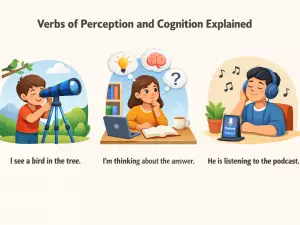
Verbs of Perception and Cognition Explained
This article explains the difference between perception and cognition verbs, lists common verbs and patterns, and shows complements for think, know, and believe. It covers stative tense choices, common learner errors, natural speech and writing use, and homework practice tasks.
Perfect Gerunds (Having Done): Rules and Examples
This article explains perfect gerunds and how having plus a past participle works to show one action happened before another. It covers common verb and preposition patterns, meaning changes vs regular gerunds, real examples, typical mistakes, and rewrite practice exercises.
Result Verbs and Verb + Adjective Patterns
This article explains what result verbs are, how verb + adjective structures work, and how make, leave, and render take object complements. It compares result patterns with linking verbs, flags common learner mistakes, shows writing uses, and ends with homework practice tasks.
Gerund or Infinitive? Simple Rules and Usage Guide
This article explains why some English verbs take a gerund or an infinitive, lists common verbs that require each form, and shows verbs that allow both. It also covers cases where meaning changes, plus real-speech tips and practice exercises.
Verbs of Change and Result: Become, Grow, Turn, Remain
Explains what change and result verbs mean, then shows patterns for become, and how grow, turn, and go describe shifts. Covers remain, stay, and keep for no change, plus verb + adjective/noun patterns, common mistakes, style tips, and homework practice tasks.
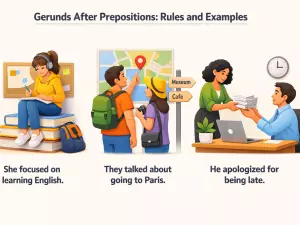
Gerunds After Prepositions: Rules and Examples
This article explains why verbs after prepositions take the gerund, lists common prepositions that need -ing, and covers gerunds in phrasal and fixed phrases like interested in and good at. It also explains multi-word preps like because of/instead of, common learner errors, and quick practice.
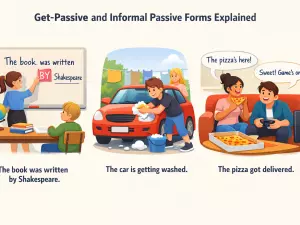
Get-Passive and Informal Passive Forms Explained
This article explains what the get-passive is and how it differs from the be-passive. It covers common uses for changes, events, and accidents, key get plus past participle patterns, when it sounds natural, learner mistakes, and how it shows up in spoken English, plus homework practice tasks.
Previous
1
...
7
8
9
10
11
12
13
14
15
...
124
Next