Search the site
Search
Grammar ▾
▸ Articles
▸ Advanced Grammar
▸ Adjectives & Adverbs
▸ Conjunctions
▸ Conditionals
▸ Determiners
▸ Gerunds & Infinitives
▸ Grammar Practice
▸ Modal Verbs
▸ Nouns
▸ Parts of Speech
▸ Prepositions
▸ Pronouns
▸ Quantifiers
▸ Question Formation
▸ Reported Speech
▸ Verbs
Writing ▾
▸ Punctuation
▸ Sentence Structure
▸ Writing Mistakes
Vocabulary ▾
▸ Visual Vocabulary
▸ Food Vocabulary
▸ People Vocabulary
▸ Places Vocabulary
▸ Hobbies Vocabulary
▸ Home Vocabulary
▸ School Vocabulary
▸ Weather Vocabulary
▸ Basic Vocabulary
▸ General Vocabulary
Speaking ▾
▸ Conversational English
Calculators
Contacts
Home
»
English
»
Grammar
Grammar
This section focuses on English grammar explained in a simple and practical way. You will find clear rules, step-by-step examples, and common mistakes to avoid, helping you build a strong foundation for speaking and writing confidently.
Verbs Followed by Gerund or Infinitive (Same Meaning)
This article explains why some verbs take either a gerund or an infinitive, which common verbs keep the same meaning, and how sentence structure shifts when you switch forms. It covers start, begin, continue, and prefer, why one option may sound more natural, common learner mix-ups, and rewrite exercises.
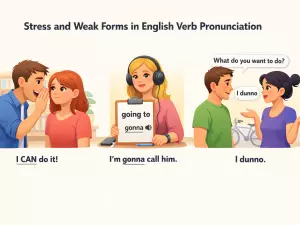
Stress and Weak Forms in English Verb Pronunciation
This article explains stress and weak forms, why auxiliaries weaken in speech, and how be, have, and do change in strong vs weak pronunciation. It also covers reduced modals, sentence stress and meaning shifts, common learner issues, practice for natural rhythm, and homework drills.
Verbs Followed by Infinitives: Rules and Examples
Learn why some verbs need the to + verb infinitive, which common verbs follow this rule, and the main verb + infinitive sentence patterns. See real examples, avoid mistakes with decide, hope, and plan, and use memory tips plus choose-the-correct-form practice exercises.
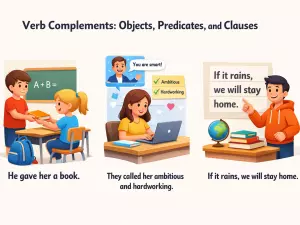
Verb Complements: Objects, Predicates, and Clauses
Covers what verb complements are, including direct and indirect objects, subject complements after linking verbs, and object complements in result structures. Also explains verb + that-clause and verb + wh-clause complements, common learner mistakes, and homework practice tasks.
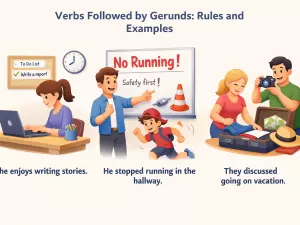
Verbs Followed by Gerunds: Rules and Examples
The article explains why some English verbs must be followed by a gerund, lists the most common ones, and shows real sentence patterns for verb plus gerund in everyday use. It also covers mistakes with enjoy, avoid, consider, gives memory tips, and includes practice exercises.
Verb Tenses Compared: Choosing the Right Time Form
This article shows how to choose the right tense by meaning, comparing present simple vs present continuous; past simple vs present perfect and past continuous; and present perfect vs present perfect continuous. It also covers past perfect vs past simple, future forms will vs going to vs present continuous, and includes homework practice tasks.
Verb Agreement: Subject–Verb Concord Made Simple
Here we the basics of subject–verb agreement, including rules for singular, plural, compound, and collective subjects, tricky words like each and none, agreement with there is/there are, common mistakes, and provides practice exercises.
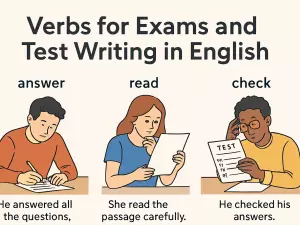
Verbs for Exams and Test Writing in English
This article explains why verb choice can raise or lower exam scores and reviews common task verbs in questions. It covers academic, reporting, and describing verbs for writing, plus how to avoid informal verbs and fix typical scoring problems.
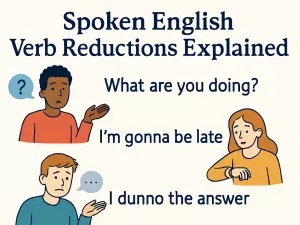
Spoken English Verb Reductions Explained
This article explains what verb reductions are, including auxiliary reductions, contractions, and weak forms, and how rhythm and linking create natural speech. It also covers listening for reduced forms, common learner problems, and ways to improve pronunciation.
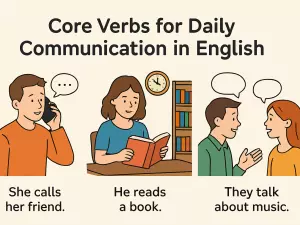
Core Verbs for Daily Communication in English
Learn the core verbs you need first, focusing on high-frequency everyday ones. See common patterns, typical collocations and phrases, and how to use them in real situations. Avoid basic mistakes, build fluency, and follow daily homework practice.
Previous
1
...
11
12
13
14
15
16
17
18
19
...
124
Next