Search the site
Search
Grammar ▾
▸ Articles
▸ Advanced Grammar
▸ Adjectives & Adverbs
▸ Conjunctions
▸ Conditionals
▸ Determiners
▸ Gerunds & Infinitives
▸ Grammar Practice
▸ Modal Verbs
▸ Nouns
▸ Parts of Speech
▸ Prepositions
▸ Pronouns
▸ Quantifiers
▸ Question Formation
▸ Reported Speech
▸ Verbs
Writing ▾
▸ Punctuation
▸ Sentence Structure
▸ Writing Mistakes
Vocabulary ▾
▸ Visual Vocabulary
▸ Food Vocabulary
▸ People Vocabulary
▸ Places Vocabulary
▸ Hobbies Vocabulary
▸ Home Vocabulary
▸ School Vocabulary
▸ Weather Vocabulary
▸ Basic Vocabulary
▸ General Vocabulary
Speaking ▾
▸ Conversational English
Calculators
Contacts
Home
»
English
»
Grammar
Grammar
This section focuses on English grammar explained in a simple and practical way. You will find clear rules, step-by-step examples, and common mistakes to avoid, helping you build a strong foundation for speaking and writing confidently.
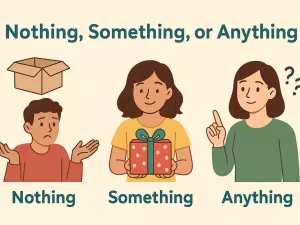
Nothing, Something, or Anything: Simple Usage Guide
Here we how to use nothing, something, and anything in affirmative, negative, and question sentences, highlights context differences and double negatives to avoid, lists common collocations, and provides practice choosing the correct form.
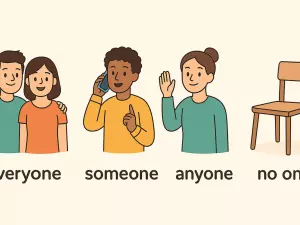
Everyone, Someone, Anyone, No One: Easy Grammar Guide
This article explains indefinite pronouns, showing how to use them in positive, negative, and question forms. It covers verb agreement, common mistakes, pronunciation tips, and includes a fill-in-the-blank practice activity.
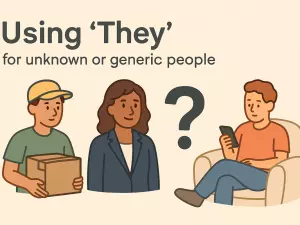
How to Use “They” for Unknown or Generic People
Here we why we use they as a gender-neutral pronoun, its use for unknown people, how it appears in modern English, common examples and mistakes, and provides practice rewriting sentences with they.
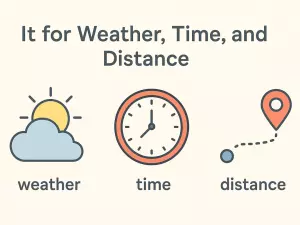
How to Use “It” for Weather, Time, and Distance
Here we why we use it in weather, time, and distance expressions, points out common mistakes, and gives real spoken English examples. It also includes practice exercises to help you master these uses.
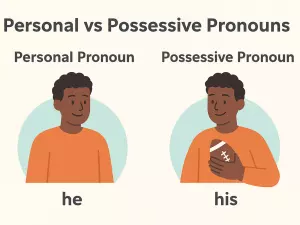
Personal vs Possessive Pronouns: Key Differences and Examples
The article lists personal and possessive pronouns, explains how their functions differ, and points out common mistakes like his versus he. It also gives example sentences and practice exercises for choosing the right pronoun.
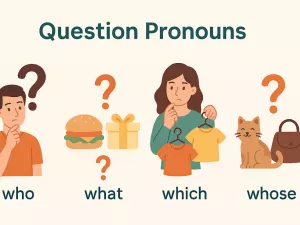
Question Pronouns: Who, What, Which, Whose Explained
This article explains question pronouns, covering who for people, what for things, which for choices, and whose for possession. It includes example sentences and a practice section to help you use these pronouns correctly.
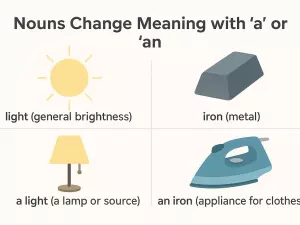
20 English Nouns That Change Meaning with “a” or “an”
This article explains how using articles like a or an with English nouns can change meaning. It covers common examples, context-based differences, frequent learner mistakes, and includes a matching exercise to practice article use.
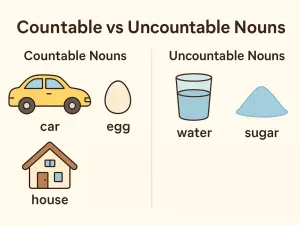
Countable vs Uncountable Nouns: Easy Memory Trick for Learners
Here we the basics of countable and uncountable nouns, provides typical examples, explains quantifiers such as much, many, and some, discusses words that change type, offers a visual memory tip, and includes a sorting practice.
How to Use Nouns After “There Is” and “There Are”
Here we how to use there is and there are, focusing on their meaning, usage with countable and uncountable nouns, singular and plural forms, and patterns for affirmative, negative, and question sentences.
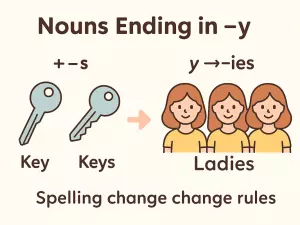
Nouns Ending in -y: Simple Spelling Change Rules
Here we rules for making plurals of nouns ending in -y, explaining the consonant plus y to -ies and vowel plus y to -ys patterns. It also provides examples, exceptions, pronunciation notes, and a plural rewrite exercise.
Previous
1
...
111
112
113
114
115
116
117
118
119
...
124
Next