Search the site
Search
Grammar ▾
▸ Articles
▸ Advanced Grammar
▸ Adjectives & Adverbs
▸ Conjunctions
▸ Conditionals
▸ Determiners
▸ Gerunds & Infinitives
▸ Grammar Practice
▸ Modal Verbs
▸ Nouns
▸ Parts of Speech
▸ Prepositions
▸ Pronouns
▸ Quantifiers
▸ Question Formation
▸ Reported Speech
▸ Verbs
Writing ▾
▸ Punctuation
▸ Sentence Structure
▸ Writing Mistakes
Vocabulary ▾
▸ Visual Vocabulary
▸ Food Vocabulary
▸ People Vocabulary
▸ Places Vocabulary
▸ Hobbies Vocabulary
▸ Home Vocabulary
▸ School Vocabulary
▸ Weather Vocabulary
▸ Basic Vocabulary
▸ General Vocabulary
Speaking ▾
▸ Conversational English
Calculators
Contacts
Home
»
English
»
Grammar
Grammar
This section focuses on English grammar explained in a simple and practical way. You will find clear rules, step-by-step examples, and common mistakes to avoid, helping you build a strong foundation for speaking and writing confidently.
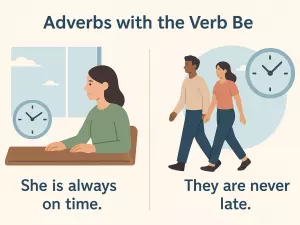
Adverbs with the Verb Be: Placement and Rules
Here we adverb placement in sentences, focusing on their position after the verb be and for emphasis. It lists common frequency adverbs, highlights typical mistakes, and includes practice exercises for adding adverbs correctly.
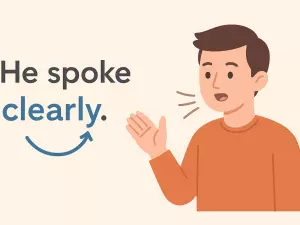
Making Adverbs from Adjectives: Quick Grammar Guide
Here we what adverbs are, how to form them by adding -ly to adjectives, and key spelling and pronunciation rules. It also explains irregular adverbs such as fast and hard, highlights common mistakes, and provides practice exercises.
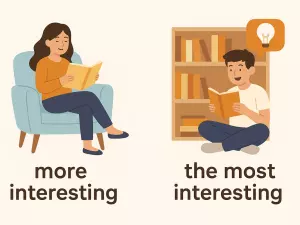
Comparatives with More and Most: Easy Rules
This article explains when to use more and most, highlights the rules for one-syllable and multi-syllable comparatives, and lists irregular forms like better and worse. It also warns against double comparatives and includes examples and practice.
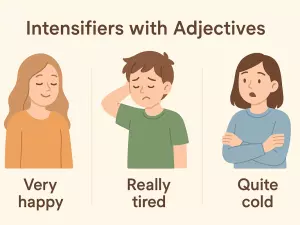
Intensifiers with Adjectives: Very, Really, Quite
This article defines intensifiers, compares very, really, and quite, and explains the difference between strong and weak adjectives. It also covers when intensifiers are inappropriate, common mistakes, and includes practice rewriting sentences.
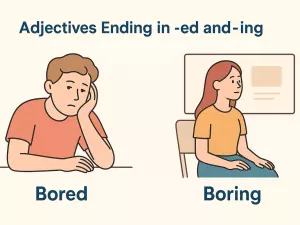
Adjectives Ending in -ed and -ing (bored vs boring)
This article explains the difference between -ed and -ing adjectives, shows how to use them to describe feelings or things, highlights common pairs like bored/boring, discusses frequent learner mistakes, and offers tips and practice exercises.
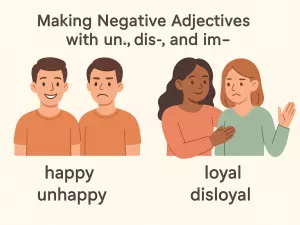
Making Negative Adjectives with un-, dis-, and im-
This article explains how prefixes such as un-, dis-, and im- turn adjectives into their opposites. It covers correct usage, provides common examples, notes on spelling and pronunciation, and includes a practice section for prefix selection.
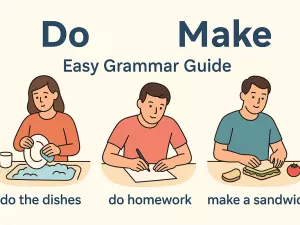
Do vs Make: Easy Grammar Guide for Beginners
This article explains when to use do or make, highlights common fixed phrases, points out typical mistakes to avoid, and offers quick tips. It ends with practice exercises to help you choose do or make correctly in different situations.
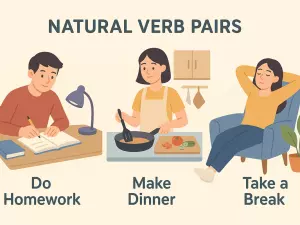
Natural Verb Pairs: Do Homework, Make Dinner, Take a Break
The article defines collocations, highlights common verb and noun pairs like do, make, and take, gives practical examples, points out typical mistakes, and offers exercises to choose the correct verb in context.
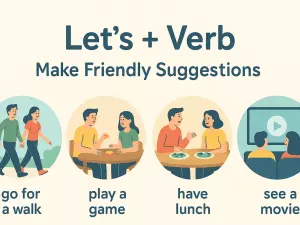
Let’s + Verb: How to Make Friendly Suggestions
This article explains what let's means, how to form sentences with it, and the difference between making suggestions and giving commands. It also covers adding tag questions, common mistakes, and practice making suggestions correctly.
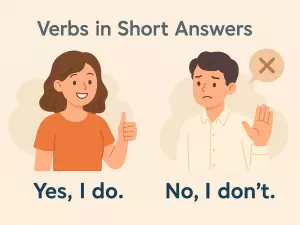
Verbs in Short Answers: Yes, I Do / No, I Don’t
The article explains when to use short answers, how to form both positive and negative ones, and covers questions with be, do, have, and modal verbs. It also highlights natural speech patterns and provides short answer practice.
Previous
1
...
109
110
111
112
113
114
115
116
117
...
124
Next