Search the site
Search
Grammar ▾
▸ Articles
▸ Advanced Grammar
▸ Adjectives & Adverbs
▸ Conjunctions
▸ Conditionals
▸ Determiners
▸ Gerunds & Infinitives
▸ Grammar Practice
▸ Modal Verbs
▸ Nouns
▸ Parts of Speech
▸ Prepositions
▸ Pronouns
▸ Quantifiers
▸ Question Formation
▸ Reported Speech
▸ Verbs
Writing ▾
▸ Punctuation
▸ Sentence Structure
▸ Writing Mistakes
Vocabulary ▾
▸ Visual Vocabulary
▸ Food Vocabulary
▸ People Vocabulary
▸ Places Vocabulary
▸ Hobbies Vocabulary
▸ Home Vocabulary
▸ School Vocabulary
▸ Weather Vocabulary
▸ Basic Vocabulary
▸ General Vocabulary
Speaking ▾
▸ Conversational English
Calculators
Contacts
Home
»
English
»
Grammar
Grammar
This section focuses on English grammar explained in a simple and practical way. You will find clear rules, step-by-step examples, and common mistakes to avoid, helping you build a strong foundation for speaking and writing confidently.
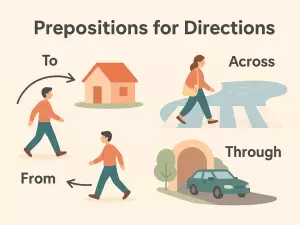
Prepositions for Directions: To, From, Across, Through
This article explains basic directional prepositions, how they pair with movement verbs, and clarifies the difference between across and through. It also compares to and towards, and includes a practice activity to match verbs with prepositions.
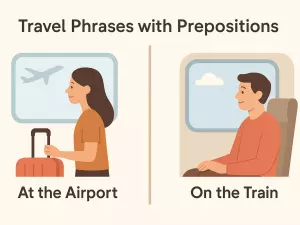
Travel Phrases with Prepositions: At the Airport, On the Train
The article teaches how to use at, in, and on for transport, provides essential airport and hotel phrases, points out common mistakes, and offers practice exercises to help you select correct travel-related prepositions and expressions.
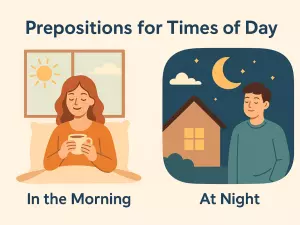
Prepositions for Times of Day: In the Morning, At Night
The article explains how to use in, on, and at for times of day, specific times, and parts of the day. It covers special cases such as at night and on time, highlights common mistakes, and provides practice sentences for learning.
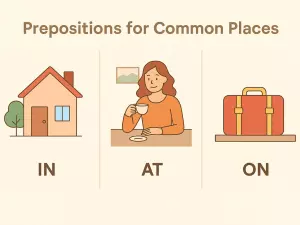
Prepositions for Common Places: In, At, On
The article explains key rules for using in, at, and on, gives examples with places like buildings, cities, streets, and rooms, points out common mistakes made by Russian learners, and provides practice exercises to test your understanding.
Easy Adverbs That Make Speech Sound Natural
Here we how to use adverbs of degree and manner for smoother, more natural conversations. It explains adding flow, avoiding overuse, and provides examples and practice exercises to help your speech sound authentic in daily situations.
Frequency Ladder: From Always to Never
This article explains the full range of frequency adverbs, their correct order, and placement in sentences. It includes a chart with examples, highlights common mistakes, and offers practice to help you use these adverbs accurately.
Really vs Very: How to Choose the Right Word
Here we the difference between really and very, when they can be swapped, and how they pair with strong or weak adjectives. It also gives tips to avoid repetition, offers spoken English examples, and provides practice with better word choices.
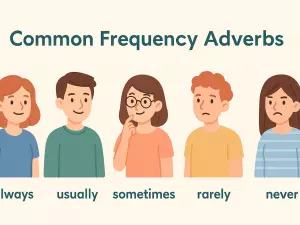
Common Frequency Adverbs in Everyday English
This article explains what frequency adverbs are, their typical order, and where to place them in sentences. It covers differences with be and action verbs, highlights common mistakes, and offers practice with correcting sample sentences.
Placement of Adverbs in Simple Sentences
This article reviews basic word order and explains where to place adverbs at the beginning, middle, or end of a sentence. It also covers emphasis, style choices, common mistakes, and offers practice exercises to improve your adverb placement.
Adverbs with Verbs: Where and How to Use Them
Here we what adverbs are, their main types—manner, time, and place—where to position them with verbs, and how to avoid using double adverbs. It also includes examples and practice exercises for using adverbs correctly.
Previous
1
...
108
109
110
111
112
113
114
115
116
...
124
Next