Search the site
Search
Grammar ▾
▸ Articles
▸ Advanced Grammar
▸ Adjectives & Adverbs
▸ Conjunctions
▸ Conditionals
▸ Determiners
▸ Gerunds & Infinitives
▸ Grammar Practice
▸ Modal Verbs
▸ Nouns
▸ Parts of Speech
▸ Prepositions
▸ Pronouns
▸ Quantifiers
▸ Question Formation
▸ Reported Speech
▸ Verbs
Writing ▾
▸ Punctuation
▸ Sentence Structure
▸ Writing Mistakes
Vocabulary ▾
▸ Visual Vocabulary
▸ Food Vocabulary
▸ People Vocabulary
▸ Places Vocabulary
▸ Hobbies Vocabulary
▸ Home Vocabulary
▸ School Vocabulary
▸ Weather Vocabulary
▸ Basic Vocabulary
▸ General Vocabulary
Speaking ▾
▸ Conversational English
Calculators
Contacts
Home
»
English
»
Grammar
Grammar
This section focuses on English grammar explained in a simple and practical way. You will find clear rules, step-by-step examples, and common mistakes to avoid, helping you build a strong foundation for speaking and writing confidently.
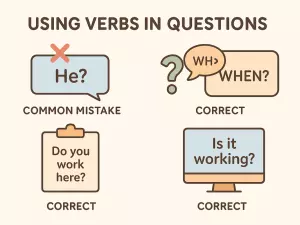
How to Use Verbs in Questions Correctly
Here we how to form English questions, including word order, using do, does, did, and be, and making WH questions. It also highlights common mistakes and provides exercises for practice.
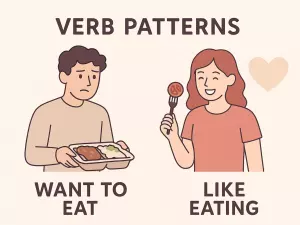
Verb Patterns: Want to Eat or Like Eating?
This article explains verb patterns, focusing on when to use verbs with to-infinitives or -ing forms. It covers verbs that take both patterns, how their meanings change, common mistakes, and includes exercises for practice.
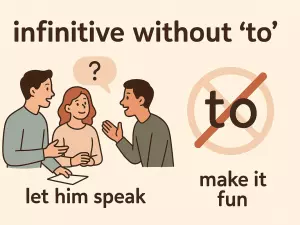
Infinitive without “to”: When to Drop It and Why
This article explains the bare infinitive, showing how it works with modal verbs, causative verbs like let and make, and verbs such as help and see. It also highlights common mistakes and provides fill-in-the-blank practice.
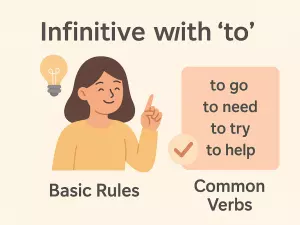
Infinitive with “to”: Basic Rules and Common Verbs
The article defines infinitives, lists common verbs that take to, explains their use for showing purpose, covers verb plus to plus verb patterns, points out typical mistakes, and provides practice sentences for you to complete.
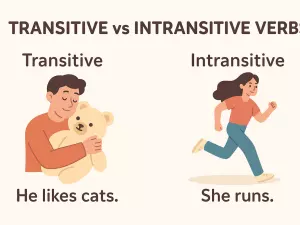
Transitive vs Intransitive Verbs: Easy Rules and Examples
The article defines transitive and intransitive verbs, highlights their key differences, lists verbs that do or don’t take objects, shows verbs used both ways with examples, and provides a practice section to identify verb types.
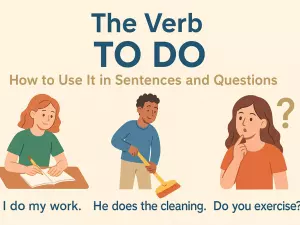
The Verb “To Do”: How to Use It in Sentences and Questions
This article explains the functions of do in English, covering its use as a main verb, auxiliary verb, and in forming questions or negatives. It also discusses how do adds emphasis, common expressions, and offers sentence practice.
The Verb “To Have” in Present Simple: Grammar and Examples
The article explains how to use have in the present simple tense, including forming affirmative and negative sentences, making questions with do and does, and recognizing common mistakes. It also provides a fill-in-the-blank practice exercise.
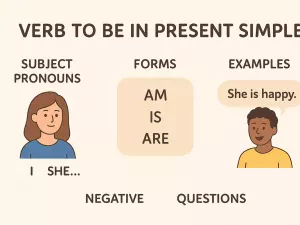
The Verb “To Be” in Present Simple: Full Beginner Guide
This article explains the different forms of the verb to be in the present simple tense. It covers how to make affirmative and negative sentences, ask yes/no and WH questions, avoid common errors, and includes a practice table.
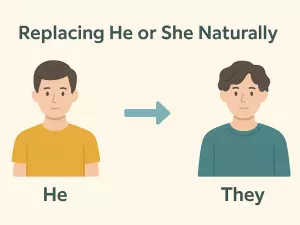
Replacing He or She Naturally: Using Pronouns Correctly
Here we reasons for replacing he or she, explains how to use they as a neutral pronoun, offers tips for rewriting sentences clearly, points out common style errors, and provides practice for using correct pronouns in context.
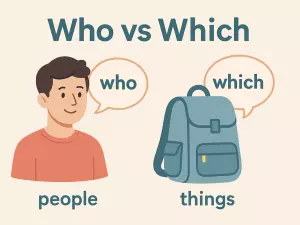
Who vs Which: How to Choose Between People and Things
Here we the use of relative pronouns, focusing on when to use who and which, the difference between who and that, and common mistakes. It also offers practice exercises to help you select the correct pronoun.
Previous
1
...
110
111
112
113
114
115
116
117
118
...
124
Next