Search the site
Search
Grammar ▾
▸ Articles
▸ Advanced Grammar
▸ Adjectives & Adverbs
▸ Conjunctions
▸ Conditionals
▸ Determiners
▸ Gerunds & Infinitives
▸ Grammar Practice
▸ Modal Verbs
▸ Nouns
▸ Parts of Speech
▸ Prepositions
▸ Pronouns
▸ Quantifiers
▸ Question Formation
▸ Reported Speech
▸ Verbs
Writing ▾
▸ Punctuation
▸ Sentence Structure
▸ Writing Mistakes
Vocabulary ▾
▸ Visual Vocabulary
▸ Food Vocabulary
▸ People Vocabulary
▸ Places Vocabulary
▸ Hobbies Vocabulary
▸ Home Vocabulary
▸ School Vocabulary
▸ Weather Vocabulary
▸ Basic Vocabulary
▸ General Vocabulary
Speaking ▾
▸ Conversational English
Calculators
Contacts
Home
»
English
»
Grammar
Grammar
This section focuses on English grammar explained in a simple and practical way. You will find clear rules, step-by-step examples, and common mistakes to avoid, helping you build a strong foundation for speaking and writing confidently.
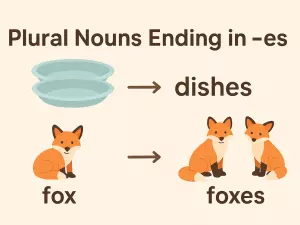
Plural Nouns Ending in -es: How to Spell Them Correctly
The article details when to use -es for plurals, focusing on nouns ending in s, sh, ch, x, or z, and exceptions like hero to heroes. It also gives pronunciation guidance, notes typical mistakes, and provides a brief quiz for practice.
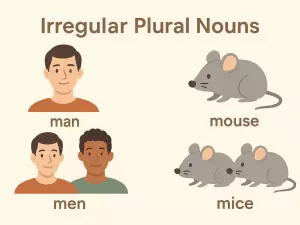
Irregular Plural Nouns: Complete List and Easy Rules
The article explains what makes a plural form irregular, lists common singular and plural pairs, covers vowel and ending changes, discusses Latin and Greek forms, highlights nouns with no plural, shares memory tips, and includes a matching practice.
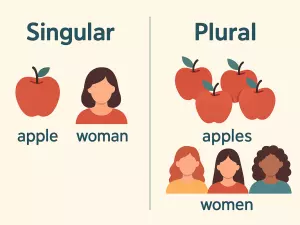
Singular vs Plural Nouns: Clear Rules and Common Confusions
Here we the basics of singular and plural nouns, explains regular and irregular plural endings, spelling changes, and no-change plurals. It also shows their usage in sentences and provides practice on making plurals.
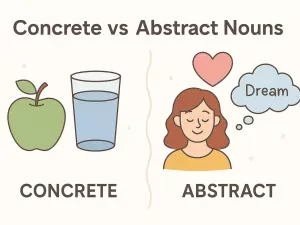
Concrete vs Abstract Nouns: Easy Grammar Guide with Examples
This article explains what concrete and abstract nouns are, how they differ, and their roles in daily language. It provides definitions, examples, common confusions, tips for remembering, and a practice section for classifying nouns.
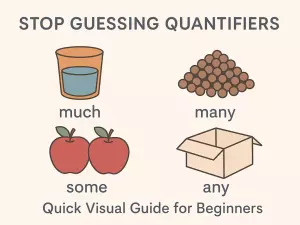
Stop Guessing Quantifiers: Quick Visual Guide for Beginners
This article explains how to choose between much, many, some, and any by countability, context, and common confusions. It includes decision charts, tables, and practice activities to help you use these words correctly in real situations.
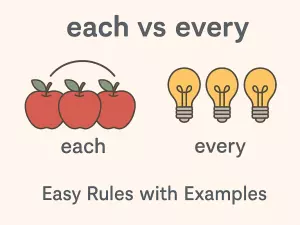
each vs every: Easy Rules with Examples
The article compares each and every, focusing on their similarities, differences, and singular verb agreement. It also covers time expressions, use with of and determiners, set phrases, exceptions, common mistakes, and provides practice exercises.
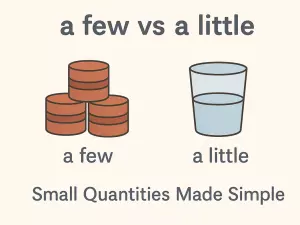
a few vs a little: Small Quantities Made Simple
Here we how to use a few and a little, focusing on their meanings, tone, and differences for countable and uncountable nouns. It also explains common phrases, frequent errors with fixes, and provides practice through short dialogues.
much vs many: Count or Not Count?
This article explains the difference between count and noncount nouns, how to use much, many, a lot of, and lots of, and when to choose formal or informal options. It highlights common mistakes and gives real-life examples and practice.
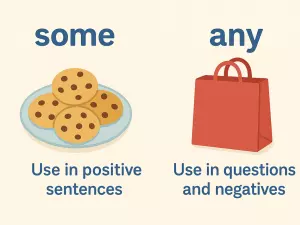
some vs any: The Beginner's Short Guide
The article reviews countable and uncountable nouns, how to use some and any in statements, questions, and negatives, when some is natural in offers and requests, fixed expressions, common mistakes, and includes practice exercises for rewriting.
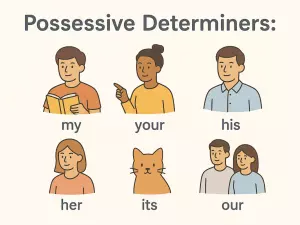
Possessive Determiners: my, your, his, her, its, our, their
The article explains how to use possessive determiners before nouns, focusing on agreement with the noun, not the speaker. It covers the difference between its and it's, common gender word confusions, real-life examples, and practice exercises.
Previous
1
...
112
113
114
115
116
117
118
119
120
...
124
Next