Search the site
Search
Grammar ▾
▸ Articles
▸ Advanced Grammar
▸ Adjectives & Adverbs
▸ Conjunctions
▸ Conditionals
▸ Determiners
▸ Gerunds & Infinitives
▸ Grammar Practice
▸ Modal Verbs
▸ Nouns
▸ Parts of Speech
▸ Prepositions
▸ Pronouns
▸ Quantifiers
▸ Question Formation
▸ Reported Speech
▸ Verbs
Writing ▾
▸ Punctuation
▸ Sentence Structure
▸ Writing Mistakes
Vocabulary ▾
▸ Visual Vocabulary
▸ Food Vocabulary
▸ People Vocabulary
▸ Places Vocabulary
▸ Hobbies Vocabulary
▸ Home Vocabulary
▸ School Vocabulary
▸ Weather Vocabulary
▸ Basic Vocabulary
▸ General Vocabulary
Speaking ▾
▸ Conversational English
Calculators
Contacts
Home
»
English
»
Grammar
Grammar
This section focuses on English grammar explained in a simple and practical way. You will find clear rules, step-by-step examples, and common mistakes to avoid, helping you build a strong foundation for speaking and writing confidently.
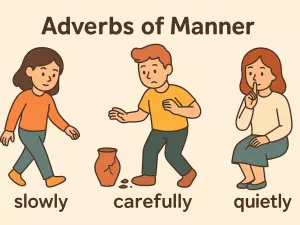
Adverbs of Manner: Slowly, Carefully, Quietly
The article compares adverbs of manner with other adverb types, explains their forms and spelling, common positions, and effects on speech rhythm. It also addresses confusions like hard vs. hardly and offers practice to improve sentence style.
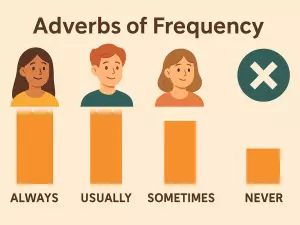
Adverbs of Frequency: Always, Usually, Sometimes, Never
This article explains adverbs of frequency, their scale from 0 to 100 percent, and correct placement with be and other verbs. It covers using them for habits in present simple, common errors like double negatives, and practice for weekly routines.
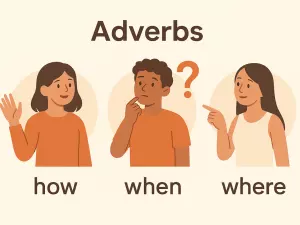
Adverbs for Beginners: How, When, Where
Here we how adverbs express manner, time, and place, how to form -ly adverbs, where to place them in sentences, word order with be and other verbs, the difference between strong and weak adverbs, common errors, and practice exercises.
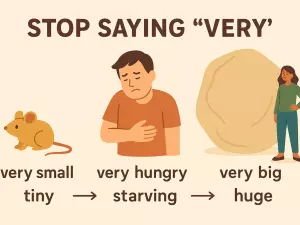
Stop Saying 'Very': 20 Simple Adjectives That Sound Better
Here we why very can weaken your writing, offers stronger alternatives like tiny and starving, explains when to upgrade or keep very, reviews common collocations, and gives practice replacing very plus an adjective with a better word.
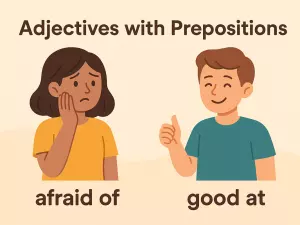
Adjectives with Prepositions: Afraid of, Good at
Here we the importance of adjective-preposition pairs such as afraid of and good at, explains their use with nouns and gerunds, highlights typical errors and pronunciation tips, discusses formal and casual choices, and provides practice exercises.
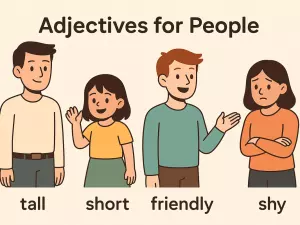
Adjectives for People: Appearance and Personality
Here we how to describe a person's looks and personality using adjectives for height, build, hair, clothes, and traits like friendly, shy, kind, and careful. It also explains adjective patterns, polite descriptions, collocations, and avoiding stereotypes.
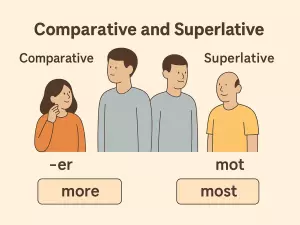
Comparative and Superlative Basics: -er, -est, More, Most
Here we how to compare things in English, including spelling rules for -er and -est, using more or most with longer adjectives, irregular forms, how to use than, avoiding double comparatives, and provides practice comparing people and objects.
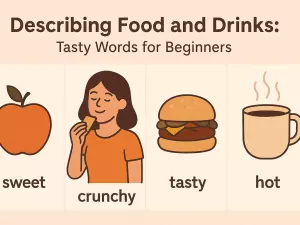
Describing Food and Drinks: Tasty Words for Beginners
Here we key vocabulary for taste, texture, temperature, and smell, how to politely express food opinions, common collocations, frequent mistakes and fixes, and practical advice for describing menu items accurately.
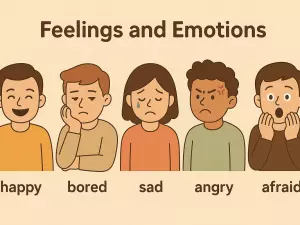
Feelings and Emotions: Useful Adjectives for Daily Talk
This article explains basic feeling words like happy and bored, the difference between ed and ing forms, and key patterns for describing feelings. It covers polite ways to talk about moods, common mistakes, and includes short role-play dialogues for practice.
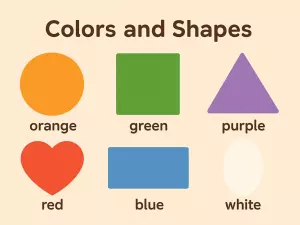
Colors and Shapes: Basic Adjectives with Pictures
Learn to use basic color and shape words, describe objects, and understand word order with colors. Here we shade variations, simple style and design terms, common errors, and practical exercises for describing real-life items.
Previous
1
...
115
116
117
118
119
120
121
122
123
124
Next