Search the site
Search
Grammar ▾
▸ Articles
▸ Advanced Grammar
▸ Adjectives & Adverbs
▸ Conjunctions
▸ Conditionals
▸ Determiners
▸ Gerunds & Infinitives
▸ Grammar Practice
▸ Modal Verbs
▸ Nouns
▸ Parts of Speech
▸ Prepositions
▸ Pronouns
▸ Quantifiers
▸ Question Formation
▸ Reported Speech
▸ Verbs
Writing ▾
▸ Punctuation
▸ Sentence Structure
▸ Writing Mistakes
Vocabulary ▾
▸ Visual Vocabulary
▸ Food Vocabulary
▸ People Vocabulary
▸ Places Vocabulary
▸ Hobbies Vocabulary
▸ Home Vocabulary
▸ School Vocabulary
▸ Weather Vocabulary
▸ Basic Vocabulary
▸ General Vocabulary
Speaking ▾
▸ Conversational English
Calculators
Contacts
Home
»
English
»
Grammar
Grammar
This section focuses on English grammar explained in a simple and practical way. You will find clear rules, step-by-step examples, and common mistakes to avoid, helping you build a strong foundation for speaking and writing confidently.
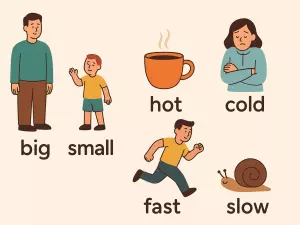
Opposite Adjectives: Big/Small, Hot/Cold, Fast/Slow
Here we what opposite adjectives express, lists useful pairs for daily use, explains differences in strength and tone, distinguishes not from true opposites, provides example sentences, highlights common confusions, and includes practice comparing and…
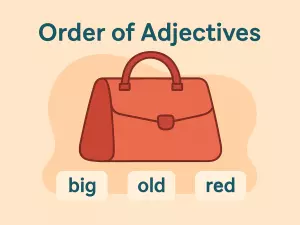
Order of Adjectives: The Simple Pattern for A1-A2
The article explains why word order is important for adjectives in English, details the main opinion–size–age–color–material pattern, shows how to combine adjectives, covers hyphens and commas, gives examples, points out errors, and provides practice sentences.
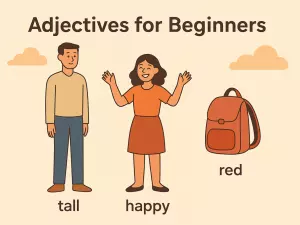
Adjectives for Beginners: Describing People and Things
Here we how to use adjectives, including their position before nouns or after be, main types like size, color, and shape, describing people's looks and traits, using intensifiers such as very, and common errors to avoid. It also suggests practical exercises.
Verbs You'll Use Today: Speak, Go, Get - Learn the Real Basics Fast
This article explains why speak, go, and get are essential verbs. It covers communication phrases, travel and planning, core meanings, short questions, common mistakes with fixes, and includes practice mini dialogues for daily English use.
50 Common Verbs Every Beginner Should Learn
The article explains how to learn verbs efficiently, presents the top 50 verbs with meanings, gives examples in different forms, includes mini phrases, a quiz, tips for common mistakes, and sentence practice to reinforce learning.
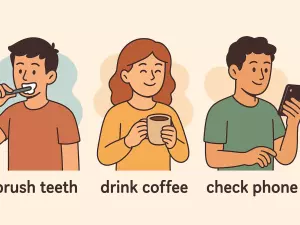
Verb + Noun Collocations for Daily Routines
The article defines collocations and gives common examples for morning routines, study and work, shopping, travel, and free time. It also highlights common translation mistakes, offers mini dialogues, and includes practice for describing routines.
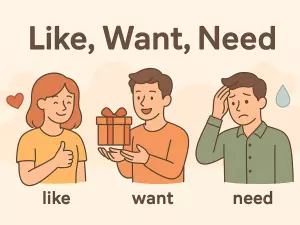
Like, Want, Need: Everyday Verbs with Examples
Here we the core meanings and differences between like, want, and need, explains their verb patterns, and shows how to soften requests. It includes real-life dialogues, common mistakes, and practice exercises for better usage.
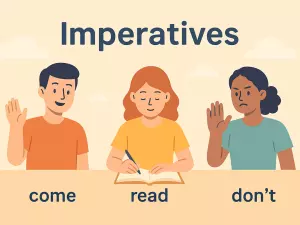
Imperatives: How to Give Simple Instructions in English
This article explains what the imperative form is, covers both positive and negative commands, and shows how to use polite language. It includes tips for sequencing instructions, examples from daily life, common mistakes, and practice exercises.
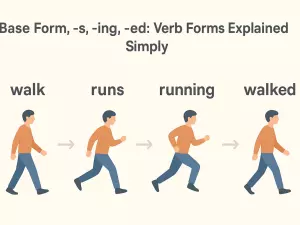
Base Form, -s, -ing, -ed: Verb Forms Explained Simply
Here we why verb forms matter at A1, explains using the base, -s, -ing, and -ed forms, covers spelling patterns, highlights common mistakes, and provides practice converting and using verbs correctly in sentences.
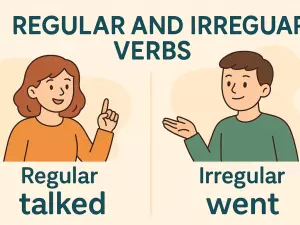
Regular and Irregular Verbs: Basics You Must Know
Here we the difference between regular and irregular verbs, explains ed ending rules for both pronunciation and spelling, lists the most common irregular verb forms, gives tips to learn them faster, points out common mistakes, and provides practice.
Previous
1
...
115
116
117
118
119
120
121
122
123
124
Next