Search the site
Search
Grammar ▾
▸ Articles
▸ Advanced Grammar
▸ Adjectives & Adverbs
▸ Conjunctions
▸ Conditionals
▸ Determiners
▸ Gerunds & Infinitives
▸ Grammar Practice
▸ Modal Verbs
▸ Nouns
▸ Parts of Speech
▸ Prepositions
▸ Pronouns
▸ Quantifiers
▸ Question Formation
▸ Reported Speech
▸ Verbs
Writing ▾
▸ Punctuation
▸ Sentence Structure
▸ Writing Mistakes
Vocabulary ▾
▸ Visual Vocabulary
▸ Food Vocabulary
▸ People Vocabulary
▸ Places Vocabulary
▸ Hobbies Vocabulary
▸ Home Vocabulary
▸ School Vocabulary
▸ Weather Vocabulary
▸ Basic Vocabulary
▸ General Vocabulary
Speaking ▾
▸ Conversational English
Calculators
Contacts
Home
»
English
»
Grammar
Grammar
This section focuses on English grammar explained in a simple and practical way. You will find clear rules, step-by-step examples, and common mistakes to avoid, helping you build a strong foundation for speaking and writing confidently.
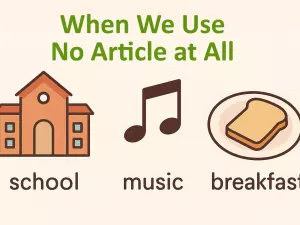
Zero Article: When We Use No Article at All
This article explains when to omit articles in English, such as with general statements, meals, sports, languages, places, transport, and set phrases. It also highlights common errors and offers exercises for practice.
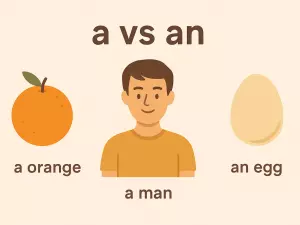
a vs an: The Easiest Rule You'll Ever Learn
Here we how to choose a or an based on vowel and consonant sounds, discusses exceptions like hour and university, explains rules for acronyms, warns against direct translation, and provides quick tips and practice exercises.
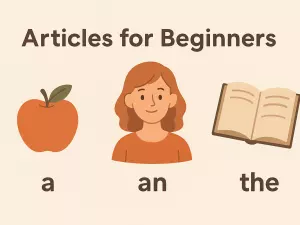
Articles for Beginners: a, an, the Explained Simply
Here we how to use a, an, and the in English, explains the sound rule, when to use or omit articles for general ideas, points out common beginner mistakes, and provides practice exercises with explanations.
Sound More Natural: 15 Easy Adverbs You Can Start Using Today
Here we why 15 common adverbs are effective in everyday conversation, provides meanings, usage notes, example sentences, tone tips, mini dialogues, a quiz, and practice exercises to help you use these adverbs instead of basic words.
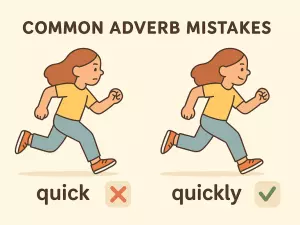
Common Adverb Mistakes at A1-A2 Level
Here we common A1-A2 English mistakes such as adjective vs adverb confusion, incorrect word order with be, frequency adverb misplacement, too vs very errors, redundancy, and provides clear repair strategies and practice.
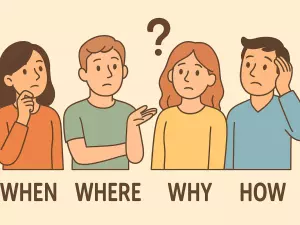
Question Words as Adverbs: When, Where, Why, How
Here we how wh-words act as adverbs in questions, explains correct word order, short answers, and using how. It also addresses common classroom situations, typical errors, and includes practice to help learners build clear questions.
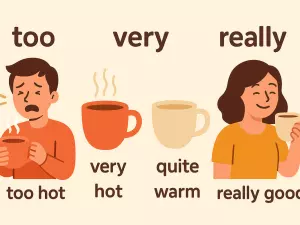
Too, Very, Quite, Really: Making Descriptions Stronger
Here we how to use very, really, quite, and too to change the strength and feeling of what you say. It also discusses common mistakes, differences in British and American English, and offers practice to improve your descriptions.
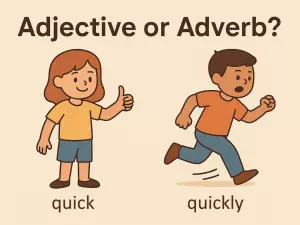
Adjective or Adverb? Quick Tests for Beginners
Here we the difference between what adjectives and adverbs describe, how to use them after be or action verbs, tricky words like hard vs hardly, choosing good or well, using adjectives with sense verbs, and correcting common mistakes with practice.
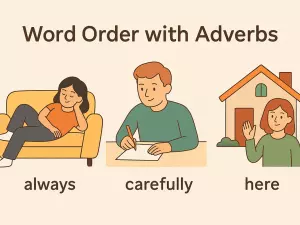
Word Order with Adverbs: Where Do They Go?
This article explains where to place adverbs in sentences, how their position differs with be and other verbs, the distinctions among frequency, manner, and time adverbs, tips for emphasis, the natural order of two adverbs, and common mistakes to avoid.
Adverbs of Time and Place: Today, Now, Here, There
Here we how to use time words for now, past, and future, place words for position and movement, and rules for word order when using time and place. It also explains stacking adverbs, fixed phrases, and includes practice with a short story.
Previous
1
...
115
116
117
118
119
120
121
122
123
124
Next