Search the site
Search
Grammar ▾
▸ Articles
▸ Advanced Grammar
▸ Adjectives & Adverbs
▸ Conjunctions
▸ Conditionals
▸ Determiners
▸ Gerunds & Infinitives
▸ Grammar Practice
▸ Modal Verbs
▸ Nouns
▸ Parts of Speech
▸ Prepositions
▸ Pronouns
▸ Quantifiers
▸ Question Formation
▸ Reported Speech
▸ Verbs
Writing ▾
▸ Punctuation
▸ Sentence Structure
▸ Writing Mistakes
Vocabulary ▾
▸ Visual Vocabulary
▸ Food Vocabulary
▸ People Vocabulary
▸ Places Vocabulary
▸ Hobbies Vocabulary
▸ Home Vocabulary
▸ School Vocabulary
▸ Weather Vocabulary
▸ Basic Vocabulary
▸ General Vocabulary
Speaking ▾
▸ Conversational English
Calculators
Contacts
Home
»
English
»
Grammar
Grammar
This section focuses on English grammar explained in a simple and practical way. You will find clear rules, step-by-step examples, and common mistakes to avoid, helping you build a strong foundation for speaking and writing confidently.
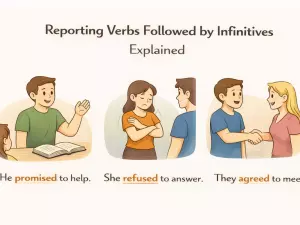
Reporting Verbs Followed by Infinitives Explained
Here we how infinitive structures work in reported speech, lists common reporting verbs with infinitives, and explains object plus infinitive patterns. It also discusses meaning differences, negative forms, and common structural mistakes.
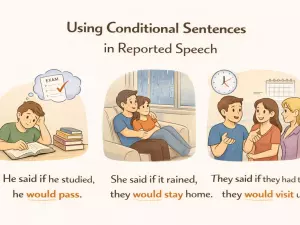
Using Conditional Sentences in Reported Speech
This article explains how to report conditional sentences in indirect speech. It covers reporting zero, first, second, and third conditionals, how to adjust tenses and modals, preserve meaning, and avoid common errors with conditionals.
Attitude Verbs in Reported Speech: Admit, Deny, Insist
The article explains how attitude verbs such as admit, deny, and insist express a speaker’s stance and emotion. It covers differences in meaning, grammar patterns, formality, tone, and common mistakes in their use.
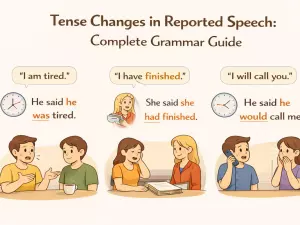
Tense Changes in Reported Speech: Complete Grammar Guide
Here we why tenses change in reported speech, explains present and past tense shifts, addresses how to report future intentions, discusses the impact of time references, and points out common mistakes with tense logic.
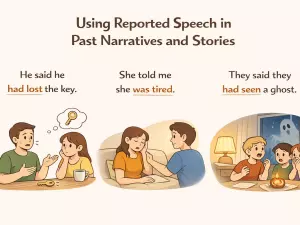
Using Reported Speech in Past Narratives and Stories
Here we how reported speech is used in narratives, the importance of tense consistency, and how to shift perspective when recounting past events.
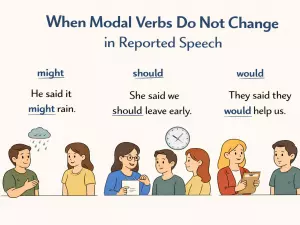
When Modal Verbs Do Not Change in Reported Speech
This article explains why some modal verbs do not change in reported speech, focusing on their use for general truths and present or future situations. It also covers logical vs. grammatical changes, speaker intention, and common learner mistakes.
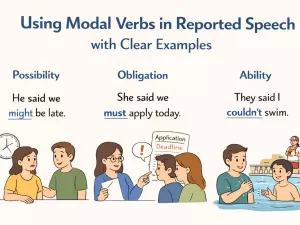
Using Modal Verbs in Reported Speech with Clear Examples
Here we how modal verbs function and change in reported speech, including typical transformations and meaning shifts.
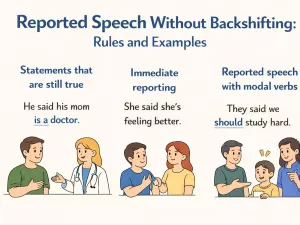
Reported Speech Without Backshifting: Rules and Examples
Here we the meaning of backshifting in reported speech, situations where it is not used, and how present relevance or unchanged facts affect its use. It also discusses the role of speaker intention, context, and typical confusion about optional backshifting.
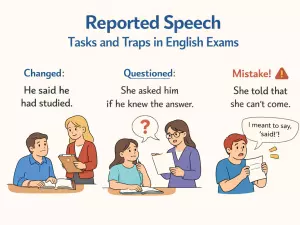
Reported Speech Tasks and Traps in English Exams
The article explains why reported speech causes exam errors, outlines typical exam tasks, and highlights common tense and pronoun traps. It also discusses challenges with reporting questions and commands, overusing backshifting, and practical ways to avoid mistakes.
Advanced Reporting Verbs for C1 and C2 Learners
Here we the importance of advanced reporting verbs, how they convey nuance and attitude, suitable verbs for formal or academic contexts, common verb patterns at C1–C2 level, and tips for choosing precise verbs while avoiding overuse and mistakes.
Previous
1
...
19
20
21
22
23
24
25
26
27
...
124
Next